
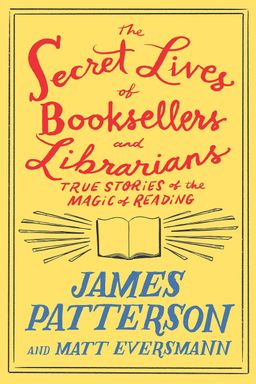
The Secret Lives Of Booksellers And Librarians cover

The Secret Lives Of Booksellers And Librarians

by James Patterson And Matt Eversmann With Chris Mooney

Profiles of the workers who connect people with books.

Booksellers & Librarians: The Quiet Frontline

When was the last time a stranger handed you a book that changed your week—or your life? In The Secret Lives of Booksellers and Librarians, James Patterson, Matt Eversmann, and Chris Mooney argue that the people who run our bookstores and libraries are quiet first responders for a culture in crisis. They don’t arrive in sirens; they arrive with empathy, curiosity, and a deeply practical craft: putting the right story into the right hands at the right moment. The authors contend that despite headlines about the death of reading, a vibrant, improvisational corps of booksellers and librarians is not only keeping reading alive, but also stitching communities together, defending free expression, and widening the circle of who gets to see themselves in books.

This portrait is built as a chorus of first-person vignettes—indies and chains, rural and urban, kids’ rooms and prison tiers. You meet event wizards and quiet matchmakers, business builders and free-speech fighters, hurricane responders and BookTok translators. Across their differences, they share a stubborn devotion to readers and a belief that stories change what people imagine they can be. If you’ve ever wondered what really happens behind the desk or the counter (and why it matters to your own reading life), this book makes the human circuitry of the reading ecosystem visible.

What They Actually Do

At street level, the job looks like detective work and social work with a retail backbone. In Albany and Troy, New York, Alexis Sky runs buying, returns, receiving, the website, and the social feeds for Book House and Market Block Books—then turns around to personally stash racy romances on a hold shelf for a delighted regular. In San Antonio, school librarian Lorrie Roussin keeps a mental “walking book blog,” matching teens to Jason Reynolds and Brendan Kiely’s All American Boys, sparking multigenerational reading in families. In Houston, McKenna Jordan of Murder By The Book hustles debuts like Paula Hawkins’s The Paper Palace predecessor (and later The Girl on the Train), hand-selling hundreds before the national wave hits. Their craft starts with listening; it ends with a book that feels uncannily precise to the moment you’re in.

Why It Matters Now

The authors frame this work as a countercurrent to forces eroding attention and trust: digital distraction, polarization, and attacks on public goods. Carolyn Foote launches #FReadom to push back on coordinated book bans targeting LGBTQ+ and race-related titles in Texas (echoing broader fights covered in PEN America reports). Martha Hickson withstands a months-long smear campaign to preserve students’ choice in a New Jersey high school library. Meanwhile, librarians like Diego Sandoval Hernandez roll book carts into Rikers Island, or build TeleStory and Daddy & Me so incarcerated parents can read to their kids. The through-line is agency: readers deserve choice, context, and a place to practice empathy. Booksellers and librarians are the human infrastructure that guarantees it (see also Eric Klinenberg’s Palaces for the People for a civic lens).

How Communities Are Built

You see community in the small rituals: a corgi named Yola greeting customers at Park Road Books in Charlotte; a teen rolling up with a piggy bank at Astoria Bookshop; a grandchild asking Mary Terry at Barnes & Noble for Captain Underpants and The Attack of the Talking Toilets (while Dad’s jaw drops). You also see it under stress: Sanibel Public Library staff reopening after Hurricane Ian with power, Wi‑Fi, and notaries; Bob Wells’s Rainbow News & Café becoming a mutual-aid site after a tornado; the pandemic-era curbside logistics that turned booksellers into distance runners. The book insists that “bookplace as third place” isn’t nostalgia; it’s measurable resilience.

What This Summary Covers

In the pages ahead, you’ll step inside the craft of “getting the right book to the right reader,” from Nancy Pearl’s 50-page rule to the fine art of decoding “the cover is blue.” You’ll see libraries as radical welcome—teaching ESL over soup, notarizing wills, lending Bibles and Batman comics at Rikers, and transforming kids into lifelong readers through story time, YA clubs, and summer reading games. We’ll track the new pipelines of buzz (BookTok, Instagram, author tours) and the old-school superpowers (hand-selling, staff recs, and knowing your town). We’ll examine censorship fights and the ethics of neutrality, the economics behind the counter, and what representation does in real lives—from EyeSeeMe’s African American children’s bookstore to Cleveland’s author-powered youth festivals. Finally, we’ll look at the emotional labor—grief, joy, and everything between—that turns transactions into trust.

Big Idea

Books aren’t scarce; attention and belonging are. Booksellers and librarians turn stacks of paper into experiences of recognition, relief, and resolve. That’s why their work looks like magic from the outside—and like a muscle you can develop once you see it up close.


Finding the Right Book, Right Person

Ask any great bookseller or librarian what their job is and you’ll hear a version of this: discover what you need before you can name it, then hand you a book that clicks. The stories here decode that process so you can borrow it for your own reading life—and for the readers around you.

Start With Curiosity, Not Categories

Alexis Sky in Albany/Troy treats each reader as a puzzle. She watches what lights you up (a social clip, a cover, a quick laugh) and triangulates from there. She doesn’t stop at “mystery” or “romance”; she notices you loved Twilight for immersion, so she might ladder you to a new world with similar momentum. In San Antonio, Lorrie Roussin asks teens for just three signals—“this, this, and this”—then returns with a dozen possibles. It’s fast because she’s built a mental map by reading across YA genres and formats (novels, graphics, audio), and because she leads with freedom: “It’s okay not to like this; let’s find what you like.”

Use Trusted Shortcuts

Several pros lean on Nancy Pearl’s famous formula: give a book 50 pages; over age 50, subtract your age from 100 to find your new page threshold. Kelly Moore in Texas uses it to lower stakes for a nervous patron. The result? A political thriller series becomes a lifeline through health scares, and a photo sent to the author turns a private joy into a conversation. These shortcuts aren’t rules; they’re permission slips to keep reading a pleasure, not a test (Anne Lamott’s Bird by Bird sits in the background of this ethos).

Hunt the Signal in the Noise

Matching often begins with almost nothing. Jamie LaBarge in Kansas City treats “the cover is blue” or “it’s long and dystopian” like a scent trail that leads to Justin Cronin’s The Passage. Sally Brewster laughs that most of bookselling is “numbers” until someone walks in and says, “Tell me what to read,” and then it’s theater. Erin Duffy in Tempe watches a self-published ebook (Fifty Shades of Grey) jump to Vintage and pivots inventory just as word of mouth explodes—proof that listening to your customers’ excitement is part of the data. Meanwhile, Meg Wasmer delights in the “media tie-in” route: a kid’s obsession with Minecraft or Star Wars becomes a sturdy bridge to series reading (think Beverly Cleary or Rick Riordan as on-ramps—parents often forget this progression happened to them).

Make Space for serendipity

Serendipity is engineered, not accidental. Staff recommendation tables are the beating heart of shops from Judy Blume’s Books & Books Key West to Thunder Road Books in New Jersey (teacher-turned-bookseller Kate Czyzewski curates story-times with a lesson planner’s touch). McKenna Jordan’s hand-sell of hundreds of copies of The Girl on the Train before it hits #1 shows what happens when you stake your reputation on a debut. And sometimes the magic is literal: a kid in Lake Placid learns what a bookmark is for the first time; a Staten Island author quietly signs his own book on the shelves; a corgi named Yola persuades non-readers to linger just long enough for a conversation to begin.

Try It Yourself

Next time you’re stuck, tell a librarian three things you liked about your last favorite (pacing, voice, world, not just genre). Ask for two “near matches” and one “stretch.” If you’re the recommender, borrow Alexis’s move: pre-place a book on hold for someone you know well. And adopt Pearl’s rule so you stop white-knuckling through books that don’t love you back. Reading thrives when you turn seeking into a shared sport.

Field Note

“Detective work” is not metaphorical; it’s a daily practice of noticing, testing, and revising. Do that for yourself and your people, and your reading life accelerates.


Libraries as Radical Welcome

The book reframes libraries as engines of belonging and practical help, not quiet warehouses of print. When you see what happens inside, you realize how much of your own life could be easier—and kinder—if you used your library like a Swiss Army knife.

A Place Where Everyone Belongs

Sharon Perry Martin in University Park calls the public library “the last true bastion of impartiality.” That looks like helping a patron research African American history regardless of anyone’s background, or notarizing documents without judgment. In Akron, Emily Schall’s “Culture & AV” team runs a Library of Things—hotspots, laptops, and more—while also curating YA book clubs for “Not So YA” adults. Dena Heilik in Philadelphia reminds us libraries are among the few spaces left where you can exist without spending money, and they show it: ESL through cooking at the Culinary Literacy Center, tie-borrowing for interviews, even a plexiglass beehive for wonder’s sake.

A Safety Net in Disguise

In Sanibel, Florida, when Hurricane Ian rips doors off hinges and floods the first floor, Beth Jarrell and team return as soon as power and Wi‑Fi are live. They become a FEMA-adjacent help desk: printing insurance forms, notarizing, listening. During COVID shutdowns, countless systems did curbside pickup, taught telehealth basics, and turned parking lots into internet hubs. Libraries are often the only climate-controlled space some neighbors have; they treat dignity like a utility.

Inside the Walls—and Behind Them

Diego Sandoval Hernandez’s correctional-services team at Brooklyn Public Library brings carts to Rikers, answers research questions by mail, and builds bridges like TeleStory and Daddy & Me so kids can hear their dads read. He meets people where they are—sometimes with Malcolm X’s autobiography, sometimes with Batman vs. Superman—because literacy levels and needs vary. Amy Cheney’s Juvenile Justice Literacy Project mirrors this on the youth side: invite Terry McMillan to speak; watch doors open; then keep feeding kids like Tamika the kind of page-turning suspense (Lois Duncan) that turns “I don’t like to read” into “I’m on page 33!”

Membership Libraries & Memory Work

Lillian Dabney’s Seattle Athenaeum, a modern echo of Benjamin Franklin’s subscription model, focuses on Pacific Northwest writing and the art of translation (think Jay Rubin translating Haruki Murakami). At the Holocaust Museum Houston, Joel Bangilan builds a lending library and story time that teaches kindness, cooperation, and memory, while preserving survivor testimonies for a future that too easily forgets. This is libraries as moral muscle: they teach us how to remember, and how to talk about what we remember (see also Susan Orlean’s The Library Book for libraries as civic memory).

How to Use Yours Better

Get a card. Ask a librarian to “show me three services most people don’t know.” Try interlibrary loan (Dodie Ownes fell in love with librarianship through the magic of a Stanford book arriving in high school). Ask about notaries, exam proctoring, digital newspapers, and language-learning databases. And if your library hosts school partnerships like “Book Madness” (Mara Zonderman’s bracketed reading tournament), bring your kids—the contagion of enthusiasm is real.

Key Shift

Stop treating libraries as buildings with books. See them as community operating systems—programmable for the problems you and your neighbors actually have.


Fighting Censorship, Protecting Choice

Perhaps the fiercest through-line is a defense of intellectual freedom—not as an abstract principle, but as daily boundary-setting with parents, politicians, and pressure groups. If you’ve wondered what to say when someone wants a book banned, this chapter hands you scripts and spine.

From Hashtags to Hearings

In Texas, district librarian Carolyn Foote co-creates #FReadom to flood the state legislature’s hashtag with thousands of positive posts about inclusive books—especially after a lawmaker circulates a list of 850 titles framed as causing “discomfort.” She reframes the debate: libraries offer voluntary reading; choice belongs to families for their own kids, not for everyone else’s. The hashtag becomes a movement, backed by the Texas Library Association’s training and hotline.

When It Gets Personal

In New Jersey, high school librarian Martha Hickson refuses demands to pull Gender Queer, Lawn Boy, and other frequently challenged titles. She’s publicly labeled a “groomer,” left without immediate institutional defense, and endures months of board meetings and reconsideration processes. She persists, recruits YA author David Levithan to write a statement, and ultimately keeps the books (all but one) on shelves. Her takeaway: “We can have a conversation around two shared values—First Amendment rights and protecting kids—if we lower the temperature and show up together.”

Local Power, Real Stakes

In Llano County, Texas, veteran librarian Suzette Baker refuses to hide or remove LGBTQ+ and race-related books labeled “pornography” by activists. She’s fired, then watches as residents sue the county; a federal judge orders books restored within 24 hours; the county briefly considers closing libraries entirely rather than comply. The public outcry keeps doors open. The lesson: transparency (using existing reconsideration policies) and community mobilization matter as much as principle.

How to Respond Where You Live

Know your library’s selection and reconsideration policies; ask your board to publish and follow them. Separate parental choice (for one child) from public removal (for all). Invite students and authors into the conversation; personal testimony reframes abstractions. And show up: the decisive votes in Llano and Hickson’s district were bolstered by hundreds of neighbors who said, simply, “We read. We choose.” (Context: Deborah Caldwell-Stone at ALA offers similar playbooks; PEN America tracks coordinated bans.)

Bottom Line

Censorship thrives in procedural fog and silence. Clarity plus community beats outrage every time.


Business, Not a Fairy Tale

The romance of book work is real—but so are margins, leases, and leaky roofs. The book lifts the hood on how bookstores survive, scale, and sometimes reinvent, so you can support them (and steal a few entrepreneurial lessons yourself).

Margins & Mechanics

Elaine Petrocelli opens Book Passage in 1976 after a late-night epiphany: “Everyone who walks into a bookstore wants to be there.” Decades later she’s running two locations, 900 events a year, and a writers’ conference. She still hates returning unsold titles, but cash flow demands it. Judy Blume in Key West learns the same: 7,000 titles in a small shop means ruthless turnover; staff recs drive velocity (her blurbing The Paper Palace sells it out repeatedly). Meanwhile, Sally Brewster pays above minimum wage and keeps health insurance for Park Road Books staff even through the 2008 crash—then survives the pandemic by turning curbside pickup into a production line.

Real Estate, Really Real

Nina Barrett revives a legendary Evanston space (once Bookman’s Alley), builds a “speakeasy for books,” then loses the lease when the landlord doubles rent. Community outrage helps fund a move a few blocks away; a bright mural by her artist sons re-centers the store’s soul. Taylor Rose Berry opens Harbor Books in Sag Harbor in 22 days, learns the hard way after forgetting to stock The Great Gatsby on opening weekend, then evolves into Berry & Co., a bespoke bookselling service untethered from one storefront. The message is sobering and hopeful: the brand is the relationship, not just the address.

Scaling Chains With Soul

Chains aren’t soulless in these pages; they’re staffed by lifers. Nancy Moore has been with Barnes & Noble for 40 years and still quotes customers’ shelves back to them. Jessica Claudio treats the Staten Island B&N like a neighborhood storefront; she champions local authors and celebrates a customer’s soon-to-be grandmotherhood with squeals. Erin Blake at Books‑A‑Million shows the back-end magic: national planners push the right YA hits to the right stores; BookTok resurrects 10–15‑year‑old backlist titles that suddenly won’t stay in stock. District manager Catrina Haynes builds service-dog story times and calls Books‑A‑Million a “family business” even at scale.

Moneyball for Mysteries

Resale is an art form, too. “Mystery Mike” Bursaw haunts library and estate sales for first editions, then sells a $1 Jack Carr find for $695 (signed) and an early Elmore Leonard Western for $3,750. His biggest score: 7,000 mint-condition crime novels from a private collection of 50,000, packed and palletized with a high school hockey team. Treasure-hunting looks glamorous; it’s logistics all the way down.

How to Help Your Store Thrive

Preorder from them. Attend events and buy the book the author is signing. Join (or start) a club in-store. Ask if they can order what you don’t see (they almost always can). And remember Lynn Greene’s blunt truth about empty malls: “It’s the first time you’ve been to the mall in years.” Vote with your feet.

Entrepreneur’s Note

Mission thrills won’t pay rent; relationships might. Design around repeat joy (staff recs, clubs, author nights) and operational resilience (returns, events, omnichannel).


Community Glue in Crisis

When something breaks—your routine, your city’s power grid, your heart—book people often become first calls. This section shows how they steady communities in storms literal and figurative, and how you can build similar glue where you live.

Pandemic Pivots

In Charlotte, Sally Brewster and her brother work phones and curbside until the city tells them even run‑outs are off-limits; they flip to mail-only overnight. In Cleveland, Elaine Petrocelli’s “Conversations with Authors” livestreams keep Book Passage solvent; a $500,000 pledge from James Patterson anchors #SaveIndieBookstores, while Isabel Allende literally steps behind the café counter to pull espresso when staff are short. Across the chain world, Jessica Claudio keeps Staten Island families supplied as the borough’s only bookstore.

Storm Duty

After Hurricane Ian, Sanibel Public Library becomes an information lighthouse: chargers, Wi‑Fi, printers, and calm. Bob Wells’s Rainbow News & Café weathers a tornado; the next day customers arrive with chainsaws, trucks, and casseroles to rebuild the porch and reshelve the strewn books. The lesson? If you’ve invested in people, they invest back when the wind comes.

Personal Emergencies, Human Responses

Barnes & Noble’s Nancy Moore helps a widower script condolence replies and find a guide to thank-you notes. She cries with the family saying goodbye to a cancer-stricken yellow Lab who loved the store. Mary Terry shields a terrified toddler clutching her hair through a thunder-loud story time and gently steers a child and father through the wilds of Captain Underpants. These aren’t dramatic acts; they’re the daily kindnesses that make a bookstore or library your first safe place.

Build Your Own Glue

Join or start programs like Angie Tally’s AIMS, which funds author visits and guarantees a free copy for every student in a grade (matched by schools and First Bank). Support Adopt‑a‑Reader (Bookworm of Edwards) to build kids’ personal home libraries monthly. Offer your skills: notarizing, tech help, rides to events. Or simply show up consistently—relationships built in quiet months pay dividends in hard ones.

Resilience Rule

The stronger the reading community before the storm, the faster the recovery after. Invest early and often.


New Pipelines of Buzz

If you’ve felt overwhelmed by book hype—front tables, BookTok, celebrity clubs—this chapter helps you read the signals and use them to your advantage. The book shows how pros blend old-school hand-selling with new-school feeds to keep good books circulating.

BookTok, Backlist, and the Long Tail

Erin Blake at Books‑A‑Million calls BookTok “the biggest thing I’ve ever seen,” reviving decade-old titles chain‑wide. Miranda Berdahl in Wyoming watches romance and fantasy surge with Gen Z girls wandering in from TikTok—then gently redirects too‑spicy titles for younger readers without shaming curiosity. Katherine Walcott at Indigo notes manga’s meteoric rise with teens and twenty‑somethings, outselling fiction in many stores.

Events That Matter

McKenna Jordan runs author nights like precision theatre, delivering some of the highest tour sales in the country (including a triumphant James Patterson signing). Cleveland’s Erica Marks turns author visits into empowerment festivals: Jason Reynolds, Angie Thomas, Ilyasah Shabazz—each pairing a talk with a free signed book for hundreds of students. Anne Holman at The King’s English transforms a gas station into a children’s treehouse with a grant from—yes—James Patterson; midnight Harry Potter lines stretch around the block, adults and kids equal in wonder (compare to the fever of Midnight Launch culture chronicled in pop‑culture studies).

Staff Recs & Local Love

Astoria Bookshop grows poetry from one shelf to four because its readers buy it; Lexi Beach’s team tweaks sections as each new staffer’s passions ripple through sales. Staten Island’s B&N celebrates homegrown authors with Instagram shout‑outs and in‑café signings. Cathy Jesson’s Canadian chain, Black Bond Books, maintains one of the country’s largest local‑interest sections because Newfoundlanders (as Charlene Stoyles jokes) will stampede any author who makes the local news. Your best discovery engine might be five miles from home.

How to Ride the Wave

Browse staff rec tables monthly; if a bookseller’s taste aligns with yours, follow their picks as a personal feed. Use BookTok to find energy, then confirm at your library or store. Go to at least two author events a year; hearing a writer talk often flips a “maybe” into a “must.” And don’t ignore backlist: when a title resurfaces, there’s usually a reason (a movie, a theme, a universal itch).

Takeaway

Hype is a tool, not a tyrant. Pair it with a human filter and your TBR stack gets sharper, not just taller.


Representation Changes Lives

Again and again, the book shows what happens when readers finally “see themselves.” If you’re a parent, educator, or simply a neighbor who cares, these stories make the case for building shelves that mirror the whole community.

From Absence to Abundance

Pamela Blair’s EyeSeeMe African American Children’s Bookstore in St. Louis began with a practical crisis: her brilliant son Ezra was bored and in trouble; the school’s reading list had zero Black voices. She homeschooled with history centered on African civilizations and Black scientists; as other parents asked for her lists, she and her husband opened EyeSeeMe (starting with ~100 titles and $50 in first‑week revenue). Years later, they now help teachers diversify classrooms and locate specific requests—like a potty‑training book with toddlers of color or an interracial grandparent story. One preschooler from the Middle East lit up during a reading of Anne Sibley O’Brien’s I’m New Here and asked to bring it home; her parents later called in tears.

School Libraries as Mirrors

Lorrie Roussin’s middle school readers find themselves in Reynolds & Kiely’s All American Boys, setting off a domino effect: a student reads it, then his brother, then his mom and grandmother—ending with “We’re buying all this author’s books.” Angie Tally’s AIMS ensures that when authors visit, every kid takes home a free copy—no matter the zip code. That’s more than equity; it’s fuel.

Adults Need Mirrors, Too

Kai Burner found language for a trans identity in Aiden Thomas’s Cemetery Boys. Mara Zonderman’s 102‑year‑old grandmother guides a whole community’s reading with her bookmark list. Roxanne Coady named RJ Julia for her Holocaust‑survivor grandmother and still chases the awe she felt reading Leon Uris’s Exodus as a new American kid. Representation is not a “kids’ issue”; it’s a human one across a lifespan (see also Rudine Sims Bishop’s “windows, mirrors, sliding glass doors”).

What You Can Do

Audit your shelves at home and school. If everyone looks like you, fix it. Ask your indie or librarian for ten recs by authors from communities missing on your shelf. Buy two: one to read, one to donate to a school or jail program. And celebrate staff who know how to steer—not censor—young readers around content jumps while preserving their curiosity (Miranda in Casper models this beautifully).

Core Truth

When a reader sees themselves, they don’t just read more; they move differently in the world.


The Emotional Labor of Book Work

What makes book work feel like a calling is not only the stories on the page; it’s the stories at the counter. If you’ve ever been steadied by a bookseller or librarian on a wobbly day, this chapter shows why it felt so personal—and how they’re trained (or self‑taught) to carry it.

Listening Is the Skill

Suzanne Lucey at Page 158 Books instructs her team: don’t say “Can I help you find something?”—start a conversation, make people feel seen. A Yankees‑capped widower breaks down in front of her; she listens, shares her own “new to town” story, and helps him begin a new chapter. At a Thai restaurant, Indigo’s Charlene Stoyles becomes a six‑year‑old’s lunch buddy because the child knows her as “the book lady.” You don’t get that at most retail counters.

Joy & Grief in the Same Hour

Nancy Moore navigates grief sections and cheesecake cookbooks for a newly single customer; minutes later she hears that Maddie the yellow Lab wants to visit the store “one last time.” Mary Terry wrangles a thunderstruck toddler who won’t unclutch her hair, then congratulates a four‑year‑old for warning her about a “pooted” book table. Humor and tenderness keep the space safe for kids and adults alike.

Boundaries & Ethics

“Neutrality” doesn’t mean moral mush. Sharon Perry Martin underscores the ALA standard: serve anyone who walks through the door; help with a straight face even when you disagree; protect privacy. Dodie Ownes argues that true neutrality requires carrying uncomfortable titles across the spectrum, then letting circulation patterns and weeding policies—not politics—shape the shelf over time. Librarians are trained to hold space without becoming therapists; the best develop humane scripts for when to refer and when to simply nod.

Sustaining the Self

Many narrators describe long careers powered by community and craft: Patrick Nichol has sold books in the same Calgary location since 1998 and still lights up talking about Spider‑Man and being mistaken for George R. R. Martin. Janice Turbeville started as an American Girl Book Club kid and never left bookselling; two decades later she still delights in a customer who asks her to select surprise jigsaw puzzles “so I don’t see the picture.” When burnout creeps in, people pivot: Nina Barrett left food radio for books, then books for food, then back again; others change sections, start clubs, or shift to events.

How to Be the Kind of Customer Who Helps

Be patient when technology hiccups; ask for recs and report back; write a thank‑you email naming the staffer; show up to author nights; donate to kids’ programs. If a bookseller remembered your favorite, remember their humanity in return. That reciprocity is the secret fuel of the whole ecosystem.

Emotional Physics

Attention given comes back multiplied. That’s why a bookstore feels like home even if you’ve just walked in.

Dig Deeper

Get personalized prompts to apply these lessons to your life and deepen your understanding.

Go Deeper

Get the Full Experience

Download Insight Books for AI-powered reflections, quizzes, and more.