
Idea 1
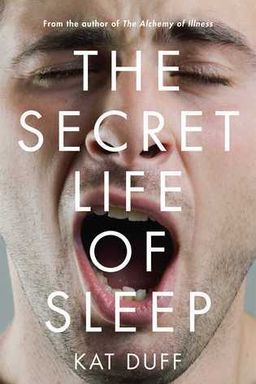
The Secret Life of Sleep: What Rest Reveals About Being Human
Have you ever wondered what happens during the hours you spend unconscious each night? Kat Duff’s The Secret Life of Sleep invites you into that shadowy territory, illuminating not only how and why we sleep but also what it means for our emotional balance, creativity, and humanity itself. Duff contends that sleep is far more than a biological necessity—it’s a state of consciousness as rich, vital, and meaningful as our waking life. Yet modern culture, enamored with productivity and control, has alienated us from this nightly mystery, commodifying it into something to be optimized or escaped.
Drawing from neuroscience, philosophy, mythology, and personal reflection, Duff argues that sleep serves as a mirror to culture. The way we approach rest—whether we embrace it, fight it, or medicate it—reveals our relationship to vulnerability, emotion, and the natural cycles that sustain us. She journeys from infants co-sleeping with their mothers in tribal villages to adults numbed by Ambien in 24/7 economies, exposing how sleep has evolved—and how we’ve tried to outsmart it.
The Cultural and Scientific Quest to Master Sleep
Duff begins by exploring sleep’s universality. Every living creature, from worms to whales, has a version of it, demonstrating its evolutionary necessity. Humans, however, have layered sleep with interpretation—from ancient myths that linked Hypnos (the god of sleep) to Thanatos (the god of death) to modern neuroscience mapping REM cycles. For centuries, Western thinkers saw sleep as the absence of consciousness; only in the twentieth century, with the discovery of REM by Eugene Aserinsky in 1953, did science reveal that the sleeping brain is intensely active. Duff frames this discovery as revolutionary—it proved that interior life continues even when the body lies still.
But while science illuminated the mechanics of sleep, modern society narrowed its purpose. Sleep became a recovery tool to recharge for more work, stripped of mystery or meaning. Duff contrasts this reductionism with older, more holistic understandings—Buddhist dream yoga, Islamic vision quests, Indigenous rituals of communal night watch—that treat sleep as a time of communion with the unseen. In her words, our nightly descent is not a shutdown but a journey inward, a crossing into worlds where emotional healing, creativity, and wisdom thrive.
Sleep as a Bridge Between Worlds
A recurring metaphor in the book is sleep as a bridge—between the physical and spiritual, day and night, reason and imagination. Duff intertwines her own experiences with scholarship to show how this bridge enables transformation. Struggling with anxiety over community conflict, she dreams of floating above the earth watching a Shakespearean drama unfold. Upon waking, she understands that each person, herself included, is simply playing a role necessary to life’s unfolding. This dream, she writes, granted her what Emerson once called “double consciousness”—the ability to see both subjectively and objectively, compassionately and detachedly. Sleep gave her perspective where waking thought could not.
This “double consciousness” also emerges in research. Psychiatrist Matthew Walker’s studies confirm that REM sleep acts like “overnight therapy,” deactivating stress hormones and stripping painful memories of their emotional charge while retaining lessons learned. Dreams, Duff explains, are not random firings but intricate emotional algorithms, testing our responses to threat, loss, and love. Through the night’s alternating waves of REM and deep slow-wave (SW) sleep, our psyches rehearse resilience.
What We Lose When We Abandon Sleep
Yet Duff warns that our cultural estrangement from sleep comes at a price. Electric light and caffeine severed us from natural circadian rhythms; the industrial workday compressed what was once “segmented sleep”—two periods of rest divided by a midnight vigil filled with prayer, reflection, or lovemaking—into one uninterrupted stretch demanded by production schedules. Insomnia, she argues, is not merely a medical disorder but a social symptom of our relentless wakefulness addiction. “Without enough sleep,” she quotes a friend, “we turn into two-year-olds.”
The book chronicles the commercialization of exhaustion: barbiturates in the 1930s, benzodiazepines in the 1960s, Z-drugs like Ambien today. Duff shows how each generation’s “cure” both reflects and reinforces its anxieties—control, convenience, performance. But true sleep, she insists, cannot be controlled; it’s an act of surrender. The more we try to dominate it, the more elusive it becomes. Whether through Indigenous lullabies, dream sharing, or meditation, other cultures remind us that rest is relational, not transactional.
Why Sleep Still Matters
Ultimately, Duff’s message is deeply humanistic: to heal ourselves and our societies, we must reclaim sleep’s sacredness. It’s not simply downtime but the realm where emotions reset, bodies repair, and imagination renews. When we short-circuit this cycle—through overstimulation, artificial light, or perpetual availability—we become disoriented, anxious, and divided against ourselves. Sleep knits us back together.
By blending neuroscience, poetry, and anthropology, The Secret Life of Sleep reimagines what it means to close our eyes each night. As Duff writes, sleep “has no master.” It defies capitalist logic, reminding us of our limits and our belonging to the earth’s rhythms. To understand sleep, she argues, is to understand life itself—its fragility, mystery, and miraculous continuity between the realms of night and day.