
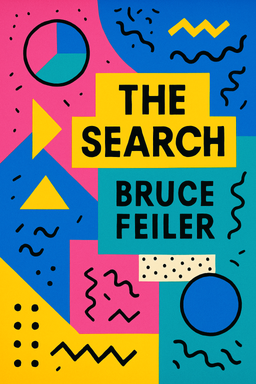
The Search cover

The Search

by Bruce Feiler

In ''The Search,'' Bruce Feiler offers a transformative guide to finding meaningful work in today''s ever-changing landscape. By sharing real-life stories and insightful questions, Feiler empowers readers to break free from outdated career paths and create fulfilling and purpose-driven work lives.

Finding Meaningful Work in a Post-Career World

What does it mean to truly find work that matters—not just work that pays or impresses, but work that fulfills you? In The Search: Finding Meaningful Work in a Post-Career World, Bruce Feiler argues that we're living through a once-in-a-generation revolution in how we think about success, identity, and purpose. Work is no longer something fixed—it's fluid, personal, and deeply connected to your sense of meaning. This transformation, Feiler contends, requires each of us to stop following inherited scripts about work and instead write our own story of success.

The American Dream Is Being Rewritten

For generations, the traditional formula for success—career, stability, and upward mobility—defined the American Dream. Feiler shows that this dream, rooted in a narrow view of achievement shaped by figures like Benjamin Franklin and Horatio Alger, emphasized industriousness and self-reliance to the exclusion of emotional fulfillment and diversity. But that dream is fractured. Today, millions are walking away from the old model. Americans are quitting jobs at record rates, not to escape work but to search for meaning within it. Feiler calls this shift a movement from a means-based economy to a meaning-based economy.

The Work Story Project and the Meaning Revolution

Feiler didn’t start out intending to write about work. After spending years studying life transitions, he noticed that the same disruptions—illness, burnout, grief, reinvention—that shaped people’s personal lives were also reshaping their professional identities. He launched the Work Story Project, interviewing over 150 people from all walks of life—refugee coordinators, comedians, CEOs, activists, and farmers—creating an unprecedented database of work experiences. Through these conversations, he uncovered not a “career path” but a complex web of work stories—narratives that people use to make sense of change and reclaim meaning when their professional world is shaken.

The Three Lies About Work

Most of us still unconsciously believe three myths about work: (1) You have a career, (2) You have a path, and (3) You have a job. Feiler dismantles these lies by showing that careers are no longer linear, paths are hidden beneath rapid change, and jobs are multifaceted—often combining multiple forms of labor, both paid and unpaid. In a nonlinear world, the old success playbook of climbing the ladder has collapsed. The new rule is: there is no ladder, only a kaleidoscope of possibilities that you must learn to assemble for yourself.

The One Truth About Work

Beyond those myths lies one truth: Only you can write your story of success. Through narrative psychology, neuroscience, and storytelling, Feiler shows that your identity isn’t fixed by what you do—it’s shaped by the stories you tell yourself about what you do. Your work story is not just professional—it’s personal. You create meaning by revisiting your scripture: the values, lessons, and wounds inherited from childhood, reinterpreting them to fuel your journey. Like his subject Mary Robinson, who transformed her childhood trauma into a life helping grieving children, Feiler invites readers to ask: what pain, what moment, what lesson defines your story of work?

Writing Your Work Story

The book ultimately becomes a toolkit for reconstructing your narrative. Feiler offers six timeless questions—the Kipling questions—that guide readers through their own workquake: Who, What, When, Where, Why, and How. These questions help you uncover who influenced you, what you value, when your calling began, where you find belonging, why you do what you do, and how you move forward. In answering them, you begin to see your own work story as a living, breathing document—one that you can edit, reinvent, and tell on your own terms. Feiler’s message is clear: the American Dream isn’t dead; it’s multiplying. There’s not one dream anymore—there are infinite dreams, waiting for each of us to claim them as our own.


The Three Lies About Work

Feiler structures his argument around three cultural myths that have long defined our understanding of work—and how each has collapsed under the pressure of twenty-first-century change. These myths are comforting but false narratives, and recognizing them is the first step toward building meaning in your work.

Lie #1: You Have a Career

The traditional career model was born during the industrial era. Driven by figures such as Frank Parsons, the founder of vocational counseling, and Frederick Winslow Taylor, who created management science, it promoted a scientific formula for matching personality and profession. Careers were supposed to be logical, linear, and lifelong. But no such stability exists today. Economic turmoil, globalization, and digitization have dissolved the “career ladder,” replacing it with short-term roles and flexible identities.

Take Eric Vélez-Villar, who rose through the FBI to become its head of intelligence and later joined Disney as a high-paid security executive. Despite his conventional success, he left it all behind when facing childhood trauma, realizing that success meant being a fulfilled husband and father—not earning an $800,000 salary. His story reveals that the modern world rewards adaptability more than obedience. Your career isn’t a ladder—it’s a mosaic you’ll keep reassembling.

Lie #2: You Have a Path

Feiler introduces the idea of workquakes—disruptive events that shake up your job, identity, and direction. These moments pull you off your supposed path and into unknown terrain. Whether voluntary (changing jobs) or involuntary (illness, layoffs), workquakes are part of a nonlinear life. On average, Americans experience about twenty such events across their working years. For Cathy Heying, the social worker who founded a nonprofit car repair garage after witnessing poverty firsthand, her path wasn’t planned—it was discovered through empathy and improvisation. The right path isn’t found; it’s created.

Lie #3: You Have a Job

The single-job model is obsolete. Feiler’s data shows people hold an average of 3.5 jobs at once, including paid, unpaid, and side roles. He calls this new reality Work360—a full circle of responsibilities comprising your main job, side job, hope job (something you hope will grow), care job, and ghost job (invisible emotional labor). For instance, Morgan Gold works as an insurance marketer by day but runs a Vermont farm and YouTube channel by night. Work today is multidimensional, combining ambition, service, and self-expression. In this world, fulfillment doesn’t come from having one job—it comes from integrating the many jobs that make you whole.

Together, these three lies expose how outdated the traditional success playbook has become. You no longer have a career to climb, a single path to follow, or a job to keep forever. What you have is a story—a living narrative that evolves with every workquake. The key, Feiler says, is learning not to survive change but to author it.


The Workquake and the Meaning Audit

Feiler’s concept of a workquake is the heartbeat of this book. Like physical earthquakes, these disruptions shake the ground beneath your professional identity. They can be terrifying, but they also offer opportunities for reinvention. To navigate them, Feiler introduces the Meaning Audit—a three-step process to excavate your past, probe your present, and construct your future.

Step 1: Excavating the Past

In painful times, most people look forward for answers. Feiler suggests looking backward instead. Through what he calls personal archaeology, he encourages you to rediscover forgotten ambitions, childhood passions, and emotional wounds. Tim Pierpont, a real estate executive who returned to painting houses after being laid off, realized that his true happiness had always been working with his hands—a lesson buried since teenage summers spent crafting fences. Digging into your history reveals recurring patterns of meaning you can reclaim today.

Step 2: Probing the Present

The present is where meaning takes shape. Feiler uses his ABCs of Meaning: Agency, Belonging, and Cause. Agency is what you create; Belonging is who you connect with; Cause is the larger purpose you serve. By identifying which of these matters most to you right now, you can adjust your balance during periods of upheaval. Many people, Feiler finds, shift from self-focused agency toward cause and community as they age or experience crisis, echoing psychologist Roy Baumeister’s claim that meaning arises from linking past, present, and future through story.

Step 3: Constructing the Future

After excavation and reflection, you’re ready to write your next chapter. Feiler’s interviews show that those who thrive after a workquake craft new stories rather than chase old ones. Laura Spaulding, a former police officer wronged by discrimination, built a nationwide crime-scene cleanup company that now helps women recovering from trauma. Her story illustrates the power of transforming pain into purpose—a recurrent theme Feiler calls “turning toothaches into poetry.”

In this model, change isn’t the enemy—it’s the plot. Just like Joseph Campbell’s hero’s journey, your work life moves through descent, discovery, and ascent. Meaning isn’t found in avoiding disruption but in embracing it. As Feiler writes, a workquake is “a de-storying event that summons you to re-story your life.”

If you approach your next shake-up with curiosity instead of fear, you’ll find that disruption can be your greatest teacher. The outcome of a workquake isn’t mere survival—it’s authorship.


The Six Questions That Create Your Work Story

Once you’ve accepted that work is no longer linear, Feiler offers a storytelling framework to rebuild meaning—the six Kipling questions. Derived from Rudyard Kipling’s poem on curiosity, they serve as the scaffolding of any good story. Each question—Who, What, When, Where, Why, and How—helps you rewrite your work narrative after a disruption.

Who Is Your Who?

Your “who” includes the people who shaped you—parents, mentors, colleagues, and waymakers who open doors or challenge assumptions. Judy Cockerton, inspired by her grandmother’s legacy of caregiving, founded Treehouse, an intergenerational community for foster families. Her story reflects Feiler’s idea that personal heroes create emotional imprints on our work decisions. By revisiting these influences, you learn which relationships serve or hinder your growth.

What Is Your What?

Here, you articulate what you actually do—and why it matters. Beverly Jenkins, who wrote the first mainstream Black historical romance, discovered that her “what” was preserving cultural history through storytelling. Feiler uses her example to show that your work can become an expression of your values, not just your talents. Knowing what makes you proud—freedom, creativity, service—gives focus to an otherwise uncertain career path.

When Is Your When?

When your story began—and when it must change—matters profoundly. Feiler tells Alexander Vindman’s story, the soldier whose testimony shaped U.S. history, as a case study of timing and courage. Every workquake has a moment when “the clock tolls.” Recognizing it lets you act decisively instead of deferring a dream. Timing isn’t fate—it’s attention.

Where Is Your Where?

Place, Feiler argues, molds identity. In the age of remote work and relocation, “where” is less about geography than belonging. Carolina Guillen Rodriguez, who grew up picking carrots in California, built a real estate business that empowers Latino families to own homes. Her “where” became both mission and metaphor: transforming the dream of a house into a symbol of dignity and community.

Why Is Your Why?

Your why is your deepest motivation—the wound that drives your purpose. Mary Robinson, who lost her father at twelve, later founded a grief center for children. Feiler calls these formative pains “toothaches,” borrowing Hans Christian Andersen’s metaphor. Finding meaning often means transforming such pain into compassion. Your why is the invisible thread tying your work story together.

How Is Your How?

Finally, how is the practical part—turning intention into action. Robin Arzón, who left corporate law after surviving a hostage situation, built a world-changing fitness brand by taking deliberate micro-steps: saving money, networking, and posting her story online. Feiler reminds you that advice from others can help, but the most powerful advice is the one you give yourself. Each of these six questions forms the spine of your next chapter, turning confusion into narrative clarity.

By answering these questions honestly, you transform your career from a sequence of jobs into an authored story. Your life stops being something that happens to you—and starts being something you write.


Redefining Success and the New American Dreams

The final section of The Search reframes success itself. Feiler argues that the old definition—status, wealth, and hierarchy—is dead. Instead, we’re entering an era of multiple American Dreams rooted in individuality, diversity, and shared purpose. Inspired by Aldo Leopold’s idea of the “edge effect” and bell hooks’ notion of “centering the margin,” Feiler shows that vitality arises at the intersections where cultures, identities, and experiences converge.

The Four New Rules of Success

  • Success is not climbing; success is digging. True success means probing deeper into your roots and values rather than chasing external heights. For artist Michael Running Wolf, digging into his Indigenous heritage led him to preserve endangered languages through AI technology.
  • Success is not individual; success is collective. Collaboration is the new engine of progress. Beverly Jenkins credits the generations before her—Black writers and activists—for paving the way for her storytelling; she now mentors younger authors.
  • Success is not means; success is meaning. Purpose outweighs profit. Eric Vélez-Villar’s shift from corporate prestige to authentic self-acceptance illustrates that fulfillment replaces financial gain as the measure of achievement.
  • Success is not status; success is story. Your life’s narrative is the real asset. Jasminne Mendez, who reinvented herself after illness, embodies this truth—her success lies not in position but in the continual act of rewriting her story.

The Gift of the Wrong Decision

Feiler ends with a poignant reflection on his own father, whose devotion to family over ambition left lasting lessons. Every unconventional decision, he writes, may disappoint someone—but those choices often lead to freedom. The banker who becomes a painter, the lawyer who becomes a healer, the teacher who becomes an entrepreneur: these “wrong” moves rewrite what it means to be right. In a world without linear careers, mistakes become milestones.

The new American Dream isn’t a single storyline—it’s a theater filled with infinite scripts. Your task isn’t to chase someone else’s dream but to author your own, embracing unpredictability as a creative force. Feiler urges you to center your edges, tell your truth, and remember that success isn’t where you end—it’s the story you tell along the way.

As he concludes: “Write your own damned story. If not you, who? If not now, when?” It’s a modern rallying cry for anyone ready to claim their version of meaning in work—and in life.

Dig Deeper

Get personalized prompts to apply these lessons to your life and deepen your understanding.

Go Deeper

Get the Full Experience

Download Insight Books for AI-powered reflections, quizzes, and more.