
Idea 1
Scrum and the Art of Changing the Possible
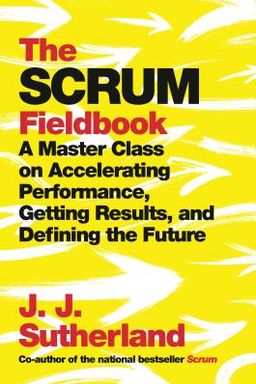
What if you could double your team’s output without doubling your stress or your hours? J.J. Sutherland’s The Scrum Fieldbook opens with precisely this question, inviting you to imagine work not as endless churn but as creative problem solving at lightning speed. Sutherland, co-creator of Scrum along with his father, Jeff Sutherland, argues that the world demands a new operating system for work—a method agile enough to keep pace with exponential technological changes and complex global challenges. That operating system, he claims, is Scrum, a disciplined yet liberating framework that changes not only how teams deliver results but how organizations evolve, learn, and thrive.
The book’s centerpiece idea is that Scrum is the art of changing the possible. While most management systems reinforce control, hierarchy, and predictability, Scrum is designed for the unpredictable. It replaces exhaustive upfront planning with short, iterative cycles, continuous learning, and radical transparency. The framework’s genius lies in making change cheap, inverting traditional bureaucracy by empowering teams to solve problems directly and adapt in real time. Sutherland’s comparison of modern business revolution to Antoine Lavoisier’s discovery of oxygen sets the tone: as chemistry once redefined how we understood matter, Scrum is redefining how we understand human collaboration and productivity.
Living in an Age of Exponential Change
To explain why this shift is urgent, Sutherland uses Moore’s law—the idea that computing power doubles roughly every two years—as both metaphor and warning. Complexity is accelerating faster than our ability to plan for it. Traditional top-down project management collapses under this pace, producing billion-dollar failures like London’s Taurus settlement system or SAP implementations that drag on for decades. The world changes faster than organizations can react. Scrum, Sutherland argues, is how people can fight back by evolving at the same scale of acceleration as technology itself—a kind of Moore’s Law for people.
Making Change Cheap
At its core, Scrum makes it cheap to change your mind. Instead of betting everything on a single massive deliverable, teams work in short sprints—one or two weeks—testing ideas, gathering feedback, and improving continuously. In this system, failure doesn’t signal disaster; it becomes valuable information for innovation. “Great,” Sutherland often tells teams when they bring him a failed experiment, “now we know that doesn’t work. Next time, bring me a more interesting mistake.” This reframing of failure as data turns rigidity into resilience. Whether you’re building software, fighter planes, or restaurants, Scrum enables fast learning through structured iteration.
Stories That Redefine the Possible
Throughout the book, Sutherland grounds theory in vivid real-world stories. Saab Aerospace uses Scrum to design the Gripen fighter jet—a modular, plug-and-play aircraft built like Lego. By turning airplane design into a system of independent Scrum teams, Saab reduced development costs by half and produced a more adaptable, cheaper, and superior plane. Elsewhere, 3M integrated a $2-billion corporate acquisition using Scrum, finishing months ahead of schedule. A Minneapolis house flipper reorganized contractors weekly and paid for incremental value delivered, proving that Scrum’s power extends beyond software.
A Framework for Human Systems
Ultimately, The Scrum Fieldbook isn’t just about speed—it’s about human potential. Sutherland believes every organization holds vast, latent energy constrained by bureaucracy, blame, and fear. Scrum is the mechanism for unleashing that energy. By emphasizing autonomy, trust, and transparency, Scrum transforms culture as much as process. It teaches organizations to build resilient systems that grow stronger after setbacks, turning mistakes into momentum and uncertainty into creativity.
A Roadmap for Transformation
Across its chapters, the book progresses through implementation stages: from decision-making speed (“Why We Can’t Decide”) and focus (“Busy vs. Done”) to culture (“Structure Is Culture”) and large-scale application (“The Renaissance Enterprise”). Sutherland locates the heart of business success not in planning perfection but in the ability to learn fast, act decisively, and connect fearlessly. In the end, The Scrum Fieldbook is a manifesto for a world where adaptation replaces control—and where the future belongs to teams that can pivot, collaborate, and deliver with joy.