
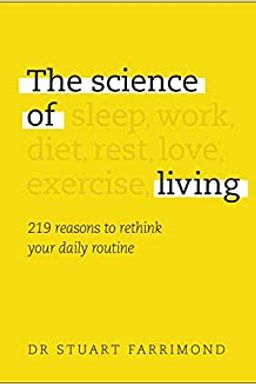
The Science of Living cover

The Science of Living

by Stuart Farrimond

The Science of Living dissects everyday routines with scientific precision, dispelling myths and providing actionable insights. Learn how to optimize your day, from morning rituals to weather dressing, and unlock strategies for enhanced well-being and productivity.

The Science of Everyday Life: Understanding Yourself Through the Day

Why does waking up sometimes feel like climbing a mountain while other days you spring out of bed? Why do you suddenly feel sluggish after lunch, or find yourself wired at midnight even though you’re exhausted? In Live Your Best Life: Understanding the Science of Living Well, Dr. Stuart Farrimond takes you hour by hour through a typical day, using the latest scientific research to illuminate the mysteries of your body and mind.

Farrimond argues that living your best life doesn’t mean stacking up productivity hacks or craving motivation; it means understanding the biological, psychological, and social rhythms that govern your behavior. He contends that your experiences – from morning fatigue to midnight cravings – aren’t moral failings or personality quirks. They are the predictable results of a well-designed but easily confused human body. Once you learn to work with it rather than against it, you can use science as your personal compass for a healthier, more fulfilling life.

A Doctor’s Journey from Medicine to Meaning

The starting point of this exploration comes from Farrimond’s own transformation. Trained as a medical doctor, he stepped away from the profession after realizing that too often, science and medicine wrap themselves in jargon that alienates people. Through years of teaching and science communication, he became convinced that understanding science isn’t about memorizing chemical equations—it’s about making sense of everyday mysteries: why caffeine jitters appear, why stress makes you sick, or why teenagers can’t get out of bed before 10 a.m.

In his words, this book is “a celebration of life”—a tribute both to human curiosity and the fragile gift of health. Diagnosed with aggressive brain cancer during writing, Farrimond’s reflections carry emotional weight. His mission is not just to help readers optimize their schedules but to help them appreciate life’s biological poetry: the intertwining of cells, hormones, and habits that make each day extraordinary.

A Day in the Life of Your Body

The entire book is structured as a 24-hour journey. Farrimond divides the day into four sections—Morning, Afternoon, Evening, and Night—using each to explore what happens within you as you wake, work, eat, rest, and sleep. It’s a rhythm-based approach, emphasizing that your body is governed by the ultimate metronome: your circadian clock.

You’ll learn why your morning grogginess is a biological feature called sleep inertia; why your midday mood crash isn’t laziness but a predictable dip in alertness caused by shifting hormones; and why your late-night musings or creativity spikes are triggered by an ebb and flow in brain activity. From coffee timing to shower temperature, he uses each familiar act as a window into how biology operates behind the scenes.

Morning: Awakening the System

Mornings, Farrimond explains, are a complex reactivation of your internal machinery. Cortisol surges, heart rate increases, and the body begins to shake off melatonin’s drowsy grip. Yet most of us fight against this process by hitting snooze or scrolling through phones. The book humorously calls these habits “morning sabotage,” detailing how bright light, movement, and even stretching can reboot your circadian rhythm far better than caffeine at dawn. Science shows that drinking coffee too early overlaps with your natural cortisol peaks, causing anxiety and diminishing caffeine’s long-term kick.

Afternoon: The Performance Paradox

During the afternoon, your sharpness begins to blur, as digestion and hormonal cycles redirect energy toward the gut. Farrimond dives into why your post-lunch slump exists, how blood sugar and “gut brain” chemistry influence mood, and why a power nap can be as restorative as extra hours of sleep. He also explores stress, creativity, and decision fatigue, showing how simple breaks or “mind-wandering” moments can unlock insight (a point supported by neuroscientists studying default mode networks).

Evening: Strength, Social Bonds, and Balance

Evening is when body temperature and physical power peak, making it the best time for intense exercise. Here, the book turns to the social side of science—why hugging boosts oxytocin, why arguing is easier when hungry, and how love, attraction, and even risk-taking are tied to hormone surges. Farrimond grounds his explanations in humor and empathy, reminding readers that human behavior is inseparable from biology. He even tackles modern habits like social media addiction and online shopping through the lens of dopamine-driven rewards.

Night: Rest, Restoration, and the Hidden Work of Sleep

At night, the book moves inward—to the mystery of sleep and dreams. Farrimond details how REM and deep sleep repair your brain, consolidate memory, and balance emotional stability. He debunks common myths (like the “eight glasses of water” rule and the idea that blue light ruins bedtime) and reframes sleep as one of the most crucial forms of self-care available. Shortchanging sleep, he warns, sabotages everything else—productivity, health, even willpower.

Why This Science Matters

The genius of Live Your Best Life lies in its accessibility. By translating medical research into bite-size daily habits, Farrimond makes science deeply human. You aren’t simply told to change your routines—you’re shown how and why your body responds the way it does. There’s a humility behind his writing: life, he reminds us, is short and uncertain. But understanding it through science can help you live it with greater wonder and grace.

“Science isn’t about making life perfect—it’s about helping us appreciate it.”

– Dr. Stuart Farrimond

Ultimately, Farrimond’s guide is both a survival manual and a love letter to the human experience. It teaches that knowing the science of your body isn’t cold or mechanical—it’s an act of care. When you understand your internal rhythms, you stop fighting yourself and start living in harmony with the marvelous, messy system that is you.


Morning Science: Waking, Energy, and Rhythm

Dr. Farrimond opens the morning section by tackling the deceptively simple question: why is waking up so hard? He reveals that emerging from sleep is less like flipping a switch and more like jump-starting an engine. Your brain passes through stages of non-REM and REM sleep; how and when you wake determines whether you leap up refreshed or crawl out groggy.

Sleep Inertia and the Cortisol Connection

The grogginess we feel upon waking is caused by sleep inertia, a temporary cognitive sluggishness due to the still-waking prefrontal cortex. Farrimond compares it to “a computer booting up after an update—it works, but everything lags.” Exposure to daylight, movement, and hydration kick-start this biological reboot. He notes that cortisol—an energizing hormone often misunderstood as merely a stress agent—naturally spikes about 30 minutes after waking. This rhythm, called the cortisol awakening response, primes your mind and metabolism to handle the day.

That’s why reaching for coffee too early backfires. Caffeine blocks adenosine, a compound that builds sleep pressure, but it competes with cortisol’s natural jolt. Farrimond recommends waiting one to two hours before your first cup so you ride your hormone wave instead of crashing it.

Phones, Snooze, and the Modern Wake-Up Trap

Using an alarm may get you up, but hitting snooze restarts your stress cycle. Each alarm triggers adrenaline and cortisol bursts, mimicking mini panic attacks. Repeating the act conditions your heart and mood to start the day in fight-or-flight mode. As for checking your phone immediately—Farrimond warns that it floods your barely awake brain with distractions and anxieties before your reasoning circuits activate. This is neurochemically primed to breed stress.

Instead, he suggests leaving curtains slightly open so natural light cues your body clock or using a sunrise lamp to simulate dawn. These subtle cues synchronize your suprachiasmatic nucleus—the brain’s master timekeeper—with the external world, improving alertness naturally.

Chronotypes and Morning Personalities

Farrimond dives into a favorite topic of chronobiologists: chronotypes. Some people are born morning larks, others night owls, and most fall somewhere between. This isn’t just preference—it’s genetic. He references research showing that early risers tend to live slightly longer and earn more but also that forcing night owls into morning routines leads to chronic sleep deprivation.

Flexible work policies, he argues, are not luxuries but biological necessities. Modern schedules clash with our evolutionary biology, explaining the epidemic of burnout and grogginess. Rather than fighting your body’s clock, understanding it allows you to structure your life—creative work, physical activity, even decision-making—when your brain is most suited for it.

Morning takeaway

Treat morning as a scientific experiment in self-kindness: wake with light, move your body, delay caffeine, and give your brain 60 minutes before demanding performance. Doing so aligns your daily rhythm with nature’s design.


The Science of Energy and Food

Everyone has heard the old adage that breakfast is the most important meal of the day. Farrimond dismantles this cliché, showing how the truth is more nuanced. For centuries, breakfast habits were cultural, not biological. In Rome, people ate once midday; the modern breakfast boom came from early 20th-century cereal marketing. So is breakfast truly essential, or just a commercial invention?

Rethinking Morning Fuel

Scientific evidence reveals that metabolism doesn’t need a “kick-start.” Your body burns calories as soon as it wakes. What matters is balance across the day and your personal chronotype. Morning eaters (larks) may thrive on breakfast; night owls may perform better postponing it. Skipping breakfast doesn’t inherently cause weight gain, though it may lead to overeating later. Farrimond suggests experimenting with timing to discover your individual energy rhythm.

Nutrients That Matter

Not all energy sources are equal. Whole grains provide steady glucose release, while refined carbs spike insulin and crash quickly. High-protein foods prolong satiety by slowing digestion. Fiber feeds healthy gut bacteria, promoting steady energy and immunity. He demystifies fat: unsaturated fats in nuts, seeds, and olive oil actually aid long-term heart health, contrary to decades of “low-fat” marketing rooted in mid-century industry politics (a narrative paralleling Robert Lustig’s Fat Chance).

He also dismantles myths about “superfoods.” No single item, he insists, holds salvation. It’s dietary patterns—rich in plants, moderate in animal products, low in processed sugar—that make or break health. The Mediterranean diet, supported by massive longitudinal studies, remains his model example of sustainable nourishment.

Sugar, Caffeine, and Midday Slumps

Farrimond highlights dopamine’s mischievous role in craving sugary snacks. Sugar’s immediate energy boost triggers an addictive pleasure loop. The fix? Combine small carbohydrates with protein or fiber to blunt the blood sugar peak. As for caffeine, used wisely, it’s beneficial—boosting alertness and even longevity—but overuse disrupts sleep architecture. Stop drinking it at least six hours before bedtime.

Eat with awareness, not fear

Instead of labeling foods “good” or “bad,” Farrimond teaches that the real enemy is imbalance and ignorance. Knowing what, when, and how food interacts with your biology transforms eating from guilt into self-respect.


Stress, Emotion, and the Modern Mind

One of Farrimond’s most practical contributions is reframing stress. Instead of a universal villain, he calls it a misunderstood biological signal—a system meant to protect, not punish. The problem lies in constant activation. We were built for sprinting from predators, not enduring endless emails.

The Chemistry of Stress

Acute stress releases cortisol and adrenaline, priming you for action. Chronic stress, however, keeps these hormones circulating, damaging heart vessels, dulling immunity, and impairing memory. Sleep loss worsens the effect, leading to “leisure sickness”—the tendency to fall ill once you stop working because your body’s defenses finally relax.

Rewiring Stress Responses

Deep breathing works because lungs directly influence the vagus nerve, which calms the amygdala. Farrimond presents stress as trainable: rehearse calm reactions before stressful events, and your brain’s neural “paths” will strengthen toward serenity. This aligns with cognitive-behavioral insights found in works like Viktor Frankl’s Man’s Search for Meaning—that control resides in interpretation, not circumstance.

Good vs. Bad Stress

Not all stress harms. Moderate strain can sharpen focus and resilience. The key difference is recovery: without downtime, even good pressure corrodes wellbeing. Farrimond’s antidote: sleep, daylight, laughter, and connection. Social support releases oxytocin, buffering cortisol’s spike. Solitude, by contrast, mimics physical pain; friendships are as physiologically essential as diet or exercise.

Practical stress science

Engage your body first: slow your breath, step outside, smile at someone. The mind will follow. Stress isn’t removed—it’s reinterpreted.


Exercise, Movement, and Motivation

Most of us know exercise is good for us, yet we resist it. Farrimond explains why: evolution wired humans to conserve energy. Unless survival demanded effort, rest was logical. The guilt of inactivity isn’t moral weakness; it’s ancient programming clashing with the modern world.

Timing and Temperature

Late afternoon is the body’s athletic sweet spot. Muscle temperature peaks, reaction time sharpens, and injury risk is lowest. Morning exercise supports mood, but evening exercise builds strength faster. Farrimond shows how “chronofitness” can personalize performance: train when your body clock agrees, not out of obligation.

HIIT and Heart Health

High-intensity interval training (HIIT) outperforms long, moderate workouts for heart conditioning. Short cardio bursts flood the body with BDNF—brain-derived neurotrophic factor—stimulating neuron growth, while endorphins elevate mood. Movement literally rewires the mind, making exercise an antidepressant more powerful than many drugs (a finding echoed by Dr. John Ratey’s Spark).

Stretching, however, has limits: static stretches before workouts increase injury risk by creating micro-tears. Dynamic warm-ups and postworkout cooldowns are far better. His verdict on gym fads? Focus on fundamentals: movement, recovery, and joy.

The movement mindset

Stop chasing motivation. Start small, attach pleasure, and repeat. The brain rewards the action, not the intention.


Love, Connection, and the Social Brain

At the intersection of biology and emotion lies one of the book’s most human sections: relationships. Farrimond treats love not as poetry but as neurochemistry in action—a harmony of oxytocin, dopamine, serotonin, and trust.

The Biochemistry of Bonding

Hugging for 20 seconds releases oxytocin, lowering stress and boosting immunity. Physical touch literally communicates safety to the nervous system. In contrast, loneliness activates the same brain regions as physical pain. This explains why social ties predict lifespan as accurately as smoking or exercise habits. Love isn’t just emotional—it’s medicinal.

Attraction and Hormones

Testosterone and estrogen drive desire; dopamine fuels pursuit; and oxytocin anchors attachment. Farrimond presents sex not as taboo but essential biology. He even explains why smartphones harm intimacy: the small dopamine rush of a notification competes directly with connection. “Presence,” he writes, “is the highest form of attraction.”

The Neural Rewards of Empathy

Humans are hardwired to mirror emotions. When you see someone smile, your brain’s mirror neurons light up as if you smiled yourself. This is empathy’s biochemical root—and our greatest social tool. Recognizing this turns compassion into a conscious habit, not a mystical gift.

Touch, trust, and togetherness

Oxytocin binds us. Touch heals. Sharing stories rewires empathy. The science of love proves that connection isn’t optional—it’s vital fuel for a flourishing life.


Sleep, Dreams, and the Power of Rest

If the morning chapters explore activity, the night ones reveal its counterpoint: restoration. Farrimond calls sleep ‘the body’s nightly miracle’—a recalibration that sustains every physical and mental system. He warns that most of us treat it as negotiable, when it’s the foundation of brain health, immunity, and emotional balance.

The Architecture of Sleep

Sleep cycles oscillate between deep (non-REM) and REM stages roughly every 90 minutes. Non-REM cleans cellular waste and restores tissue; REM consolidates memories and integrates emotions. Skipping REM leads to irritability and poor creativity. Sleeping pills or alcohol induce sedation, not true rest, suppressing these essential waves.

Ritual and Rhythm

Good sleep hygiene—the modern term coined by sleep scientists—involves keeping a regular bedtime, cooling the room, limiting late meals, and embracing darkness. He challenges myths about blue light: while screens can disrupt rest through mental stimulation, their physical light output is rarely strong enough to shift circadian rhythms. The bigger culprit is mental overstimulation. Meditating, reading, or journaling calms the mind’s ‘watching network,’ allowing rest to unfold naturally.

Dreams and Creativity

Dreams, he argues, are not nonsense but the brain’s sandbox, remixing memories to test solutions and strengthen learning. As Dmitri Mendeleev or Paul McCartney discovered, REM-inspired insights can be revolutionary. Dreaming, far from fantasy, is cognitive problem-solving in disguise.

Sleep as love for life

Sleep is not downtime; it’s repair time. When you honor your sleep, you aren’t being lazy—you’re giving your brain the space to stay kind, smart, and alive.

Dig Deeper

Get personalized prompts to apply these lessons to your life and deepen your understanding.

Go Deeper

Get the Full Experience

Download Insight Books for AI-powered reflections, quizzes, and more.