
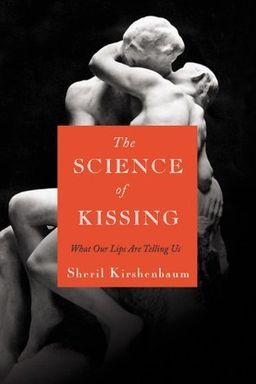
The Science of Kissing cover

The Science of Kissing

by Sheril Kirshenbaum

Explore the fascinating science behind kissing with Sheril Kirshenbaum. Discover why this universal act transcends cultures and species, influencing our biology, health, and relationships. Uncover the hidden power of a kiss and its profound impact on human evolution.

The Science and Soul of a Kiss

Why do we kiss—and what’s really happening behind that brief, electric moment when two people meet at the lips? In The Science of Kissing, Sheril Kirshenbaum sets out to answer one of humanity’s most intimate yet least understood questions: how kissing came to be, why it matters, and what this seemingly simple action reveals about love, biology, and human connection.

Kirshenbaum argues that kissing is far more than a romantic gesture—it’s an evolutionary tool, a biological experiment, and a cultural language that has shaped human relationships for millennia. By combining insights from neuroscience, anthropology, psychology, and history, she shows that a kiss is both instinctive and learned, rooted in deep biological drives yet sculpted by social norms and technological change. From the red of our lips to the hormones that surge through our bodies, every aspect of kissing tells a story about survival, sex, and intimacy.

A Universal, Yet Mysterious Language

Kirshenbaum begins by highlighting a surprising truth: scientists aren’t even sure what kissing is in a formal, biological sense. There’s no taxonomy for it, no universal definition across cultures. And yet, kissing—or kissing-like behaviors—appear almost everywhere: among bonobos, whales, wolves, and people from nearly every society. She notes that the act of pressing lips together might be as ancient as humanity itself, connected to our earliest instincts for bonding and recognition.

Through evolutionary theories and cultural examples, Kirshenbaum positions kissing as a window into who we are. It’s not just a nice gesture—it’s a biological signal, a subconscious exchange of genetic and emotional information. When we kiss, our bodies evaluate potential partners, reinforcing love or revealing incompatibility. As she writes, kissing is “nature’s litmus test”—a way to decide if the chemistry is truly right.

From Jungle Origins to Modern Intimacy

Kirshenbaum divides her exploration into evolutionary, biological, and cultural parts. In the origins story, she traces kissing back to survival habits: the feeding bonds between mother and infant, the bright redness of primate genitalia that became mirrored in human lips, and the “sniff-kiss,” where our ancestors used smell to recognize and bond with others. Whether kissing began as an adaptation of feeding or as a sensory greeting, its persistence shows how vital it is to connection.

As the book progresses, she reveals what happens inside the body when lips meet. Hundreds of muscles coordinate movement; nerves send signals to the brain’s pleasure centers; hormones like dopamine, serotonin, and oxytocin flood the bloodstream. These create the rush of attraction or attachment we feel. A good kiss triggers the same chemical rewards as addictive drugs and is physiologically intertwined with feelings of love and trust.

Culture, Gender, and Evolutionary Codes

Kirshenbaum dives deeply into gender differences—how women and men experience kissing for distinct biological reasons. Women, she notes, are more attuned to scent, taste, and subtle cues, using a kiss as an unconscious test of genetic compatibility. Men, wired by evolutionary pressures to spread their genes, may see kissing as a prelude to sex. But for both, the kiss serves as an incredibly efficient exchange of information—part courtship, part communication.

Cultures further shape this instinct. From ancient Indian scriptures and Roman customs to Hollywood films and modern Internet dating, Kirshenbaum illustrates how social norms reinvent the kiss. In some societies, kissing is intimate; in others, it’s a greeting or even taboo. Today, globalization and technology have turned kissing into a worldwide phenomenon—reflected in art, cinema, viral images, and even robotics. Yet its emotional essence remains unchanged.

Why the Science of Kissing Matters

For Kirshenbaum, decoding the kiss isn’t about removing its magic—it’s about understanding its power. When you kiss someone, you are tapping into millions of years of evolution. Your lips, eyes, and hormones collaborate in a millisecond to decide if this person feels “right.” This means kissing isn’t simply romantic; it’s diagnostic, biological, and deeply human.

Ultimately, Kirshenbaum wants readers to see kissing as a profound form of communication that bridges emotion and science. It affirms love, motivates reproduction, and builds trust—the three pillars of human connection. And by bringing science into the conversation, she shows that understanding our chemistry can deepen our capacity for intimacy, not diminish it. The science of kissing reveals that something as small as a moment at the lips carries the entire history of human affection within it.


The Evolutionary Anatomy of Desire

Kirshenbaum explores how kissing might have started as an evolutionary accident that became an emotional necessity. Her journey through anthropology and biology reveals four major theories about how kissing arose—and each gives you a new way to think about intimacy.

The Red Signal: Lips and Attraction

The first theory centers on color and sexual signaling. Early human ancestors who could spot red fruit had an evolutionary advantage. Over time, the association between red and reward became deeply embedded in our brains. When our primate ancestors stood upright, Kirshenbaum suggests, this rosy signal moved—from hidden reproductive areas to the lips. As Desmond Morris famously called them, human lips became “a genital echo”: plump, red, sensitive, and sexually charged. Modern males respond to this ancient cue instinctively.

That’s why lipstick has remained powerful for centuries. In ancient Sumeria, Egypt, and Rome, women colored their lips to amplify this signal. Today, studies show men are still most attracted to women with natural yet pronounced lip color, and the fuller the lips, the higher her estrogen levels. In evolutionary terms, your red lips are speaking louder than words.

The Mother’s Kiss and Premastication

The next theory looks to infancy. The first “kiss” may have been a mother feeding her child through mouth-to-mouth food transfer—a practice known as premastication. This exchange was intimate, survival-driven, and filled with trust. Later, when the child needed comfort, lip contact became associated with safety and love. The human kiss might have grown from this instinctive bond between caregiver and child.

Sigmund Freud interpreted adult kissing as a longing to return to that primal comfort, but Kirshenbaum takes a more balanced view: rather than a symptom of deprivation, kissing recalls the security of love learned early. (Similar arguments appear in Desmond Morris’s The Naked Ape.)

The Sniff Kiss and Social Chemistry

Another theory replaces lips with noses. Many cultures, from New Zealand’s Maori to the Canadian Inuit, have developed “sniff kisses,” greeting others by inhaling their scent. In ancient times, smell was critical for recognizing relatives and allies. Over time, this act may have evolved into lip contact as trust deepened. Even now, Kirshenbaum notes, when you kiss someone, you inevitably enter their personal space—a gesture of acceptance and warmth. Early humans didn’t see sniffing as rude; it was a way to say, “I know you.”

Kissing as Evolution’s Reward System

Ultimately, evolutionary biologist Helen Fisher’s research ties everything together: kissing reinforces three major biological systems—lust, attraction, and attachment. Lust drives us to seek partners; attraction focuses us on one person; attachment keeps a couple bonded. Kissing acts as a bridge, triggering all three. Whether through the sensual color of lips, the comfort of contact, or the recognition of scent, this single act has survived for millions of years because it strengthens the social bonds essential to human survival.


When Animals Kiss and What It Means

Kirshenbaum transports you to the animal kingdom to prove that humans aren’t the only ones smitten with smooching. From bonobos to wolves to gulls, animals engage in kissing-like behaviors that show affection, resolve conflict, and build community. These parallels reveal that kissing isn’t unique—it’s universal.

Bonobos: The Masters of Affection

Among our closest primate cousins, bonobos kiss with open mouths, sometimes even using tongues. They do it for comfort and reconciliation, not just sex. When one bonobo bullies another, conciliatory kisses follow—like making up after an argument. Kirshenbaum references anthropologist Frans de Waal’s observations of bonobos kissing for up to twelve minutes straight, and their habit of “kissing to calm the community.”

Across Species: Licks, Nuzzles, and Snouts

Cats lick each other’s heads, giraffes entwine their necks, and manatees nibble their partners. Elephants explore one another using their trunks, and parrots “bill-fondle” with their mates. Even wolves “kiss” through regurgitation—pups lick adults’ muzzles to trigger feeding. Kissing, it turns out, often has both practical and emotional roots. Whether feeding young, greeting allies, or resolving tension, these exchanges all strengthen social ties.

The Biological Roots of Affection

Kirshenbaum reminds readers that humans share 98.7% of our DNA with bonobos, who use touch to manage relationships rather than aggression. By studying them, we can glimpse our own social wiring. The message is clear: bonding behaviors increase trust, cooperation, and ultimately reproductive success. In evolutionary terms, affection is practical—it keeps genes alive.

(Notably, biologist Niko Tinbergen’s research on gulls showed an innate “feeding kiss,” where chicks peck at their parents’ beaks to receive food—reinforcing the idea that mouth contact fosters survival.) Kirshenbaum’s animal tour makes one thing undeniable: kissing is a behavioral inheritance written into the living world’s DNA.


From Sanskrit to Cinema: Cultural History of Kissing

Across four millennia, kissing has shifted from sacred ritual to romantic symbol. Kirshenbaum traces this cultural evolution from the dusty scrolls of India’s Kama Sutra to Hollywood’s cinematic smooches, showing how societies have alternately celebrated, censored, and commodified the kiss.

Ancient Beginnings

The earliest known references to kissing appear in India’s ancient Vedic texts (circa 1500 BCE), where “smelling with the mouth” described early kiss-like contact. Later, the Mahabharata and Kama Sutra detailed techniques—from the “nominal kiss” to the “touching kiss”—as part of sensual art. Meanwhile, Babylonian, Greek, and Roman literature expanded kissing’s role to greetings, devotion, and erotic love. Romans even had three words for it: osculum (respect), basium (affection), and savium (passion).

Religion and Rebellion

Under Christianity, the kiss gained spiritual meaning. Saints and popes encouraged the “kiss of peace,” then restricted it to moral contexts. The church alternated between sanctifying and banning kissing, worried about temptation. Yet artists and poets—from Erasmus to Shakespeare—kept the kiss alive in culture, treating it as a holy gateway to love.

By the Renaissance, kisses sealed contracts and marriages—hence the phrase “sealed with a kiss.” Even plagues couldn’t stop the custom. In 1499, Erasmus marveled at England’s generosity of kisses; centuries later, the Plague replaced them with bows, only temporarily. In every era, authority struggled but failed to contain human affection.

Modernity and Media

By the 20th century, technology globalized the kiss. The first film kiss in 1896 between May Irwin and John C. Rice scandalized audiences. Soon, movies from Wings to Splendor in the Grass pushed boundaries—from male-male kisses to tongue contact. Hollywood sparked global kissing trends, while cultural icons—from Greta Garbo to Madonna—turned the kiss into a political statement about gender and desire.

In today’s interconnected world, Kirshenbaum shows, the kiss is universal yet local: French cheek kisses compete with Indian modesty and Japanese discretion. The kiss travels through media, adapting to each culture’s values. Whether censored, ritualized, or televised, it thrives as our most recognizable form of intimacy.


Inside the Body: The Neural Chemistry of a Kiss

When you kiss, your body becomes a symphony of molecular messages. Kirshenbaum draws on neuroscience to show how the smallest gesture ignites the brain’s reward system, releases hormones, and activates sensory networks that make a kiss feel magical.

Lip Sensitivity and Neural Fireworks

Your lips contain the highest concentration of nerve endings on your body. When they touch another’s, five of the twelve cranial nerves light up, sending data to the somatosensory cortex. The lips are mapped larger than any other organ on the brain’s “sensory homunculus,” meaning your mind gives special priority to their sensations. It’s why a gentle brush feels enormous compared to pressure elsewhere—it’s evolution’s pleasure amplifier.

The Chemical Choir

Neurotransmitters such as dopamine, serotonin, and oxytocin flood your system during a kiss. Dopamine sparks excitement and craving—it’s the same molecule linked to addiction and that “high” of falling in love. Serotonin adds obsessive focus, which explains why lovers can’t stop thinking about each other. Oxytocin, known as the “love hormone,” promotes bonding and trust, strengthening long-term attachment. Meanwhile, adrenaline and norepinephrine prepare your body for passion, quickening pulse and breath.

Kirshenbaum likens these chemicals to a choir—each voice harmonizing to create emotion. Their song can be altered by environment or mindset. A romantic setting evokes calm oxytocin; anxiety might mute it. (Parallels appear in Helen Fisher’s work on love’s biochemical triad.) When the chemistry aligns, the result is breathtaking.

The Brain on Love

Passionate kissing activates limbic regions associated with emotion, memory, and reward. Studies show we remember our first kiss better than our first sexual experience—because it’s stored as emotional memory, enriched by hormonal surges. A bad kiss triggers cortisol, the stress hormone, while a good one calms it. Kissing literally reshapes the brain: neurons form new links between touch, pleasure, and affection every time you kiss.

In essence, Kirshenbaum reveals that kissing is a biological orchestra—playing the melody of love and attachment in the language of chemistry and nerve signals.


Gender, Hormones, and Emotional Intelligence

Kirshenbaum’s research reveals striking gender differences in how kissing is experienced and why it matters. Men and women may kiss for the same reason—connection—but they interpret it through different biological and emotional lenses.

Men: The Hormonal Strategists

Men often see kissing as foreplay—a signal toward sex rather than emotional bonding. Biologically, testosterone plays a major role. Because saliva contains traces of testosterone, openmouthed “wet” kisses may subtly increase a woman’s libido, giving men an evolutionary advantage. Kirshenbaum calls it “nature’s legal aphrodisiac.” Studies show men tend to prefer longer, more intense kisses with tongue, possibly as a way to subconsciously transmit hormones and gauge fertility.

Women: The Emotional Analysts

Women, by contrast, use kissing to assess trust and compatibility. They value breath, taste, and timing as indicators of health and honesty. In surveys Kirshenbaum conducted, most women said they would not sleep with a man they hadn’t first kissed. For them, kissing measures emotional safety and commitment. Evolutionarily, this makes sense: with limited fertility and long childrearing periods, women invest heavily in finding reliable partners.

Psychologist Gordon Gallup’s research confirms that a “bad kiss” can end a relationship before it starts—women’s bodies seem wired to interpret kissing as data about genetic suitability. It’s not about technique; it’s about chemistry, literally.

Attachment and Trust

Through hormones like oxytocin, prolonged kissing deepens emotional bonds for both sexes. Couples who kiss more frequently report higher satisfaction and stability. Interestingly, studies show men who kiss their wives before work live longer and earn more—suggesting kissing may influence stress, confidence, and social well-being. Kirshenbaum blends affection with evolutionary logic: kissing is both pleasure and strategy.


The Scent of Compatibility: Smell and Genetics

Why does one person’s scent seem irresistible while another’s repels us? Kirshenbaum’s chapter on olfaction uncovers a secret dimension of kissing—the invisible communication of genes through smell.

The Chemistry of Smell

Your skin releases odors via sebaceous and apocrine glands, especially around the lips, neck, and armpits. Each person’s scent carries genetic fingerprints shaped by the immune system. The key players here are MHC genes—the same ones that help fight disease. Studies such as Claus Wedekind’s “sweaty T-shirt experiment” showed women prefer the smell of men with different MHC genes, ensuring healthier offspring. In essence, our noses are matchmaking devices for diversity.

Unconscious Compatibility

When you kiss, your nose and mouth sample another’s biochemical data. Without realizing it, you’re assessing genetic fit. Women not on birth control respond more strongly to genetic diversity—those on hormonal contraception, however, prefer similar scents to their own. Kirshenbaum suggests that this may explain why relationships sometimes change after a woman stops taking the pill—her body recalibrates attraction to different genes.

Pheromones: The Silent Messengers

While human pheromones remain controversial, Kirshenbaum reviews evidence from animal studies suggesting that odorless chemical signals might shape attraction. Chemicals like androstenone and androstadienone in men’s sweat influence mood and arousal in women. The famous “McClintock effect”—menstrual synchrony among women living together—suggests humans may subconsciously respond to these scent signals.

The conclusion? A kiss brings noses close enough for nature’s chemistry to make its quiet judgment. You’re not just feeling someone—you’re literally smelling their genes.


Danger and Hygiene: The Biological Risks of Kissing

Despite its romance, kissing isn’t all sweetness. Kirshenbaum devotes a candid chapter to the “cooties” side of kissing—what germs and illnesses hide behind it—and how health intersects with affection.

Mouth Ecology

Your mouth is home to more than ten trillion bacteria. Most are helpful, aiding digestion and immunity, but some cause disease. Research she cites shows a single kiss can transfer up to 278 bacterial colonies. While most are harmless, they underline the intimacy of this act: every kiss is an exchange of ecosystems.

Kissing Diseases and Myths

Kirshenbaum busts myths about kissing hazards. You can’t “catch” HIV from normal kissing, but you can pass herpes simplex (cold sores), Epstein-Barr virus (mononucleosis), or even cavities if oral hygiene is poor. She recounts bizarre but real cases—like boys kissing a dead rabid bat—and reminds readers that hygiene matters more than fear. The mouth, she says, is a microcosm of trust: whoever you kiss, you share both flora and faith.

The Health Bonus

Yet kissing may also protect health. It boosts immunity by exposing you to another person’s harmless microbes, stimulating antibody production. It increases saliva flow, washing plaque from teeth. Studies even show men who kiss their partners before work live longer and happier—a fact Kirshenbaum presents as proof that affection improves wellness.

A kiss may transmit germs, but it equally distributes joy and resilience. Kirshenbaum’s pragmatic tone turns biology into affirmation: connection, she insists, is worth the microscopic risk.


The Future of Kissing: Technology and Connection

As the book concludes, Kirshenbaum looks forward—asking how globalization, virtual reality, and robotics might reshape the kiss. Her vision isn’t dystopian, but deeply human: even as screens replace touch, the desire for connection endures.

Digital Love

Online dating, she writes, has revolutionized romance but removed sensory cues. You can learn someone’s favorite music from their profile, but not their scent or chemistry. Algorithms optimize choice, yet the first kiss remains the real test of compatibility—biology triumphs over bytes. Kirshenbaum warns that while technology increases access, it also filters authenticity. We may fall for well-crafted words but fail the biological audition at kiss number one.

Virtual and Mechanical Intimacy

She introduces “Thomas” and “Janet,” Taiwan’s first kissing robots, and “Roxxxy,” a U.S. lifelike sex robot that can talk, respond, and simulate affection. However, these machines lack the hormonal interplay and emotional depth that real kisses generate. A synthetic kiss may mimic touch, but it cannot release oxytocin or encode memory. Kirshenbaum humorously concludes that no robot can kiss back with a beating heart.

What Remains Timeless

Despite modern substitutes, the kiss’s meaning endures. It celebrates love, comforts fear, and connects generations. Technology can simulate many things—but not the exchange of emotion and trust captured in one electric touch. As Kirshenbaum writes, kissing adapts but never disappears: it’s both our past and our future, biology’s eternal signature of intimacy.

Dig Deeper

Get personalized prompts to apply these lessons to your life and deepen your understanding.

Go Deeper

Get the Full Experience

Download Insight Books for AI-powered reflections, quizzes, and more.