
Idea 1
The Science of Choosing Happily Ever After
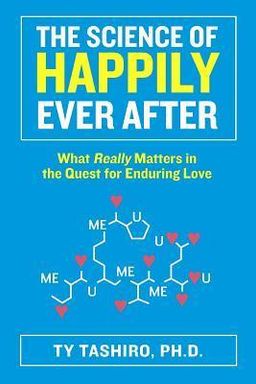
Why do so many smart, well-intentioned people—people who make rational, evidence-based choices in their careers, finances, and health—fail to apply the same logic when choosing someone to love? This question drives Ty Tashiro’s The Science of Happily Ever After, a thoughtful and surprising exploration of how modern relationship science can help you make better choices in love. Tashiro, a psychologist trained at the University of Minnesota, argues that finding lasting love isn't a matter of fate or magic—it’s about making smarter, more informed decisions. He contends that we can dramatically improve our odds of lifelong happiness by using scientific insights into psychology, evolution, and statistics to select the right kind of partner in the first place.
Where fairytales promise that love will conquer all, Tashiro reveals the sobering truth: two-thirds of marriages end in divorce, permanent separation, or lasting unhappiness. Yet instead of despair, he offers a grounded optimism rooted in data. The problem, he argues, isn’t that love is impossible—it’s that most of us are wishing for the wrong things. This book is about understanding what really matters in enduring love and learning how to direct your limited romantic “wishes” toward traits that actually predict long-term satisfaction.
Why Love Is So Hard to Find
Tashiro begins with personal stories from his days as a psychology intern, observing how bright students like Grant—a socially anxious engineering prodigy—struggled to navigate romance. Such cases highlight a universal dilemma: intelligence doesn't automatically translate to relationship wisdom. Science, however, reveals that patterns of failure in love are not random. Using research that tracks couples across decades, Tashiro shows how feelings of intense infatuation (driven by hormones like dopamine and cortisol) inevitably fade, but emotional stability and kindness keep relationships alive. The lesson is clear: the early sparks of lust cannot sustain lifelong connection. The couples who thrive, he writes, are those who invest in traits like fairness, loyalty, and kindness—three pillars of what he calls “liking.”
The Folly of Fairy Tales
Tashiro’s humor surfaces in his comparison of our cultural messaging about love—Disney princess fantasies for children and melodramatic tragedies like Twilight for teens—to lessons that teach us all the wrong priorities. From a young age, he argues, we internalize a simplified narrative that passion equals permanence and that fate will deliver “the one.” As adults, this conditioning pushes us toward attractive or exciting partners rather than compatible ones. Even the survey data confirm this: Americans rank “being in love” as the most important prerequisite for marriage, while half of participants in countries like India or Pakistan would marry without love if the match was otherwise ideal. For Westerners, love has become the test—and the trap.
The Science of Three Wishes
The heart of the book lies in a deceptively simple model: you only get three wishes for traits in an ideal partner. This limitation isn’t moral preaching—it’s mathematical. Every trait you insist on (say, tall, educated, and funny) drastically narrows the pool of potential partners. Using probability theory, Tashiro demonstrates how even modest preferences can eliminate nearly all eligible matches. For example, when his high school friend Anna wished for a man who was “hot, athletic, and Catholic,” her 500-person dating pool shrank to just over one viable candidate. The more traits you add, the fewer people qualify. The trick, then, is not to keep wishing—but to choose wisely which three traits truly increase your chances of enduring love.
The rest of the book revolves around what those three wishes should be. Physical beauty and wealth, he explains, do little to predict lasting satisfaction. Instead, traits rooted in personality, secure attachment, and relational skill make all the difference. Decades of longitudinal data show that personality (especially low neuroticism and high agreeableness), emotional security (a legacy of childhood attachment), and constructive communication behaviors can foretell whether couples will stay together and stay content. These are the raw materials from which “happily ever after” is built—not fairy dust or fate.
Why This Science Matters
Tashiro presents love not as an emotion to surrender to but as a project to approach with curiosity and care. Understanding the psychology of attachment explains why some partners cling or withdraw, why others explode with passion only to fizzle, and how personality molds daily interactions. For anyone tired of repeating painful patterns, his message is liberating: love can be mastered through mindful choice. Drawing insight from fields like evolutionary psychology (David Buss), behavioral economics (Daniel Kahneman), and positive psychology (Martin Seligman), he situates romantic love within the same realm of study and mastery as any other life skill.
In the end, The Science of Happily Ever After isn’t about downgrading romance—it’s about upgrading realism. The fairy tale can come true, but only if you wish for the right things, approach love as both heart and head, and, as Tashiro suggests, have the courage to act when the right person appears.