
Idea 1
The Science of Getting Rich: Wealth as a Creative Power
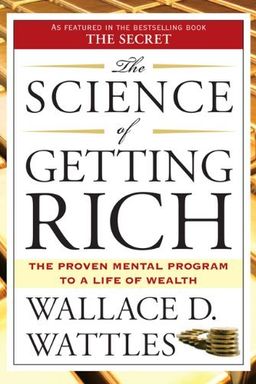
What if getting rich wasn’t just luck, hard work, or privilege—but a science that anyone could master? In The Science of Getting Rich, Wallace D. Wattles proposes that accumulating wealth is not a mysterious privilege reserved for the few—it’s a definite, repeatable process governed by universal laws. Like mathematics or physics, this 'science' depends on understanding and aligning with immutable principles of thought, action, and creation. Behind it all, Wattles argues, lies one ultimate truth: there exists a thinking substance—a formless universal intelligence—that responds to human thought. When you learn to think and act in alignment with it, riches flow naturally.
The Core Argument: Thinking Substance Creates Reality
Wattles begins with a radical but simple claim: everything in the universe originates from an infinite, intelligent, formless substance. This substance—call it God, Spirit, or Energy—takes shape according to thought. When you think about a desired form with faith and purpose, you transmit that idea to this substance, and it begins taking shape in the physical world through natural channels of commerce, trade, and human interaction. In other words, thought is the starting point of creation. You don’t receive wealth by competing with others, hoarding money, or exploiting people—you receive it by thinking in a Certain Way.
To Wattles, this Certain Way means combining mental focus, unwavering faith, gratitude, and efficient action. In his words, success comes from “doing things in a Certain Way.” It’s not about luck or chance, but about scientific alignment with natural law. Doubt, fear, and competitive striving, on the other hand, block your creative channels and keep you bound to scarcity.
Why Being Rich Matters—Spiritually and Practically
Despite its title, Wattles’ work isn’t just about money—it’s about life in its fullest sense. He argues that getting rich is a moral duty, because true wealth allows you to express life completely through body, mind, and soul. Poverty limits the capacity to develop one’s potential. To live as a complete human being, you must have the means to nourish your body, cultivate your intellect, and beautify your soul. Hence, the right to be rich is a natural right—an expression of the universe’s inherent drive toward increase and growth.
Wattles is emphatic that there’s nothing spiritual about glorifying poverty. To live fully is to grow, and to grow you must have access to the tools, materials, and opportunities that wealth provides. His book challenges the moral stigma surrounding money by reframing it as a spiritual instrument—the manifestation of divine abundance, not greed.
The Laws of the Science: Faith, Gratitude, and Action
The Science of Getting Rich rests on a pattern of mental and physical practices that build a creative relationship with the universe. The first law is faith—holding an unwavering belief that the formless substance is responsive and abundant. The second is gratitude—the emotional glue that aligns your heart with creative intelligence. Gratitude prevents you from falling into thoughts of lack, resentment, or competition. Finally, there is efficient action—the daily work of doing everything you can, now, with excellence and purpose. These three—faith, gratitude, and efficient action—form the trinity of creative living.
According to Wattles, people often fail because they separate faith from action or action from purpose. Modern metaphysicians might recognize his thinking as a precursor to the 'Law of Attraction,' though Wattles insists that it’s not wishful thinking but disciplined practice. You must hold your mental image continuously, act as if it’s already real, and perform every task efficiently—no matter how small or menial. This steady combination of mental creation and physical execution generates results with “mathematical certainty.”
From Competition to Creation
Wattles identifies competition as the chief obstacle to progress. Competing for limited resources assumes scarcity; creating expands abundance. The competitive mind says, “If they win, I lose.” The creative mind says, “There’s enough for everyone.” When you think and act from the creative plane, your success uplifts others; when you operate from competition, it breeds fear and loss. The Science of Getting Rich, therefore, is about shifting your consciousness from struggle to creation—from being reactive to being generative. (Note: this anticipates ideas popularized later by thinkers like Napoleon Hill and contemporary abundance teachers such as Joe Dispenza.)
Why These Ideas Matter Today
More than a century after its 1910 publication, Wattles’s message resonates because it bridges material and spiritual life. In an age obsessed with productivity, his simple declaration—that every human has the right to be rich and that wealth grows through creativity, not competition—offers a liberating philosophy. By reframing wealth as the expansion of life rather than accumulation, Wattles gives a moral and spiritual framework for abundance that still influences modern self-development, from Think and Grow Rich to The Secret.
“Whatever may be said in praise of poverty, the fact remains that it is not possible to live a really complete or successful life unless one is rich.”
Ultimately, Wattles’ book is not a promise of overnight affluence—it’s a disciplined philosophy of growth. When you think in a certain way, act in a certain way, and relate gratefully to the universe, you engage in the creative process of life itself. Riches then become not just a personal achievement but an act of alignment with the limitless intelligence of creation.