
Idea 1
The Longevity Revolution and Your Future
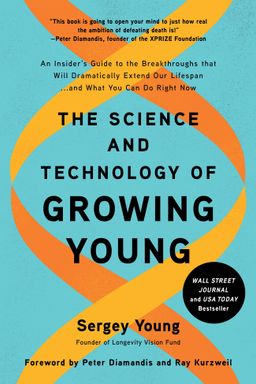
What if you could wake up on your two-hundredth birthday feeling as healthy as you did at twenty-five? In The Science and Future of Longevity, Sergey Young argues that this isn't fantasy—it’s a logical outcome of exponential technological progress. His central claim is that you can live long enough to benefit from the coming breakthroughs if you stay healthy and informed today. The book blends visionary foresight with pragmatic advice, organized across two horizons: what you can do in the next twenty years (the Near Horizon) and what future decades may bring (the Far Horizon).
Longevity Escape Velocity and the Two Horizons
At the core of Young’s vision is the notion of longevity escape velocity—the idea that if science can add more than one year of healthy life for every calendar year that passes, you can effectively outrun aging. Futurists like Ray Kurzweil and Aubrey de Grey argue this moment could arrive within decades. To keep the goal actionable, Young divides the path ahead into the Near Horizon (5–20 years) and Far Horizon (beyond 2050). The Near Horizon includes diagnostics, gene therapy, regenerative medicine, and AI-assisted healthcare—all technologies developing right now. The Far Horizon ventures into brain uploading, nanorobots, and full biological age reversal.
Three Dimensions of Longevity
Young distinguishes three complementary tracks of progress: prevention of premature death, life extension, and age reversal. Prevention is about avoiding avoidable death—safe driving, better diagnostics, and lifestyle habits. Life extension expands maximum lifespan, and age reversal aims to roll back biological age itself. Each track operates on different timescales but works in synergy. For you, the practical takeaway is to live long enough—and safely enough—to benefit from the next wave of breakthroughs.
Why the Future Depends on Integration
The Longevity Revolution is not a single invention. It’s a convergence of genetic engineering, regenerative biology, AI, and hardware that together multiply each other’s effects. Sequencing finds disease risk; CRISPR fixes faulty genes; AI discovers drugs in weeks instead of decades; implantable devices track you in real time. The combined ecosystem moves us from reactive to predictive health—treating aging at its source rather than its symptoms. (Note: this mirrors the 'exponential medicine' framework popularized by Peter Diamandis.)
Understanding Aging as a System
To navigate longevity, you must understand what aging actually is: a complex interplay of biological degradations called the hallmarks of aging—including genomic instability, mitochondrial failure, and stem cell depletion. Scientists like Carlos López-Otín reframed aging not as one process but ten hallmarks that can be measured, targeted, and potentially reversed. This systems perspective explains why there is no single 'cure' for aging but many interlocking interventions.
From Measurement to Motivation
New tools let you measure progress in real time. Epigenetic clocks developed by Steve Horvath provide a measurable biological age that differs from your chronological age. AI-driven models use multiple data sources—blood, microbiome, retinal scans—to give personal aging metrics. When you can see measurable changes, even small interventions become motivating. Psychologically, people who feel younger perform younger: subjective age translates into physiological outcomes, showing that mindset literally alters biology.
The Ethical and Social Imperative
Sergey Young insists that living longer must be matched by living better, collectively. Without ethical governance, longevity could magnify inequality or entrench power. The challenge is to democratize access before enhancements separate the wealthy from everyone else. The book urges policies that align innovation with fairness, and individuals to act as conscious stakeholders in shaping this shared future.
The essential mindset
To thrive in the age of longevity, think of yourself as a bridge: your job is to reach the next breakthrough while staying healthy and informed. Each incremental change in habits, diagnostics, and technologies compounds your odds of reaching a radically extended, healthy life.
Taken together, Young’s message blends optimism with discipline: technology will likely enable multi-century lives, but only for those who keep themselves alive and adaptable long enough to meet it. Future medicine may redefine human boundaries, yet longevity begins now—with how you eat, move, sleep, and measure yourself today.