
Idea 1
The Path to Greatness: Living a Vision-Driven Life
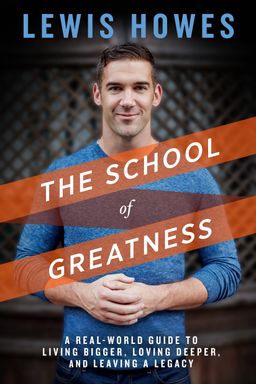
Have you ever felt a tug inside — an awareness that you’re capable of something extraordinary, but unsure how to bring it to life? In The School of Greatness, Lewis Howes contends that every human being possesses the potential for greatness. But greatness, he argues, is not some rare genetic gift or spontaneous achievement. Rather, it's a lifestyle — one forged through consistent learning, self-awareness, discipline, and service.
Drawing from his own journey — from broken athlete to millionaire entrepreneur and best-selling author — as well as from interviews with Olympic athletes, entrepreneurs, and thought leaders, Howes presents a practical roadmap. He invites you to enroll in his metaphorical “School of Greatness,” a lifelong education built on eight principles: creating a vision, turning adversity into advantage, cultivating a champion’s mindset, developing hustle, mastering your body, practicing positive habits, building a winning team, and living a life of service.
Greatness Begins Within
At the heart of Howes’s philosophy is the belief that greatness resides inherently within you. Most people search for success outside themselves — in titles, money, or recognition. But true greatness, he explains, is unearthed from within through self-discovery. Early in his life, Howes thought greatness was defined by athletic milestones: becoming an All-American, playing professional football, being extraordinary on the field. However, when injuries ended his sports career, those external markers collapsed — and so did his identity. Sleeping on his sister’s couch, broke and lost, he realized he had pursued goals, not purpose. This painful revelation led him to redefine greatness as something deeper: striving every day to move mountains and serve others by using one’s gifts.
The “Professors” of Greatness
Howes frames his book around lessons from mentors — his “professors.” Olympic gold medalists, bestselling authors, CEOs, and spiritual leaders like Shawn Johnson, Angel Martinez, and Tim Ferriss each contribute a teaching. They're not defined merely by fame but by their relentless pursuit of mastery and contribution. Like Plato’s Academy, this “school” isn’t about grades or diplomas. It’s about transformation. Howes himself became the messenger: “I’m just lucky enough to share their lecture notes,” he writes, echoing how students preserved the teachings of classical masters such as Aristotle and Epictetus.
Why the Eight Lessons Matter
Each chapter corresponds to one lesson, forming a complete system for personal excellence that can be applied to any field — sports, business, parenting, or art. First comes vision: defining what you really want and who you want to be. Then adversity, the crucible that builds strength and shapes perspective. The champion’s mindset follows — emotional clarity, belief, and focus, taught through athletes like Shawn Johnson and thinkers like Steven Kotler. Next are hustle, physical mastery, and habits, which turn purpose into consistent action. Finally, greatness expands beyond self: building teams that amplify your reach and giving back through service to create enduring impact.
These principles form a cycle. You begin by dreaming, then act, face obstacles, refine your mindset, maintain your health and habits, collaborate, and ultimately pay it forward. Each reinforces the other. Hustle without vision becomes burnout. Vision without habits stays fantasy. Mastery without service becomes emptiness.
Greatness Is a Lifestyle, Not a Destination
Howes insists that greatness isn’t achieved once; it’s lived daily. Like choosing to eat well rather than dieting temporarily, you adopt greatness as a lifelong practice. It’s about showing up consistently — even when you’re tired, afraid, or in pain. He recounts his own adversities: injuries, bankruptcy, rejection, and emotional trauma. Each one, he says, became an advantage when reframed through purpose. The essence of greatness is learning to turn setbacks into fuel.
“Greatness is not what you attain at the podium,” gymnast Shawn Johnson tells him. “It’s about being proud of yourself, knowing you’ve done all you could.”
That humility and pride coexist in Howes’s worldview. Greatness excites love, interest, and admiration, as the poet Matthew Arnold said, but its proof lies in inspiring others to feel those same emotions — a ripple from personal growth outward. So, you’re not meant to simply chase fame or success. You’re meant to embody a spirit that uplifts others.
Why This Message Matters Now
We live in an era overflowing with information but starving for wisdom. Howes’s argument resonates because he offers not more data, but a framework — practical disciplines that convert knowledge into fulfillment. His insights echo timeless sources: Aristotle’s Ethics, Marcus Aurelius’s Meditations, and the Stoic idea that “the impediment to action advances action.” Yet his message is distinctly modern. Using stories of social media entrepreneurs, Olympians, and everyday heroes, he shows how greatness today means aligning our internal purpose with external action.
Ultimately, The School of Greatness calls you to see yourself as both student and teacher. The world needs your talent, resilience, and kindness — not someday, but daily. Whether you're starting from defeat or success, you can live a life of vision, service, and greatness. That’s the education Lewis Howes offers: the art of becoming fully alive, grounded, and ready to move mountains.