
Idea 1
The Logic of Contagion
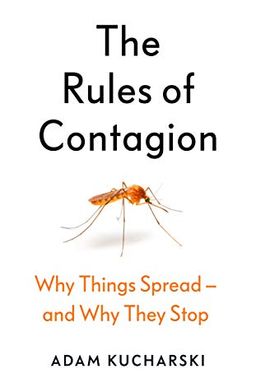
Why do things—diseases, ideas, rumors, even financial panics—spread? This book argues that contagion, in all its forms, obeys shared laws. Whether you are tracking malaria in Sierra Leone, tweets in cyberspace, or panic in financial markets, the spread depends on mechanisms connecting individuals and the context that amplifies or dampens those links. Understanding contagion means dissecting how an event travels from one entity to another, not just plotting the curve of infections or shares after the fact.
Ronald Ross, a pioneer of malaria research, showed the power of asking 'how does it move?' rather than 'how many have it?'. His mosquito theorem converted disease into arithmetic—bites, lifespans, and chances of infection—and transformed public health into a quantitative science. That same shift underlies modern epidemic theory, innovation diffusion, network modeling, and risk management: to grasp why any contagion grows or stops, you build a model of its mechanics.
From Mosquitoes to Mathematical Models
Ross’s insight seeded the SIR model, developed by William Kermack and Anderson McKendrick. Their framework—Susceptible, Infectious, Recovered—captured how populations move through stages of exposure and immunity. It explained why epidemics rise and fall naturally: once most people have recovered, the susceptible pool shrinks and transmission slows. This mathematical turning point became the basis of 'herd immunity'. The same reasoning applies far beyond biology, describing the wave-like spreads of ideas, technologies, or behaviors.
Later thinkers like Roy Anderson and Robert May simplified these dynamics into the reproduction number R, the average number of new infections (or adoptions) caused by one case. Their decomposition—Duration, Opportunities, Transmission probability, and Susceptibility (DOTS)—ties biological epidemics to anything that propagates through contact. Whether you are spreading a meme, a rumor, or a financial shock, changing any of these four parameters alters the pace and scale of contagion.
From Epidemics to Diffusion
The same laws explain why ideas or technologies often follow S-shaped adoption curves. Everett Rogers categorized social innovators and imitators; Frank Bass formalized the algebra. Early adopters spark imitation until saturation slows growth. Ross himself derived a threshold—growth peaks when around 21% have adopted—offering a concrete benchmark for 'take-off'. Luís Bettencourt and David Kaiser applied these ideas to science itself, tracing how Feynman diagrams spread through physics journals like a viral meme, revealing reproduction numbers far higher than most biological diseases.
Contagion Beyond Biology
Ross’s broader “Theory of Happenings” proposed that some events are independent—occurring regardless of other instances—while others are dependent, feeding on interaction. Financial contagion, social polarization, and online virality belong to that dependent category. Robert May and Andy Haldane showed financial networks behave like epidemics: high interconnectedness prevents small failures but makes rare, large collapses inevitable. Similarly, Gary Slutkin reframed urban violence as a transmissible process, replicating epidemic interventions through 'violence interrupters' modeled on public-health fieldwork.
Networks, Superspreaders, and Fragility
Modern contagions—biological or digital—live on networks. Some nodes act as hubs, enabling superspreading. In epidemics, 20% of people may cause 80% of infections; in banking, a handful of institutions process most payments; in social media, a few accounts drive virality or manipulation. Heterogeneity means averages mislead: random chance drives both failure and explosion. Recognizing this stochastic landscape helps you design better controls—targeting high-risk nodes or insulating critical hubs.
From Data to Ethics
Measuring contagion demands data—but measurement itself brings risks. From Framingham’s social networks to BBC’s citizen science projects, careful design and consent determine trust. Latanya Sweeney’s re-identification of “anonymized” medical records and the Cambridge Analytica scandal illustrate how data without transparency can erode public confidence. Ethical safeguards turn data into insight rather than exploitation.
A Toolkit for Modern Outbreaks—Physical or Digital
Across chapters you see practical equivalents of Ross’s arithmetic applied everywhere: online virality measured by low R-values; misinformation battling journalistic amplification loops; malware spreading through insecure devices; violence interruptors acting as ring vaccination. The book closes with lessons for responsible data use and humility in prediction. Big data can illuminate social health—but only if handled with transparency, consent, and an appreciation for complexity. Contagion is universal, but wise control depends on mechanistic understanding, not metaphor alone.
Key insight
Everything contagious—viral, financial, social—obeys underlying mechanics of contact, persistence, and saturation. When you learn to map those mechanics, you gain predictive power, ethical clarity, and tools for intervention.