
Idea 1
Personal Thrones: The Nature of Romanov Autocracy
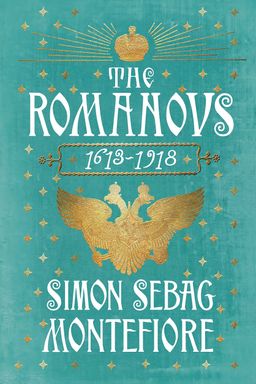
To understand Russia’s Romanov dynasty, you must see that government was never just an institution—it was a performance of personal power. In The Romanovs, Simon Sebag Montefiore argues that autocracy in Russia was fundamentally personal: every decision, reform, war, or scandal ultimately traced back to the character of a single ruler and their intimate entourage. The book follows three centuries of Romanovs from the chaos of the Time of Troubles to the cataclysm of 1917, showing how private lives and public policy were inseparable.
Montefiore’s central thesis is that tsarist autocracy was a system of personal rule masquerading as divine order. The tsar was not a detached bureaucrat but a mortal king on a sacred stage. Ritual, bloodline, and charisma functioned as political machinery. The tsar’s household—wives, favourites, priests, guards—was the real cabinet. Every policy gesture was filtered through this theatre of intimacy and fear.
The Personal State
From Michael I’s hesitant beginnings to Nicholas II’s tragic finale, power in Russia flowed through personal connections, not institutions. The system depended on loyalty, fear, and ritual obedience. Where Western Europe developed bureaucracies and constitutions, Russia relied on personal charisma and sacred legitimacy. The ruler’s moods carried the force of law, and their circle—secretaries, lovers, prophets—became the state apparatus.
Montefiore emphasises the Leninist question kto kogo? (“who controls whom?”). Each court relationship embodied a duel between dependence and betrayal: tsar versus favourite, clergy versus crown, army versus ruler. This tension defines Russia’s political pattern—every relationship a contest for control beneath a façade of divine unity.
Dynasty Born from Chaos
The dynasty emerged from the trauma of the Time of Troubles, when impostors, Poles, and famine nearly destroyed the Russian state. The Assembly’s election of the pliant teenager Michael Romanov in 1613 was a desperate act of repair. This founding compromise—between a weak monarch and powerful boyars—set the pattern for the next 300 years: balance survival against control. The Romanovs learned that to rule Russia you must appear sacred but stay ruthless, depend on nobles yet intimidate them, and delegate power carefully to family and favourites.
Power, Faith, and Fear
Each subsequent tsar improvised within this pattern. The Church acted as both ally and rival. Reforms—from Patriarch Nikon’s liturgical changes to Peter the Great’s bureaucratic overhaul—triggered fierce schisms because they touched sacred identity. The autocracy’s genius lay in instrumentalizing faith, using ritual to justify coercion while suppressing dissent. When Peter westernized Russia, he retained the medieval logic of rule-by-fear: modernization enforced by the knout, reform by decree, and spectacle as discipline.
This formula explains the cycle of fragments—reform, repression, rebellion—that repeats through the centuries. Catherine the Great’s coup, Paul’s assassination, Alexander II’s reforms, and Nicholas II’s downfall all follow the same axis: a single ruler attempting to manage modernization through personal networks until those networks implode.
Themes that Bind the Narrative
- Power is personal and precarious—six of twelve eighteenth-century sovereigns die by violence.
- Reform springs from crisis, not conviction: emancipation follows defeat, enlightenment follows humiliation.
- Favoritism is structural, not incidental: courtiers from Menshikov to Potemkin to Rasputin act as extensions of the monarch’s will.
- Public ritual conceals private weakness: coronations, brideshows, and triumphal parades are stages for legitimacy.
Why It Matters
By the book’s end, you grasp that the Romanov system was self-consuming. Its strengths—sacral monarchy, command over life and death, unity of ruler and God—became its weakness in a modern age of parties, nationalism, and war. Montefiore’s narrative traces this from the frozen ceremonies of Muscovy to the gunfire of Ekaterinburg. Each generation reenacted the same tragic rhythm: charisma transforms into cruelty, reform into repression, loyalty into assassination. What began as sacred personal rule ends as a cautionary epic on the costs of political absolutism.