
Idea 1
The Age of Intelligent Automation
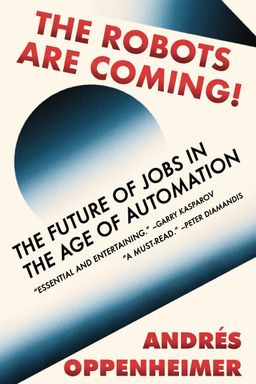
You are living through the most comprehensive transformation of work since the Industrial Revolution. In this book’s narrative, automation driven by artificial intelligence, robotics, and data platforms reshapes every profession—from factory lines to hospitals, from schools to law firms. About half the world’s jobs, according to the Oxford study by Carl Benedikt Frey and Michael A. Osborne, are susceptible to automation within two decades. Yet the author doesn’t present a tale of doom—it is a story of adaptation and redesign.
From Mechanization to Intelligence
The book traces automation’s evolution from mechanical tools that replaced muscle power to algorithmic systems that replace cognitive repetition. What determines automation risk? If your job can be explained by predictable steps and examples, an algorithm can learn it. Telemarketers, underwriters, and cashiers top the risk charts because their tasks are routine and data-rich. Meanwhile, professions requiring empathy, creativity, and complex judgment—teachers, nurses, negotiators—show resilience but not immunity.
The Expanding Battlefield
Across chapters, you witness sector-specific revolutions. Service jobs evolve into hybrid experiences with robots and sensors—hotels like Henn na in Tokyo, or Amazon Go stores without cashiers. Journalism deploys automated reporters like Heliograf while grappling with ethical risks of personalized news bubbles. Finance converts branches into apps and algorithms; law and accounting transform documentation into instant AI services. Medicine becomes data-centric and predictive, replacing symptom diagnosis with sensor-driven prevention.
Education adapts through virtual reality classrooms and robotic tutors. Factories morph into near-unmanned environments where technicians supervise hundreds of machines. Transportation turns autonomous, from driverless cars to drone taxis, forcing cities and policymakers to reconsider safety, employment, and infrastructure. Even entertainment industries reinvent themselves around streaming, CGI, and data-driven creativity, showing that automation doesn’t kill imagination—it scales it.
Society Under Pressure
Technology’s march invigorates economies but dislocates lives. Scholars like Martin Ford and Yuval Noah Harari warn of an emerging “useless class” displaced by code. Others—Peter Diamandis and José Luis Cordeiro—argue for abundance: automation can cut costs so low that basic goods become virtually free. The tension between optimism and caution defines this book’s heartbeat. The author presents Universal Basic Income (UBI), retraining subsidies, and lifelong education as possible remedies.
The book emphasizes education as the core insurance policy—lifelong, interdisciplinary, and creativity-centered. Societies that invest in reskilling and inclusive innovation will prosper; those that ignore transition risk political unrest, populism, and inequality. Automation isn’t fate—it’s a design choice shaped by policy, ethics, and courage.
The Human Edge
Ultimately you learn that the future isn’t about machines replacing humans but humans learning to work with machines. Algorithms will take predictable tasks; people will take responsibility for meaning, empathy, and creativity. Doctors will interpret algorithmic diagnoses, journalists will provide context beyond data, and teachers will cultivate curiosity robots cannot emulate. The book serves as both a warning and a roadmap—adapt now, learn continuously, and treat technology as augmentation, not competition.
Key insight
The central message: automation will transform tasks, not people. Your resilience depends on combining technical literacy with uniquely human intelligence—curiosity, empathy, and ethical judgment.