
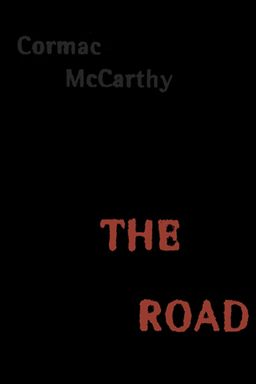
The Road cover

The Road

by Cormac McCarthy

The Road is a gripping dystopian thriller that follows a father and son as they navigate a post-apocalyptic world. Faced with constant danger, they struggle to maintain their humanity and hope, forming a profound bond that serves as a beacon in a bleak landscape. Their journey is a powerful exploration of love and survival.

Life and Death on the Edge of Faith and Despair

Have you ever found yourself talking someone back from the edge—or perhaps inching toward it yourself? In The Sunset Limited by Cormac McCarthy, that edge is literal. The book begins just after a suicide attempt on a New York subway platform, where a man called White—a weary, nihilistic professor—has tried to throw himself in front of a train. He’s stopped only because another man, Black, an ex-convict and devout Christian, happens to be there. Over the span of a single conversation in a small, grimy apartment, McCarthy unfolds a two-person philosophical duel about belief, meaning, and whether life itself is worth living. It is, at its heart, a meditation on the collision between skepticism and faith, intellect and spirit, reason and redemption.

McCarthy contends that every human life walks somewhere between Black’s conviction that God animates all existence and White’s desolate belief that the world is nothing but an empty, meaningless machine. The author strips everything away—no descriptive scenery beyond the dingy room, no background noise, even no stage directions beyond a few gestures—so we’re forced to confront the raw philosophical substance. We are left with two voices locked in battle, representing the struggle that echoes through civilization: the yearning for belief and the terror of futility.

Faith versus Nihilism

Black believes he was sent by Jesus to save White’s life and his soul. White, however, believes that existence itself is the cruelest kind of cosmic joke. Their dialogue becomes a seesaw of perspectives on the fundamental human questions: Why do we live? What do we owe one another? Is there any such thing as redemption? Black’s faith is pragmatic, born from surviving violence, poverty, and prison. White’s despair is lofty, philosophical—he sees Western culture itself as a corpse, burned out long ago by its hypocrisies and horrors, from Dachau to the cold impersonal modern world.

McCarthy uses their differing dialects—the rich vernacular wisdom of Black versus the clinical precision of White—to dramatize two forms of knowing. Black’s speech feels communal, soulful, and lived. White’s feels detached, cerebral, and dying. The book asks: which kind of knowledge can sustain you? Or is understanding itself the thing that destroys us?

The Setting as Metaphor

Nearly the entire story takes place in a dirty tenement, a space filled with heavy locks and iron bars—symbolic, perhaps, of the human need to both protect and confine ourselves. The single room becomes an allegory for the world itself: cramped, broken, but still inhabited by souls attempting conversation. McCarthy’s stage directions reduce the space to essentials—a Bible, a newspaper, a table, two chairs. These objects become battlegrounds for belief, instruments of persuasion and proof that humanity’s search for meaning requires something physical, visible, tangible.

Why It Matters

You can read The Sunset Limited as a parable about us all—chained by the bars of our convictions, debating endlessly whether anything matters. Black’s persistence and White’s despair mirror modern life’s collision between moral endurance and intellectual exhaustion. McCarthy raises a haunting question: what happens when reason kills love? And what if love, as Black embodies it, is not rational at all but divine?

Throughout this summary, you’ll explore how McCarthy builds this timeless debate. You’ll delve into themes of brotherhood, suffering, intellect, culture, and the possibility—or impossibility—of salvation. You’ll see how each man’s worldview speaks to different eras of civilization, and how their conversation becomes a mirror for yours, drawing you to ask: which side of this table am I sitting on?


The Two Voices of Humanity

McCarthy’s dramatic form sets up two archetypal figures—Black, the believer, and White, the doubter—as embodiments of the opposing halves of our species. One looks up; the other down. Through their dialogue, we witness what happens when conviction meets corrosion, when grace debates despair. It’s not just two characters speaking—it’s life arguing with death, faith wrestling with futility.

Black’s Faith Born in Suffering

Black’s worldview arises from pain and rescue. He found Christ in prison after nearly dying from a stabbing, hearing a voice that he attributes to divine mercy. For him, faith isn’t metaphorical—it’s survival. He insists that he “knows” Jesus is in the room, not because he sees him, but because he feels him through lived suffering. His speech merges humor, empathy, and biblical conviction, often teasing White with gentle irony but never abandoning kindness. In Black’s eyes, every person—even a bitter professor who tried to die—is his brother. (Compare Black’s posture to Dostoevsky’s Sonya in Crime and Punishment, who offers redemption through compassion rather than rational argument.)

White’s Despair Masked as Logic

White, on the other hand, has orchestrated his existence around intellect and culture. He claims that art, literature, and civilization were once the bulwark against chaos, but those bulwarks have burned. The Holocaust, he says, proved that Western ideals of goodness were illusions. He is methodical even in his madness—he chose suicide precisely because it would be painless, calculating speed, neurons, impact. His problem isn’t ignorance but too much self-consciousness. For him, awareness of futility leads inevitably to annihilation. His birthday, the day of his attempted suicide, symbolizes the cruel irony of consciousness—life given that one does not want.

Dialogue as Duality

McCarthy constructs dialogue not to persuade but to illuminate how incompatible but inseparable these voices are. Every exchange between White and Black mirrors humanity’s ongoing inner debate. You hear echoes of theological argument—the Book of Job, the parables of Luke, the existentialism of Camus (The Myth of Sisyphus contends life’s absurdity must be confronted, yet endured). McCarthy, however, refuses to reconcile. The conversation ends with White walking out into the hallway, toward likely suicide, while Black kneels, praying for understanding he’s denied. Their voices do not synthesize; they coexist, eternally unresolved.


Brotherhood and Responsibility

One of McCarthy’s most piercing themes is responsibility—specifically, whether we are, as the Old Testament asks, our brother’s keeper. Black embodies that divine responsibility. He witnessed White’s leap and decided, without hesitation, that saving him was his duty. White resists the idea entirely: why should one stranger’s suffering make another responsible? This conflict becomes McCarthy’s investigation into moral obligation in a morally fractured world.

Black’s Ministry of One

Black ministers to the poor and addicted in a New York ghetto, holding private sermons and offering shelter to junkies. He knows he doesn’t change many lives, but he believes serving even one soul fulfills God’s will. His “ministry” inside the prison and out is proof of love’s perseverance. When White calls the neighborhood a “moral leper colony,” Black laughs—it’s precisely there that he finds holiness. McCarthy uses this irony to highlight how moral clarity sometimes appears most vividly in the darkest places.

White’s Rejection of Human Connection

White’s worldview inverses that faith. He regards relationships as traps, empathy as illusion. When asked about his father dying of cancer, he admits he refused to visit him. For White, connection equals contamination. He believes the civilized world hides its cruelty behind sentiment. McCarthy’s genius is to counterpose this coldness against Black’s insistence on brotherhood. Where Black prays, White calculates. Where Black kneels, White exits. The tension raises the question for you: can any human truly live free of responsibility for others, or does meaning itself depend on connection?

The Moral Reckoning

At the end, Black’s desperate plea reflects Job-like confusion: “If you wanted me to help him, how come you didn’t give me the words?” McCarthy leaves us with no answer, only the ache of faith bereft of outcome. Black did everything right; he saved the man’s body but not his soul. Through this tragic loop, McCarthy asks whether duty ends at rescue or if salvation must also be willed. It’s a haunting reminder that human goodness often meets silence in return.


Culture, Intellect, and the Death of Meaning

White’s tirade against Western civilization forms the intellectual core of the play. He claims that art, music, and philosophy—the supposed guardians of human meaning—have collapsed. His declaration that culture “went up in smoke at Dachau” crystallizes McCarthy’s fear that intellect, when detached from faith, ends not in enlightenment but destruction.

The Frailty of Civilization

Throughout his dialogue, White traces his disillusionment through art. Once, books and music offered solace. Now they serve as tombstones. He admits reading thousands of volumes yet never the Bible; for him, literature without spirit leaves only sterile awareness. McCarthy turns this admission into critique: scholarship without moral gravity leads to nihilism. (Nietzsche warned similarly in Thus Spoke Zarathustra that unanchored intellect eventually devours itself.)

Black’s Counterargument: Divine Knowledge

Black challenges that death of meaning by asserting a different form of knowledge—the “lingering scent of divinity.” He insists he’s tried the other way: the chase for pleasure, for dominance, for logic. It led only to “death in life.” He replaces knowledge with wisdom, intellect with revelation. His world runs on grace rather than cognition. For him, the Bible isn’t literature; it’s sustenance.

The Primacy Debate

When White proclaims his belief in “the primacy of the intellect,” Black answers with the “primacy of survival.” Knowledge becomes meaningless if it extinguishes the will to live. McCarthy implies that Western reason failed precisely because it elevated intellect above empathy, art above mercy. This reversal resembles themes in his later novel The Road, where stripped-down love between father and son replaces all culture as humanity’s last inheritance.


The Sunset Limited as Symbol

The play’s title—The Sunset Limited—is itself a powerful metaphor that threads through every scene. The phrase refers to the name of an actual train but functions in McCarthy’s world as shorthand for death, escape, and perhaps spiritual transit. When White says he believes in “the Sunset Limited,” he reveals both irony and faith in annihilation.

Train as Death

The train underground, roaring past at seventy miles per hour, becomes the embodiment of fate—relentless, impersonal, final. White’s attempted suicide by train doesn’t merely signify self-destruction—it marks surrender to a mechanized universe. The Sunset Limited is civilization’s machine god: the culmination of human engineering that, ironically, delivers extinction. McCarthy’s choice of a train ties mankind’s progress directly to its erosion. It’s the engine of reason that pulverizes the soul.

Train as Transit Between Worlds

For Black, though, the train isn’t only death—it’s transit. He sees the world as a waiting platform, the soul as traveler. Every man waiting must choose which train to take: the Limited bound for oblivion, or the “regular commuter,” the ongoing, imperfect life of faith and pain. Black’s refrain that the “train schedule” is God’s domain forms McCarthy’s moral schema: salvation requires patience; damnation, haste. (The metaphor recalls T.S. Eliot’s image of the journey through time as an act of spiritual waiting.)

The Edge of the Platform

White stands on the platform’s edge literally and philosophically—between faith and futility. His leap, blocked by Black’s grasp, mirrors humanity’s perpetual near-fall. McCarthy’s minimal setting locks us in that moment of pause before falling, forcing a confrontation with your own train—the choices you make daily between despair and endurance.


Language, Silence, and the Limits of Persuasion

McCarthy chooses a dramatic form stripped of narrative comfort intentionally—so language itself becomes the test. The book asks if words can rescue or if only silence remains. As both men speak in endless circles, language begins to collapse under the weight of meaning it cannot carry. McCarthy’s minimalist style reveals how talk both bridges and breaks understanding.

Dialogue as Cage

The locked-room setting makes speech feel like confinement. Every sentence loops back to the same abyss: belief versus unbelief. White’s logic rebuts everything; Black’s faith absorbs every rebuttal. Yet neither truly hears the other. You feel how debates, even profound ones, fail when the hearts behind them refuse surrender. McCarthy insists that the limits of persuasion mark the limits of salvation itself.

The Failure of Words

The climax comes not with revelation but silence—White leaves, and Black weeps, asking God why words failed him. “If you wanted me to help him, how come you didn’t give me the words?” This lament transforms dialogue into prayer, and failure into devotion. The very act of speech becomes tragedy: faith cannot explain; despair cannot listen. (Compare this ending to Samuel Beckett’s Endgame, another play where language deteriorates until meaning dissolves entirely.)

Silence as Grace

For McCarthy, silence is the only honest reply to existential terror. The book ends with quiet—a man praying to a God who won’t answer, another walking toward death. Still, the silence vibrates with life’s residual holiness. McCarthy suggests grace may begin exactly where speaking ends.

Dig Deeper

Get personalized prompts to apply these lessons to your life and deepen your understanding.

Go Deeper

Get the Full Experience

Download Insight Books for AI-powered reflections, quizzes, and more.