
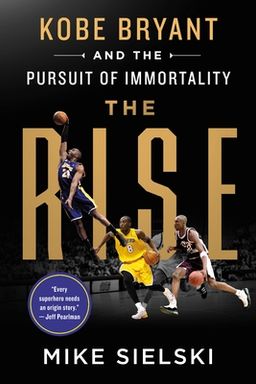
The Rise cover

The Rise

by Mike Sielski

The Rise offers an intimate exploration of Kobe Bryant''s early years, revealing how his passion and strategic mindset transformed him into a basketball legend. Discover the influences that molded his talent and media savvy, setting the stage for his iconic legacy.

Forging a Legend: Kobe Bryant’s Rise from Local Roots to Global Icon

If you want to understand Kobe Bryant’s journey, start not with his championships but with the environments that shaped him. The book builds a portrait of a player forged by geography, family, and relentless will—a child of Philadelphia grit, Italian fundamentals, and suburban contrasts who transformed local lessons into a global ethos of excellence. What emerges is a story of transcendent talent anchored in place, mentorship, and work ethic.

Roots and Character Formation

Kobe’s character begins in Philadelphia, a city whose tough athletic and social culture stamped his competitive personality. His father, Joe “Jellybean” Bryant, grew up in West Philadelphia’s courts where swagger mattered as much as skill. Those same pickup games, and the Main Line’s mixed class structure in Wynnewood and Lower Merion, taught Kobe to navigate contradictions—trash talk and privilege, exclusion and community pride. His later claim that “Philly taught me to have thick skin” serves as moral shorthand for a lifetime of self-discipline.

Italy and the Family Classroom

Relocation to Italy at age six deepened that education. Joe Bryant’s itinerant pro career introduced Kobe to the craft of fundamentals—the European emphasis on technique, spacing, and footwork became his language. Pam Bryant enforced schoolwork and family rituals, modeling discipline and structure. The result was a boy who learned showmanship from his father and responsibility from his mother while absorbing Italian culture’s balance between art and repetition. Italy also gave Kobe time: fewer games meant more practice, turning childhood curiosity into obsessive mastery.

Mentorship and Institutional Support

The educational ecosystem of Lower Merion—teachers like Jeanne Mastriano and coaches like Gregg Downer—provided the scaffolding for his ascent. Downer promoted Kobe to varsity as an eighth-grader, a decision that changed local basketball history. Mentors enforced accountability, from Dr. George Smith’s team-first discipline to Treatman’s documentation of Kobe’s games. These figures reflected a broader truth: greatness isn’t only born—it’s permitted and cultivated within supportive yet demanding institutions.

Competitive Crucibles and Psychological Development

The Sonny Hill League and ABCD Camp acted as emotional laboratories. Early failures—such as scoring zero points in twenty-five games—became catalysts for obsessive improvement. Encounters with pros at Philadelphia’s pickup gyms validated his toughness while teaching humility. Each summer camp and street tournament contributed a layer of resolve, converting setbacks into precision. You begin to see the seeds of the future “Mamba mentality”: pain transformed into disciplined repetition.

Leadership, Ego, and Team Building

The high-school championship season underscores the tension between individual brilliance and collective function. Downer’s “Cancer of Me” speech captured the risk of ego overwhelming team cohesion. Kobe’s dawn workouts and spreadsheet-tracked strength routines coexist with social friction—he leads and intimidates in equal measure. His ultimate triumph comes when leadership matures into trust, especially under playoff pressure at Hershey where he catalyzes victory not through dominance but through shared focus.

From Local Hero to National Phenomenon

Tournaments like Myrtle Beach’s Beach Ball Classic and scrimmages with NBA veterans marked his transition from local myth to national spectacle. The book shows how a single dunk contest or scrimmage story could amplify reputation faster than stats. Yet it also humanizes him through letters from fans like Jarid Gibson, revealing that charisma can coexist with empathy. Fame becomes an ecosystem—part labor, part theater, sustained by personal authenticity.

Commercial Strategy and Agency

Behind the scenes, Sonny Vaccaro, Adidas, Arn Tellem, and William Morris transform talent into brand power. The secret negotiations, limited workouts, and crafted narratives manipulate perception to ensure Kobe joins the Lakers—a team aligned with both performance and marketability. The book spotlights the convergence of sport and commerce: athletic destiny shaped as much by marketing intelligence as by physical skill.

Transition to the NBA

Kobe’s rookie campaign closes the loop on his developmental arc. When he airballs four crucial shots against Utah, he responds not with despair but midnight practice calls to Elissa Grabow, reflecting his lifelong reflex—loss triggers labor. His interactions with mentors and quiet allies reaffirm that excellence is sustained by emotional anchors as well as technical mastery.

Core Understanding

In Kobe’s world, place, mentorship, structure, and resilience intertwine. The book argues that greatness is not spontaneous—it’s engineered through deliberate exposure to constraint, criticism, and care. Kobe’s lifelong equation remains constant: disciplined practice plus psychological toughness equals mastery.

By tracing his life from Philly playgrounds to global stages, you realize that his success is less a miracle and more a system—a blueprint for turning adversity and structure into perpetual improvement.


City and Family Origins

Kobe’s formation begins in overlapping worlds—Philadelphia’s street courts and the disciplined Bryant household. Joe Bryant’s West Philly roots gave Kobe a template for flair and toughness, while Pam Bryant’s methodical parenting added structure. The city’s racial and economic contrasts taught young Kobe to move easily between public grit and suburban polish, mirroring the dual identity he would carry throughout his life.

Italy as Laboratory

When the family moved to Italy for Joe’s playing career, Kobe entered an environment emphasizing technique over athleticism. He watched, copied, and internalized fundamentals: pivot foot positioning, precise dribbling, clever spacing. His inability to palm a basketball forced him toward refined mechanics. Italy became an emotional and mechanical school that valued repetition and beauty—a counterpoint to Philly’s raw competition.

Lesson from upbringing

Family context determines how talent translates into professionalism. Kobe’s parents shaped the balance between charisma and control that became his hallmark.

Born in hospital corridors shadowed by Philly rail yards and raised among Italian cafes, Kobe’s dual upbringing made him bilingual in both cultural style and sporting philosophy—a mixture that would later appeal to global audiences.


Mentors, Coaches, and Systems of Growth

Greatness often hinges on who notices it early. Coaches and educators at Lower Merion created the framework for Kobe’s transformation. Gregg Downer’s decision to promote an eighth-grader to varsity changed institutional norms; Jeanne Mastriano’s teaching of mythic structure reframed ambition as narrative; mentors enforced accountability and provided tools to manage ego. You see that talent blooms best where disciplined adults curate its growth.

The Role of Structured Feedback

Dr. George Smith demanded three-pass basketball before shooting, teaching patience. Downer constructed a four-year plan ensuring progression from curiosity to leadership. Media figures like Jeremy Treatman documented each step, prefiguring the story that brands later leveraged. Mentorship here is procedural—regular, tough, and visionary.

Practical takeaway

Talent without system remains local; system without heart remains mechanical. The book shows how balanced mentorship transforms raw skill into reproducible excellence.

Through structured coaching and moral education, Lower Merion acted not merely as a school but as a developmental ecosystem preparing a teenager for world-stage demands.


Setbacks and Psychological Armor

Repeated defeat taught Kobe his most durable lessons. From summer league humblings to playoff disappointments, each failure became a ritual of reassessment. He learned that pain signals the work yet undone—a mindset mirrored years later when his airballs against Utah prompted midnight practice rather than withdrawal. The book details how humiliation molded resilience and consistency.

From Apology to Resolve

After the district playoff loss at Liberty High, Kobe apologizes repeatedly then declares “never again.” That psychological inflection—transforming remorse into training—recurs throughout his career. Public slights become internal commitments. The taunts (“OVERRATED,” “PROP 48”) sharpen concentration, never self-pity.

Armor of Focus

Downer’s tactical responses—tougher schedules and balanced rosters—mirror Kobe’s mental adjustments. By reframing negativity into strategy, both coach and player display adaptive intelligence. Over time, the book argues, emotional armor becomes his competitive aesthetic—a mixture of humility, swagger, and surgical focus.

Insight

Endurance is built where failure is processed methodically, not avoided emotionally.

Those lessons harden into the “tunnel mentality”: the ability to sustain intensity without self-destruction—a theme central to his evolution from prodigy to professional leader.


The Championship Season

The 1995–96 Aces season becomes both athletic and psychological experiment. Downer and Kobe navigate issues of ego, chemistry, and pressure while building a state champion. Kobe’s pre-dawn workouts and Carbone’s quantified strength regimen reveal preparation as an art of precision. Yet the heart of the story is how leadership evolves from domination to collaboration.

Turning Conflict into Cohesion

Downer’s “Cancer of Me” tirade in Myrtle Beach reshapes team culture. By labeling selfishness a moral disease, he transforms dissent into unity. Kobe learns that team success requires distributing fire, not hoarding it. That insight materializes in the final at Hershey, where despite a broken nose and low scoring total, he trusts teammates to close the game.

The Tunnel Phenomenon

Against Chester at the Palestra, Kobe enters his “tunnel”—a flow state merging concentration and presence. He filters noise, racial and class tensions, and pressure through pure performance. At Hershey, that tunnel becomes collective: he leads by composure, converting crisis into calm. The finale crystallizes his full maturation.

Lesson for leaders

True leadership merges technical mastery with psychological empathy—channeling intensity into shared victory rather than personal spotlight.

Through adversity and unity, the season secures Kobe’s legend—not only as scorer but as strategist and catalyst.


Camps, Pros, and Public Proof

Summer scrimmages and camps bridge the gap between high-school dominance and professional readiness. Encounters with seasoned NBA veterans—Vernon Maxwell, Rick Mahorn, Jerry Stackhouse—challenge Kobe physically and emotionally. These stories show initiation rites into adult basketball, where myth and reality blur.

Building Credibility

Losses turn into validation as pros start inviting Kobe back. The scene of Shawn Bradley driving him home embodies belonging: social inclusion into elite circles precedes formal status. Stackhouse’s mixed recollections remind you that legend often exceeds literal truth. But myth-building has function—it widens possibility.

Spectacle and Storycraft

The Beach Ball Classic and dunk contest amplify reputation nationally. Media portrayals and fan correspondence establish emotional resonance. These combined performances invent “Kobe Bryant” as symbol—precision plus charisma. The book situates stardom as an interplay between embodied skill and narrative control.

Key understanding

Visibility is an achievement built from repeated proof; belief in one’s story often precedes institutional belief.

Behind highlight reels stands an architecture of mythic testing: proving oneself in rooms not built for youth but seizing legitimacy by sheer will.


Business, Draft, and New Arenas

Kobe’s leap to the NBA unveils the economics of modern sports—the intersection of agent strategy, marketing, and performance. Arn Tellem restricts workouts to control narrative; Sonny Vaccaro orchestrates Adidas backing; Jerry West maneuvers for Lakers alignment. The draft becomes chess, not chance.

Strategic Concealment

By limiting visibility, Tellem amplifies intrigue. Private workouts in Los Angeles demonstrate capability discreetly. The Hornets-Lakers trade nearly collapses until human persuasion—Divac’s family influence—restores balance, revealing how personal relationships can override corporate hesitation.

Commercial Leverage

Vaccaro’s Adidas contract guarantees early financial independence, enabling the decision to skip college. This moment distills the book’s tension: pure basketball aspirations entangled with marketing foresight. Kobe’s career begins as both athlete and brand—a dual identity rooted in years of cultivated reputation.

Core takeaway

In modern sport, trajectory equals strategy—the right alliances determine opportunity as much as ability.

The NBA entry thus functions not merely as career start but as culmination of deliberate planning by a family and network attuned to both sport and culture.


Rookie Resilience

The final act showcases emotional maturity. In a season where minutes are scarce and mistakes public, Kobe reverts to his oldest habit: work. His missed shots versus Utah embody exposure under pressure. Yet his instinct—to call Elissa Grabow and practice through the night—confirms that response defines greatness, not outcome.

Support Networks

Grabow’s ordinary friendship—brownies, open gyms, evening conversations—illustrates how mundane stability sustains excellence. External mentors fade, but everyday allies maintain balance. The book’s attention to this domestic subplot humanizes fame, showing its reliance on empathy and trust.

Work Over Narrative

Kobe turns humiliation into repetition: extra lifts, extended drills, solitary shooting. The cycle of practice replaces image management. You see continuity with his Philadelphia and Italian conditioning—the instinct to rebuild privately. His modest averages conceal transformation toward mastery.

Essential insight

In sustained achievement, emotional recovery skills often outweigh technical ones; resilience begins at the moment of responsibility.

Thus, the rookie season embodies his lifelong rhythm: failure, adaptation, effort, renewal—a loop defining every stage of his legend.

Dig Deeper

Get personalized prompts to apply these lessons to your life and deepen your understanding.

Go Deeper

Get the Full Experience

Download Insight Books for AI-powered reflections, quizzes, and more.