
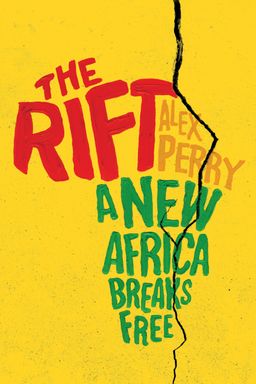
The Rift cover

The Rift

by Alex Perry

The Rift unveils Africa’s dynamic evolution from a continent overshadowed by poverty and conflict to a powerhouse of innovation and leadership. Discover how modern agriculture, solar energy, and mobile technology are reshaping Africa''s future, offering hope and inspiration to the world.

Africa Between Rift and Repair

How can a continent so rich in history, resources and ingenuity suffer cycles of violence, famine and dependency? In The Rift, Alex Perry argues that Africa’s crisis is not innate failure but the product of its geography, the legacy of external manipulation and the distorting effects of modern humanitarianism. His central claim is that to understand Africa’s present, you must grasp how deep structures—geological, political and economic—shape everyday life as profoundly as wars or famines.

The book begins with the literal rift tearing through eastern Africa—the Great Rift Valley—and turns it into a metaphor for the continent’s fractures: between promise and betrayal, self-reliance and dependence, community and outside interference. Perry travels through Somalia, Congo, Rwanda, South Sudan, Nigeria and beyond, interweaving landscape, history and reportage. The result is both travelogue and analysis: a study of how the rift between Africa and the world, and between Africa’s elites and its people, keeps widening even as new forms of hope emerge.

The Geological Destiny

Perry shows that Africa’s geography—its vast spaces, varied climates and mineral wealth—shaped its human development. The Great Rift nurtured early humanity, but its openness meant mobility trumped urban density. Social systems like ubuntu arose, favouring cooperation over ownership. This ecological history made African political cultures distinct from Europe’s; yet colonisers misread them as primitive rather than adaptive. That misreading bred later interventions that sought to remake societies without understanding their logic.

Intervention’s Shadow

From the missionary to the aid official, foreign actors enter Africa proclaiming salvation. Perry argues that these interventions, whether colonial or humanitarian, often reproduce dependency. He shows aid not as gift but industry—with markets, contractors and perverse incentives. You see this in Somalia’s famine of 2011, when donor restrictions and political caution prevented food from reaching those dying. In Congo and South Sudan, billions in aid created fortress-compounds for expatriates but fragile institutions for locals.

Politics, Celebrity and Humanitarianism

The second layer of Perry’s argument is cultural: how the moral theatre of humanitarianism—from Biafra to Live Aid to Kony 2012—turned global concern into spectacle. NGOs and celebrities amplifed visibility but simplified reality. Campaigns raised money yet reinforced the image of Africans as victims awaiting rescue. Perry follows figures like Bernard Kouchner, Bob Geldof, George Clooney and Jason Russell to show how emotion can mobilise masses—and how moral fervour without strategy can misfire.

Violence and Responsibility

From Rwanda’s genocide to Boko Haram’s insurgency, Perry examines violence not as inexplicable evil but as the continuation of politics by other means. In Somalia and South Sudan, state failure merges with foreign interference; in Nigeria and Mali, corruption and drug trade feed extremism. Perry insists these are human systems with incentives—leaders like Salva Kiir, Riek Machar or al‑Shabab’s commanders act rationally within broken structures. To fix them requires redesign, not pity.

The Counter‑Narrative of Agency

Amid devastation, Perry finds stories of self‑reliance: Yacouba Sawadogo regreening the Sahel with zai pits; Eleni Gabre‑Madhin building Ethiopia’s Commodities Exchange; Kenyan technologists creating M‑Pesa; Lagos officials reforming property systems. These bottom‑up innovations prove Africans are not passive actors but protagonists redefining freedom through markets, soil and code.

(Note: Perry’s view parallels thinkers like Dambisa Moyo and William Easterly, who similarly argue for local entrepreneurship over external planning.)

The New Scramble

Finally, Perry turns to China’s rise as builder and financier. He neither romanticises nor condemns it: Chinese firms pave roads that Western donors discuss. For many leaders, Beijing’s pragmatism offers agency long denied. The book closes where it began—in the rift—showing that the struggle between dependency and autonomy defines modern Africa. Understanding that dynamic is the key to seeing not perpetual crisis but the possibility of repair.

Core takeaway

Africa’s story, Perry argues, is not tragedy but distortion: when politics, aid and foreign power align against local agency, suffering multiplies. When Africans build around their own circumstances—through soil, trade and technology—the rift begins to close.


Aid, Industry and the Famine Trap

Perry dismantles the idea that aid is pure altruism. He portrays a global business worth over $130 billion a year, governed by donor self‑interest. Once you recognise aid as an industry—with procurement rules, branding and staff preservation—you start to see its distortions. In Somalia’s 2011 famine, food filled warehouses while 258,000 people starved. Laws forbidding operations in al‑Shabab‑held zones, and the fear of violating US anti‑terror clauses, froze relief deliveries.

Somalia’s Deadly Bureaucracy

Tony Burns of SAACID warned Perry that aid’s paralysis was policy‑driven. Oxfam ran PR campaigns from Nairobi yet lacked staff on the ground. Expat salaries and logistics fleets consumed large budgets while locals died within sight of stores of grain. The famine thus becomes a moral audit of the entire system: bureaucracy overruled urgency, and legalism replaced ethics.

Perverse Incentives

Aid rules require American grain, shipped on American vessels—destroying local markets. Agencies compete for visibility, exaggerating beneficiary counts to secure funding. Public images of emaciated children—pioneered since Biafra—turn suffering into fundraising collateral. Perry shows how these mechanisms make dependency lucrative. Institutions evolve to perpetuate their missions, not abolish the need for them.

Market Logic of Compassion

You learn to treat aid as a market with skewed incentives. Money flows to visibility, not to results. Governments shape access to reward allies. Perry’s remedy is intellectual: stop moralising generosity and study incentive design. Only then can reform shift aid from self‑maintenance to structural empowerment.


Humanitarianism, Power and Spectacle

Modern humanitarianism, Perry argues, began as conscience but matured into doctrine and show business. From Biafra’s PR firms to Live Aid and the formalisation of Responsibility to Protect, compassion became policy—and, frequently, performance. You see this evolution through characters like Bernard Kouchner, Samantha Power, Bob Geldof and George Clooney.

From Emotion to Intervention

The idea that states should intervene for moral reasons produced iconic mobilisations. Yet these moments—Darfur rallies, Libyan campaigns—often simplified conflicts into good‑versus‑evil scripts. Celebrity advocates transposed emotional urgency into political action, sometimes prompting armed engagement without viable plans. Perry’s case studies in South Sudan and Congo show how vast UN or NGO projects follow such crusades but lack agility and realism.

The Kony 2012 Phenomenon

Invisible Children’s viral film transformed obscure atrocity into global cause. The result: US military advisors deployed, while Uganda’s and South Sudan’s local complexities were sidelined. Jason Russell’s breakdown and the group’s collapse symbolised the limits of publicity‑driven activism. Perry cautions that empathy without context can distort policy as severely as apathy.

Lesson

Moral energy is vital but not sufficient. Effective humanitarianism requires humility, political awareness and acceptance that rescue cannot substitute for governance.


Wars, Genocide and Peacekeeping Failures

Rwanda and Congo reveal the anatomy of intervention gone wrong. Perry recounts how colonial categories hardened fluid identities, setting the stage for genocide. The RPF’s eventual triumph ended mass murder but seeded new crises across the border—militias, refugees and mineral wars. MONUSCO, the UN’s billion‑dollar mission, stands as cautionary monument: well‑funded yet risk‑averse, protecting its bases more than civilians.

Protection Without Risk

Peacekeepers’ mandates avoid combat; soldiers earn allowances for presence, not performance. In Goma, Perry notes the irony of a UN press release celebrating recovery of a tourist’s body while ignoring massacres nearby. Bureaucratic self‑preservation triumphs over moral courage. The same pattern reappears in South Sudan’s UN compounds, where thousands shelter yet killings persist outside the gates.

State‑Building’s Broken Tools

South Sudan’s descent from euphoria to civil war exemplifies how externally financed nation‑building collapses when elites capture the spoils. Salva Kiir and Riek Machar turned ethnic differences into personal armies, while UN staff built infrastructure for themselves. Perry’s verdict: no blueprint can substitute for political settlement. Peacekeeping that will not risk failure guarantees humanitarian paralysis.


Militancy, Crime and the War on Terror

Across Somalia, Nigeria and the Sahel, Perry traces how extremism grows from governance vacuums and foreign missteps. Al‑Qaeda’s African history predates 9/11: bin Laden’s Sudan years created networks that later bombed US embassies in Nairobi and Dar es Salaam. His operations proved Africa central to global jihad. Later, America’s counter‑terror strategy—outsourced renditions, drone strikes, backing warlords—fed resentment and strengthened groups like al‑Shabab.

Somalia’s Outsourced War

When the CIA funded Mogadishu warlords, they devastated the city and provoked the rise of the Islamic Courts Union, whose militant wing became al‑Shabab. Ethiopian invasions and covert US operations internationalised the conflict. Perry details how secrecy and collateral damage radicalised a generation. The result: a Somalia framed by the West as terrorist terrain but, in reality, punished for others’ fear.

Nigeria’s Parallel Collapse

Boko Haram emerges from poverty and police brutality. Mohammed Yusuf’s followers, alienated by corruption, find purpose in violence. Army massacres and unpunished looting certify the state’s illegitimacy. Perry juxtaposes Lagos’s vibrancy with the north’s despair to show a national rift. The Chibok kidnappings became global hashtag but local tragedy—a mirror of how symbolic politics replaces reform.

Narco‑States and Jihad Finance

In Mali and Guinea‑Bissau, cartels and militants cooperate. Planes burn in deserts after offloading cocaine worth national budgets. The fusion of trafficking and religion blurs crime and ideology. Perry labels this the true frontier of instability: when money outweighs faith, and governance itself becomes another smuggling route.


Collapse and Fragmentation at Home

Perry’s South African chapters bring the story back to politics of freedom. Post‑apartheid liberation promised equality but delivered insecurity. In townships like Itipini or Mthatha, residents tell him life feels worse than before. Police brutality, populist chants of violence and private security replace civic order. The Marikana massacre, where police killed 34 miners, epitomises the betrayal of liberation ideals.

Institutions That Fail the Freed

The ANC’s dominance corrodes accountability. Julius Malema’s and Jacob Zuma’s rhetoric normalise intimidation. With 16,000 murders a year and 411,000 private guards, security becomes commodity. Perry calls the gated enclave a modern laager: freedom reduced to walls, not justice.

Freedom as Fragility

These vignettes extend his continental thesis: without institutions, liberation degenerates into licence. Ultimately, Africa’s challenge is governance, not geography—the ability of states to turn moral victories into functional systems that defend the weak and restrain the powerful.


Growth from the Ground Up

Amid critique, Perry sketches a renaissance driven by practical innovators. He introduces figures who reverse dependency by building systems that work: Eleni Gabre‑Madhin’s Ethiopia Commodities Exchange replaces chaos with market transparency; Yacouba Sawadogo’s zai pits regreen desert; Kenyan engineers build M‑Pesa; Lagos reforms prove governance can be built from municipal level.

Markets, Property and Technology

These stories share a logic: empower individuals through predictable structures. Property formalisation in Lagos releases capital; mobile money grants financial identity; commodity exchanges give farmers bargaining power. The dignity you witness is everyday—the ability to be paid on time, grow crops in rain‑catching pits or earn from fair coffee grades.

Climate and Opportunity

Regreening mitigates conflict as much as climate change. In Niger, villages with zai report 80 percent fewer farmer–herder clashes. The soil itself becomes peace process. Perry uses these examples to argue that Africa’s future lies less in summits or aid than in quiet revolutions from below.

Essential message

Real change scales when Africans own both problem and solution. These micro‑models of success—markets, trees and phones—describe not merely adaptation but self‑authorship.


China and the Choice of Partners

The final arc of Perry’s narrative examines China’s surge across Africa and what it reveals about sovereignty. Where Western donors attach policy conditions, Chinese firms deliver roads. In Congo, resource‑for‑infrastructure deals with CREC epitomise this trade‑off: minerals for hospitals and railways. Perry interviews officials who prefer expedience to lectures, echoing Ambassador Wu’s line—'We do not criticise; we build.'

A New Bargain

Western observers call it neo‑colonialism; local leaders call it partnership. Perry avoids polemics, emphasising agency: Africans are choosing. The geopolitics of infrastructure turns sovereignty into currency—you barter control for speed. The question is not whether China is moral, but whether Africa can negotiate equity.

Rethinking Influence

For donors and analysts, the lesson is humility: legitimacy comes from delivery. Whoever builds clinics and railways earns authority. In that equation, Africa ceases to be victim or pawn and becomes an actor setting its own terms—imperfectly, but decisively.

Dig Deeper

Get personalized prompts to apply these lessons to your life and deepen your understanding.

Go Deeper

Get the Full Experience

Download Insight Books for AI-powered reflections, quizzes, and more.