
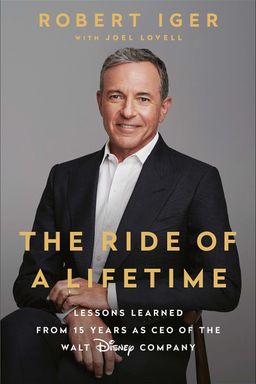
The Ride of a Lifetime cover

The Ride of a Lifetime

by Robert Iger

In ''The Ride of a Lifetime,'' Robert Iger shares his remarkable journey from a TV network backroom to CEO of Disney. Discover how innovative strategies, bold acquisitions, and visionary leadership transformed Disney into a global entertainment giant. Iger''s story offers invaluable lessons on resilience, creativity, and strategic foresight.

Leadership Through Integrity, Vision, and Courage

What makes a leader truly unforgettable—not just successful in business but transformative for people and organizations? In The Ride of a Lifetime, former Disney CEO Robert Iger tackles this question by drawing on his forty-five-year career, which began humbly at ABC and culminated in leading one of the world’s most iconic companies. He contends that effective leadership stems not from charisma or hierarchy, but from a fusion of integrity, optimism, courage, and obsessive commitment to quality.

Iger invites you to imagine navigating crises as diverse as 9/11, corporate takeovers, celebrity scandals, and billion-dollar acquisitions, while upholding optimism and trust. His underlying argument is simple yet profound: great leadership depends on how you do things, not merely what you do. A leader’s personal integrity, ability to manage fear, and appetite for innovation determine whether an organization stagnates or evolves.

From ABC Janitor to Disney CEO

Iger began as a low-level studio supervisor at ABC, cleaning gum off desks and showing up before dawn. His early years taught him discipline and the “relentless pursuit of perfection”—a mantra that became his compass. Under legendary producer Roone Arledge, he learned that innovation and excellence mean pushing relentlessly beyond “good enough.” This idea later shaped everything from how Disney would design theme parks to how its leaders were chosen.

By the time Disney acquired ABC in 1995, Iger had already internalized the leadership values that drove his rise: humility, curiosity, and empathy. When he moved to Hollywood, he was an outsider—no one thought an East Coast “network suit” could lead creative talent. Yet he treated people with fairness and decency, earning trust where arrogance was the norm. (Compare this ethos with Satya Nadella’s emphasis on empathy in Hit Refresh; both men connect compassion to business performance.)

A Philosophy Born of Challenges

Instead of chasing status, Iger focused on solving problems and empowering others to do remarkable work. When Disney faced ruinous internal conflicts during Michael Eisner’s tenure, Iger refused to feed negativity. He believed pessimism corrodes morale, while optimism unites people behind innovation. His leadership philosophy solidified through acquisitions—Pixar, Marvel, Lucasfilm, and 21st Century Fox—each requiring moral clarity, respect for talent, and courage to absorb risk.

Across chapters, you’ll see him turn difficult relationships—like with Steve Jobs, Rupert Murdoch, and George Lucas—into partnerships by emphasizing integrity and mutual respect. When Pixar’s creator worried Disney would stifle its creativity, Iger promised “Pixar will be Pixar”—a phrase that captures his commitment to preserving culture while expanding possibility.

Why These Ideas Matter Now

Modern leadership demands navigating uncertainty with grace. Iger’s story feels like a playbook for anyone leading through disruption—be it technology, organizational change, or cultural upheaval. He shows how optimism fuels courage, courage enables innovation, and integrity sustains trust even amid public controversy. You aren’t judged solely by strategic outcomes but by how you treat people when things go wrong.

“True integrity—a sense of knowing who you are and being guided by your own clear sense of right and wrong—is a secret leadership weapon.” —Robert Iger

This book’s lessons echo other classics like Jim Collins’s Good to Great and Doris Kearns Goodwin’s Leadership in Turbulent Times: character under pressure defines greatness. Through vivid stories—from firing a beloved executive to handling scandals and billion-dollar bids—Iger illustrates leadership as moral craftsmanship. Each hard choice demanded balance between excellence and empathy. For him, companies thrive when their leaders reflect decency and clarity in every decision.

By the end, you’ll see how leadership through integrity, vision, and courage can serve as your blueprint—not just for managing others but for living your own professional life with creativity, respect, and grace.


Optimism as a Leadership Engine

Iger repeatedly insists that optimism isn’t naive—it’s strategic. For leaders, optimism is the engine that powers courage, creativity, and resilience. During Disney’s crises—public scandals, internal conflict, and the 9/11 aftermath—he refused to transmit fear. “No one wants to follow a pessimist,” he writes. Pessimism breeds paranoia and paralysis; optimism, by contrast, breeds possibility.

Managing Fear vs. Facing Reality

After 9/11, when tourism plummeted and Disney’s stock collapsed 25%, Iger modeled calm resilience. He balanced realism with hope—acknowledging challenges without magnifying despair. He believed that by radiating steadiness, he could stabilize others. Each crisis—whether layoffs, shareholder rebellions, or challenges from Comcast’s hostile takeover bid—tested his ability to lead through faith in possibility, not fear. He focused on what could be controlled: communication, compassion, and decisive action.

(Similar philosophies appear in Viktor Frankl’s Man’s Search for Meaning, where hope transforms suffering into courage. Iger applies this principle pragmatically: optimism fuels action.)

Optimism in Innovation

When Iger pitched the risky Pixar acquisition in 2006, analysts panicked over the $7.4 billion deal. Yet his optimism that creativity would revitalize Disney drove him forward. He saw human talent—John Lasseter, Ed Catmull, and Steve Jobs—not merely assets but multipliers of imagination. Optimism guided every subsequent risk: Marvel, Lucasfilm, and Fox. “If we walk away from the future out of fear,” he warned, “we risk losing relevance.” Disney’s success in digital streaming later proved his belief that optimism is the antidote to complacency.

Leading With Light, Not Control

Iger’s optimism came from empathy. When crises struck—John Lasseter’s misconduct allegations or Roseanne Barr’s offensive tweet—he framed decisions in moral rather than political terms: “Not what’s commercially correct. Just what’s right.” Such conviction instilled trust across the company. Optimism doesn’t mean ignoring pain; it means carrying a clearer moral compass through uncertainty.

“Optimism isn’t about believing things are good—it’s about believing you can make them better.” —Robert Iger

For you as a leader, optimism is contagious. It calms storms, attracts cooperation, and replaces cynicism with progress. Whether you’re directing a startup or leading a classroom, Iger’s lesson holds: lead through belief, not fear. It’s both pragmatic and humane—the mindset that makes extraordinary visions possible.


Integrity Is Non-Negotiable

Throughout his career, Iger claims that integrity is the cornerstone of trust—the invisible currency that holds organizations together. “There’s no price on integrity,” he declares, recalling the episode where Disney swiftly canceled Roseanne after the star’s racist tweet. Financial losses didn’t matter; moral clarity did. “In moments like that, you must look beyond profit and be guided by principle.”

Moral Clarity Under Pressure

From firing ESPN’s president over misconduct to parting ways with longtime creative leader John Lasseter, Iger faced painful decisions that tested loyalty. Yet he insists corporate culture must mirror moral culture. At times, he faced backlash—even President Trump publicly attacked Disney’s stance—but Iger remained firm. Integrity isn’t reactive virtue-signaling; it’s proactive protection of people and brand. His decisions reaffirmed what he learned early from Roone Arledge and Tom Murphy: “Take responsibility when you screw up. Be decent to people.”

Honesty Builds Lasting Partnerships

Integrity also shaped his negotiations. When Iger met Steve Jobs over Pixar, he avoided bluffing or manipulation. Instead, he earned Jobs’s trust by admitting uncertainty: “I don’t know if it’s possible, but I want to try.” That candor transformed a wary adversary into Disney’s largest shareholder. Similarly, he was transparent with George Lucas when acquiring Star Wars, even when rejecting Lucas’s creative outlines. George trusted him because Iger respected his legacy rather than exploiting it. In business, honesty isn’t weakness; it’s strategic strength.

Integrity as the Soul of a Brand

When Disney bought 21st Century Fox for $71 billion—a deal dwarfed only by its moral stakes—Iger reminded his board that integrity determines the longevity of success: “Quality and integrity of people and product are paramount.” This ethos recurs in his leadership manual: companies mirror the character of their leaders. If you lose credibility, no amount of branding rescues you. (Simon Sinek’s Start with Why explores this same truth: people follow belief, not marketing.)

“Your values—your sense of honesty and decency—are stand-ins for your company’s values.” —Robert Iger

For you, integrity means staying authentic when pressured to compromise. It means owning mistakes publicly, keeping promises privately, and protecting fairness even when it hurts. In the long run, it’s not idealism—it’s endurance strategy.


Innovation Takes Courage

“If you don’t innovate, you die,” Iger warns, echoing his mentor Roone Arledge’s dictum from ABC Sports. Fear, he says, is the enemy of innovation. Iger’s bravery manifested not in recklessness but in deliberate disruption—choosing long-term transformation over short-term profit. When he launched Disney+ knowing it would cannibalize traditional TV revenue, he was consciously hurting a profitable business to save the company’s future. That’s courage embodied.

Embracing Risk

Think of the Pixar purchase. Everyone told Iger that Steve Jobs was impossible to negotiate with and $7.4 billion “too high.” He saw what others missed: creativity as renewable power. The same bravery drove him to buy Marvel and Lucasfilm. These choices weren’t gambles—they were investments inspired by imagination. He calls this mindset “long shots aren’t as long as they seem.” Courage multiplies probability.

Later, against board hesitation, Iger rejected buying Twitter. His gut told him the toxicity of the platform didn’t fit Disney’s brand. “If something doesn’t feel right, it won’t be right for you,” he recalled learning from Tom Murphy. Courage includes restraint—risking reputation by saying no.

Disrupting Yourself

Under Iger, Disney learned to preempt disruption rather than fear it. He replaced old cable distribution by acquiring BAMTech’s streaming technology. “We were hastening the disruption of our own businesses.” That required convincing his board to reimagine compensation, culture, and process around innovation. He faced friction but persisted, knowing tradition is innovation’s nemesis. (Clayton Christensen’s Innovator’s Dilemma makes the same point: companies must cannibalize themselves to survive.)

Courage With Humanity

Iger’s leadership combined nerve with empathy. When tragedies struck—like the alligator attack at a Disney resort in Florida—he comforted the grieving parents personally, defying legal precedent. Courage isn’t only financial audacity; it’s emotional openness. “I gave them my word their son’s life would not be in vain.” His moral courage matched his professional risk-taking.

“The decision to disrupt a business model that’s working for you requires no small amount of courage.” —Robert Iger

When you face change—whether adopting new technology or remodeling your career—remember Iger’s message: innovation demands not fearlessness, but moral courage aligned with long-term vision. That’s the only way progress sustains integrity.


Respect and Empathy Build Trust

After winning the brutal Disney succession battle, Iger’s first act as CEO was remarkably simple: make peace with those who opposed him. Roy Disney had sued the board for fraud, but Iger offered him dignity and respect instead of revenge. “A little respect goes a long way,” he learned, “but the absence of it can be very costly.” This philosophy became the foundation for every partnership, from Steve Jobs to Rupert Murdoch.

Healing Divisions Through Respect

Iger’s conversation with Roy reveals empathy as strategy. He listened without defending, acknowledging Roy’s hurt over being disconnected from Disney. Then he solved the problem—offering Roy an honorary role, small stipend, and a symbolic office. That act of respect ended a lawsuit and began reconciliation. Respect wasn’t sentiment; it was decisive leadership.

Empathy Creates Opportunity

The same approach repaired the broken relationship with Steve Jobs. Rather than begging for Pixar’s return, Iger proposed something Steve could admire—a partnership built on bold innovation. When Steve showed him the prototype of Apple’s video iPod, Iger immediately agreed to put Disney shows on it. His responsiveness impressed Steve, who valued decisiveness and faith. That act rekindled collaboration and made history. Respect for curiosity—not control—opened doors to creativity.

Listening as a Leadership Skill

Iger teaches that listening doesn’t weaken authority; it amplifies trust. When dealing with Pixar, Marvel, and Lucasfilm, he respected their cultures rather than imposing Disney’s. He told John Lasseter and Ed Catmull, “Pixar needs to be Pixar,” and promised George Lucas that selling his company meant entrusting his legacy. Each act of empathy built billion-dollar worth of goodwill. Emotional intelligence turned business into art.

“In any negotiation, be clear where you stand—but listen deeply to what is at stake for the other person.” —Robert Iger

For you, empathy isn’t softness—it’s presence. It means understanding needs before asserting power, valuing emotion alongside logic. Respect transforms conflict into cooperation. Without it, leadership is authority without trust.


The Art of Decisive Clarity

Decisiveness, Iger argues, is the lifeblood of leadership. Chronic indecision corrodes morale. Clear choices—even risky ones—energize teams. He learned this firsthand during his succession ordeal, where endless evaluations delayed Disney’s recovery. “You can’t win as an incumbent,” he realized. “It’s only about the future.” His consultant, Scott Miller, taught him to focus like a political campaign: choose three priorities and repeat them relentlessly.

The Power of Three Priorities

Iger’s leadership distilled into three permanent pillars: 1) create high-quality branded content; 2) embrace technology as opportunity, not threat; and 3) expand globally. Everything—from Pixar deals to Disney+—traces to this triad. Limiting priorities clarified purpose for 130,000 employees. “Once priorities are laid out simply,” he says, “decisions become easier and anxiety lowers.” Boardrooms, classrooms, or families—every system thrives on focused clarity.

Decisiveness Builds Trust

When negotiating Fox’s sale to Disney, Iger refused to budge on his $28/share offer even when competitor Comcast bid higher. Standing firm earned Rupert Murdoch’s respect and saved billions. Decisiveness isn’t stubbornness—it’s moral clarity under pressure. In chapter after chapter, he illustrates that speed and certainty signal competence more than perfection does. (Peter Drucker expressed similar insight: “Whenever you see a successful business, someone once made a courageous decision.”)

Clarity Over Complexity

Iger reminds leaders to communicate simply. His “whiteboard exercise” redesigning Disney after acquiring Fox demonstrated how visual clarity breeds strategic clarity. He separated “content,” “technology,” and “physical entertainment & goods” to prevent overlap. With markers and imagination, he re-envisioned a $200 billion empire in one sketch. The takeaway: clarity isn’t magic—it’s discipline.

“A CEO must provide the company and its senior team with a roadmap: This is where we want to be. This is how we’re going to get there.” —Robert Iger

For you, decisiveness means limiting distractions, prioritizing what matters, and communicating it clearly. In a world drowning in data, clarity is rare—and leadership is its art.


Culture of Excellence and Fairness

Iger’s leadership combines high standards with decency—a fusion he learned from mentors Tom Murphy and Roone Arledge. Excellence alone creates success; fairness transforms it into sustainability. “Excellence and fairness don’t have to be mutually exclusive,” he insists. His culture at Disney demanded relentless quality while ensuring people felt respected, even when failing.

Relentless Pursuit of Perfection

From watching Arledge rework an entire live broadcast overnight, Iger adopted the mantra “relentless pursuit of perfection.” It’s not vanity—it’s craft humility. Each Pixar film, each park attraction, each innovation embodied meticulous improvement. He compares this to Jiro Ono’s sushi philosophy: shokunin—the endless pursuit of perfection for some greater good. For Iger, shokunin means creating environments where “good enough” never suffices.

Fairness as Fearlessness

Fairness, meanwhile, requires emotional consistency. Disney employees trusted Iger because he treated mistakes as opportunities, not humiliation. When Roone made staff fear failure, creativity shrank. Iger flipped that culture: “If you want innovation, you must give permission to fail.” By turning fear into experimentation, he built loyalty and confidence. Respect restores dignity when pressure erodes it.

People Over Perfection

Iger’s message for leaders: greatness grows from valuing people as deeply as results. When hiring, he seeks “people who are good in addition to being good at what they do.” Skill can be taught; decency can’t. (This echoes Jim Collins’s “first who, then what” principle in Good to Great.) The blend of high standards and humane leadership created a culture that produced Frozen, Black Panther, and Avengers: Endgame—stories driven by both creativity and conscience.

“If you want innovation—and you should, always—you need to grant permission to fail.” —Robert Iger

For you, combine rigor with kindness. Demand excellence but lead with empathy. When people feel seen, they give their best. When they fear you, they only guard themselves. Build cultures where courage and compassion coexist—and creativity will follow.

Dig Deeper

Get personalized prompts to apply these lessons to your life and deepen your understanding.

Go Deeper

Get the Full Experience

Download Insight Books for AI-powered reflections, quizzes, and more.