
Idea 1
Sound and Society: Music’s Twentieth-Century Revolutions
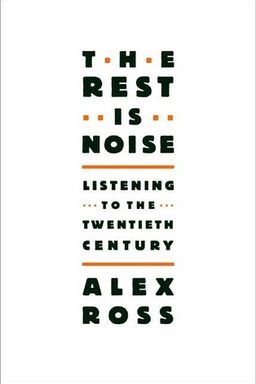
How do sound, politics, and technology intertwine to shape culture? In The Rest Is Noise, Alex Ross argues that twentieth-century music is not a tidy evolution of styles but a sprawling web of experiments shaped by wars, ideologies, machines, and migrations. He shows that music becomes a mirror of modern life—its fragmentation, its moral crises, and its relentless reinventions. To understand this story, you must listen not only to notes but to the societies that create them.
From Vienna to Paris: Collapse and Color
The century opens with two rival visions. In Vienna, Mahler and Strauss transform late Romanticism into a self-interrogating art—Mahler’s symphonies turn emotion into existential questioning, while Strauss’s Salome scandalizes audiences with sensuality and tritones. Their tension becomes the birth scene of musical modernity. Meanwhile, in Paris, Debussy and Ravel reinvent sound through timbre, rhythm, and non-European influences: gamelan textures, pentatonic melodies, and shimmering orchestration reframe harmony as color. Where Vienna collapses inward under metaphysical doubt, Paris expands outward through sensory exploration.
Fragmentation and Plural Canons
Ross invites you to track music’s fragmentation. Around 1900, recording technology and global politics fracture the classical tradition into competing canons: the intellectual avant-garde, the national and folk traditions, and the popular vernacular of jazz and theater. From Schoenberg’s atonality to Gershwin’s fusion of jazz and the concert hall, from Bartók’s ethnographic fieldwork to Stravinsky’s ritual primitivism, each strand builds its own authority. Rather than lament the split, Ross argues for crossbreeding: ideas migrate from high to low, from European chromaticism to black vernacular modernity, from Mahler’s symphonism to film music’s emotional code.
Music, Power, and Technology
As regimes rise, music becomes a political weapon. Hitler sanctifies Wagner; Stalin turns composers into state functionaries; Roosevelt funds democratic access through the New Deal; Hollywood and radio convert music into mass entertainment and ideology. Behind all this lies technology—the microphone, radio, and recording—that relocate the concert hall to living rooms and studios. Schoenberg’s private methods, Stravinsky’s neoclassicism, and Shostakovich’s coded symphonies all exist in dialogue with this new public sphere, where the line between survival and compromise grows thin.
After War: Reinvention and Global Reach
Postwar power reshapes sound yet again. American and European cultural policies sponsor avant-garde institutions—the Darmstadt School, IRCAM, and CIA-backed festivals—to represent freedom through abstraction. Boulez’s serial rigor and Cage’s embrace of indeterminacy become rival responses to the moral wreckage of history. Messiaen spiritualizes the modern, Ligeti rebuilds harmony through texture, and minimalists like Reich and Glass rediscover pulse and repetition as a democratic modernism. By century’s end, the field has globalized: Takemitsu, Tan Dun, and Golijov weave Asia, Latin America, and Europe into a new planetary soundscape.
Why This Matters
Ross teaches you to listen across categories. Every innovation—atonality, jazz rhythm, drone minimalism, spectral harmony—arises from artists trying to reconcile personal truth with public chaos. The century’s story is not one of progress but of coexistence: Mahler’s doubt beside Debussy’s light, Schoenberg’s order beside Cage’s chance, Shostakovich’s courage beside Britten’s compassion. If you listen with this lens, you hear not just a century’s music but its conscience, vibrating in air and history alike.