
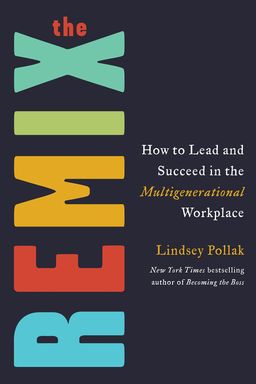
The Remix cover

The Remix

by Lindsey Pollak

The Remix by Lindsey Pollak reveals how to thrive in a multigenerational workplace. Drawing from data and case studies, it offers strategies to embrace diversity, enhance communication, and foster collaboration, transforming potential conflicts into opportunities for innovation and growth.

The Remix Mindset: Thriving Across Generations

What if you could combine the wisdom of seasoned professionals with the creativity and technological fluency of younger employees, creating a workplace that feels both classic and cutting-edge? In The Remix, Lindsey Pollak shows how every generation—from Traditionalists to Gen Z—can work together in more meaningful, productive, and harmonious ways. Her central argument is simple but transformative: instead of seeing generational differences as a problem to fix, see them as raw materials to remix.

Pollak contends that work as we know it is undergoing seismic change. Gone are the rigid hierarchies, lifelong employment contracts, and corner-office career ladders of the Baby Boomer era. In their place is a fluid, fast-moving environment driven by technology, adaptability, and diverse perspectives. But many organizations still cling to outdated norms—creating clashes between generations and confusion about loyalty, communication, and leadership. Her remedy is the Remix Mindset: borrowing what works from the past, adding innovations that fit the present, and designing flexible systems that prepare us for the future.

From the Reorg to the Remix

Pollak opens by describing the typical reaction employees have to corporate restructuring—a groan, an eye roll, and a sense of impending chaos. She suggests replacing this cynicism with curiosity and collaboration. Instead of asking how to survive change, ask how to remix it. The unprecedented fact that five generations are now working side by side presents tremendous potential if leaders learn to honor classic traditions while reimagining practices for today’s realities. Like DJs blending old tracks with new beats, remix leaders combine trust and transparency with modern tools and inclusivity.

Why Generations Matter—and How to See Beyond Them

Pollak provides a concise genealogy of American generations—from loyal, rule-following Traditionalists shaped by the Great Depression to tech-savvy, diverse Gen Z digital natives. Each cohort expresses human needs—security, purpose, respect, growth—in its own style. The problem, she argues, arises when organizations forget that these underlying needs are universal. People aren't difficult because they're Millennials or Boomers; they're frustrated because their workplace fails to understand how they experience meaning. Knowing generational differences gives leaders clues—not stereotypes—to improve communication, mentorship, and engagement.

VUCA and the Need for Adaptability

Pollak situates her ideas in what leaders call a VUCA world—volatile, uncertain, complex, and ambiguous. Change now feels permanent and recursive: every new policy or product triggers another cycle of adaptation. To survive, individuals and organizations must strengthen their adaptability muscles. For Pollak, remixing isn’t just a management strategy—it’s a personal mindset. Everyone, regardless of age or title, needs to balance evergreen fundamentals with constant learning. Like musicians evolving through different genres, professionals must keep experimenting with what works now without discarding yesterday’s greatest hits.

Remixing as a Metaphor for Work and Life

The musical metaphor carries throughout the book. In music, a remix honors what came before while creating something fresh for today. Pollak argues that workplaces, too, must remix everything from leadership to communication to training. She tells vivid stories of executives giving up offices to sit among younger colleagues, retirees becoming lifeguards, and Gen Z innovators bridging the gap between elderly parents and voice-activated technology. These examples show that remixing transcends age—it’s an attitude of curiosity, experimentation, and inclusivity.

What You’ll Learn

The chapters that follow explore ten distinct remix zones—from talent and leadership to workspace and culture. Pollak’s lens moves from large organizational systems to personal career growth. You’ll learn how to stop generational shaming, become a coach-style leader, replace one-size-fits-all management with flexible communication, and turn diversity into innovation. Ultimately, The Remix teaches you not only how to thrive at work but how to mix the best of every era into your own life—aligning meaning, adaptability, and human connection. In Pollak’s words, “To be a remixer is to see generational change not as a challenge but as an opportunity.”


Stop the Generational Shaming

Pollak begins her remix rules by confronting one of the workplace’s most corrosive habits: mocking other generations. From Greek poet Hesiod’s complaints about “frivolous youth” in 700 BCE to memes about Millennials killing napkins and home ownership, every era has scolded its successors. The author argues that this reflexive cynicism doesn’t just poison relationships—it undermines productivity. You can’t build innovation on resentment. Instead, empathy and respect must replace sarcasm and nostalgia.

Recognizing a Universal Bias

The problem isn’t confined to Boomers mocking Millennials. Gen Xers complain that they’re “the forgotten middle child,” Millennials roll their eyes at “out-of-touch managers,” and even Gen Z now faces skepticism for being “too cautious.” Pollak insists the cycle must stop. She shares stories of professionals like Amy, a Millennial executive who hides her age and even emphasizes her gray hairs so older leaders won’t dismiss her. Such self-censorship reveals how deeply ageism runs across demographics.

Letting Go of Nostalgia

Nostalgia, Pollak warns, is a subtle form of generational shaming. When leaders reminisce about how “business was more fun in the ’80s,” they alienate everyone who wasn’t there. Patty McCord (former Chief Talent Officer at Netflix) calls nostalgia one of management’s biggest pitfalls—it keeps organizations fixated on what worked yesterday instead of imagining tomorrow. Pollak’s antidote: honor your fond memories privately, but lead your team from the present. Create space for discovery, not longing.

Empathy Over Judgment

Replacing judgment with empathy means trying to understand how each generation arrived at its worldview. Consider Millennials who entered adulthood amid recession and debt, or Boomers who thrived in times of growth and competition. When you empathize, you replace stereotypes with stories. Pollak’s mantra—“We quite literally cannot achieve anything without them”—reminds leaders that every generation contributes essential experience, talent, and perspective.

Key Lesson

Instead of laughing at differences, celebrate them. Shaming is a defense mechanism against change; empathy is a strategy for progress. If you’ve ever joked about “kids today” or dismissed older colleagues as “dinosaurs,” Pollak invites you to remix your mindset: trade cynicism for curiosity and watch cooperation grow.


Rethinking Loyalty and Talent

What if loyalty isn’t about staying forever—but contributing fully for as long as you’re there? Pollak redefines loyalty in an age where few employees spend decades at one company. The Baby Boomer contract—work hard, climb the ladder, retire with a gold watch—has collapsed. In its place is a marketplace of shorter tenures, side gigs, and remote work. But loyalty hasn’t vanished; it has simply changed shapes.

The End of the Ladder

Pollak traces how postwar corporations created lifetime jobs with pensions and predictable promotions. Boomers grew up expecting that security. Millennials, by contrast, watched their parents lose those same jobs during recessions. They learned to trust themselves more than employers. Today, only 4.2 years is the median tenure for American workers—and younger employees average closer to three. This isn’t disloyalty, Pollak says; it’s realism.

Tours of Duty: A New Compact

Citing Reid Hoffman’s The Alliance, she describes the “tour of duty” model—a specific, time-bound partnership between employer and employee. The firm invests in your growth; you deliver results; both sides reassess after a few years. This modern compact fosters trust because expectations are clear. Pollak sees this as the blueprint for multigenerational teams where commitment means doing great work now, not staying forever.

Geography and Mobility

Another remix of loyalty is geographic freedom. With technology decoupling work from location, you can live anywhere—even Vermont, where the state offers $10,000 to remote workers. Pollak tells the story of Tiffany Kuck, a Millennial who chose an insurance job in Dayton, Ohio, over a glamorous offer in Hawaii because the leaders made her feel valued. “What’s inside your walls matters more than where those walls are,” she writes.

Meaning Over Money

Millennials, Pollak says, seek purpose as fiercely as Boomers sought promotions. For them, meaning outranks money. Studies show that 80% of workers would rather have a boss who cares about their success than receive a pay raise. Purpose and autonomy are the new paychecks. If you want loyalty, give people learning, growth, and a sense that their work matters.

Key Lesson

Loyalty today is not a lifetime contract; it’s a cycle of mutual value. When leaders invest in employee development and clarity, people stay engaged—even if their tenure is brief. The future belongs to workplaces that treat every career as a meaningful “tour of duty.”


Coaching Beats Command and Control

If you’ve ever felt frustrated that your team “doesn’t listen,” Pollak urges you to flip the frame: maybe they’re not resisting authority—they’re rejecting outdated leadership. Traditionalists and Boomers grew up under command-and-control bosses who barked orders; Millennials and Gen Z respond to coaching and collaboration. Her message: stop directing and start developing.

From the Sideline to the Center

Pollak’s favorite parable features a college football coach who stopped yelling because it didn’t work anymore. He assigned mentors, shortened meetings, and banned shouting. Critics claimed he was “coddling” players—until his team started winning. “It works,” he said simply. The same principle applies at work: motivation beats intimidation. Leaders succeed when they act like coaches rather than commanders.

Growth Mindset at Every Level

Drawing from psychologist Carol Dweck’s Mindset, Pollak highlights the power of believing people can grow. Replace “I’m bad at managing Millennials” with “I’m not good at managing Millennials yet.” That single word invites learning instead of labeling. Coaching leaders use “Try this” instead of “Don’t do that.” Progress becomes a shared goal, not a test of obedience.

Understanding Leadership Expectations

Pollak traces how expectations vary by generation. Boomers were parented by command-style Traditionalists; Millennials were raised by helicopter parents and supportive teachers. It’s no wonder they expect feedback instead of silence. Understanding these backgrounds helps you tailor your approach. Be authoritative but accessible; set standards and invite input. Coaching-style leadership is respectful, participatory, and optimistic.

Key Lesson

When you coach, you create possibility. The command model says, “Follow me.” The coaching model says, “Let’s grow together.” Whether you’re managing veterans or interns, the best leaders in Pollak’s remix era believe in people’s capacity to adapt and thrive.


Managing People in the Remix Era

Pollak insists that great management is eternal—it’s just the context that changes. What distinguishes today’s managers isn’t what they do differently but what they must now do consistently: teach, coach, acknowledge, and explain. Because employees can rate bosses online and change jobs quickly, mediocrity is no longer invisible. Effective people management is now a survival skill.

Lead Yourself First

Borrowing from the airplane metaphor—“put on your own oxygen mask before assisting others”—Pollak urges leaders to examine their own age biases. Do you quietly worry that remote employees aren’t working? Or joke about being “too old for technology”? Self-awareness is the first managerial remix. One executive admitted his discomfort with telework, then transparently explained it to his team. They built a check-in system that satisfied everyone, proving that disclosure builds trust.

Feedback in Real Time

Gone are the days of annual reviews and “rank and yank.” Pollak likens modern feedback to GPS recalibration—constant small adjustments that steer performance. Google’s Project Oxygen confirms that the best managers are good coaches who give timely, specific feedback. One-on-one check-ins, “stay conversations,” and short feedback apps keep communication flowing. The result: clarity, motivation, and retention.

The Power of Gratitude and Context

Pollak’s simplest but most radical advice is to say thank you and explain why. Employees aren’t avoiding “grunt work” because they’re entitled; they just want to know how it contributes to the bigger picture. Transparency about purpose turns chores into contributions. Research backs this up: recognition increases engagement by 70%. Gratitude is free—and transformative.

Key Lesson

Manage for meaning, not mechanics. In Pollak’s remix workplace, feedback and gratitude are oxygen. When you explain the “why,” people care more. When you thank them, they try harder. Management is not compliance—it’s connection.


Communication Without Borders

Pollak sees communication as the heartbeat of remix leadership. With five generations interacting, messages can ricochet through emails, texts, Zoom calls, and Slack channels—creating confusion unless leaders learn to COPE: create once, publish everywhere. Transparency and adaptability are no longer optional; they are the new language of work.

From Cronkite to Crowdsourcing

Pollak contrasts Walter Cronkite’s one-way nightly sign-off, “And that’s the way it is,” with today’s 7 billion two-way broadcasts via smartphones. Communication is now democratized and continuous. Open-door leadership is literal—Michael Bloomberg’s clear-glass mayoral office symbolized the visibility younger workers expect. Employees no longer want distant executives; they want accessible humans.

COPE: Create Once, Publish Everywhere

Designed by NPR’s Daniel Jacobson, COPE is Pollak’s favorite communication strategy. Instead of sending one long email, remix it into multiple formats: videos, short podcasts, posters, and social posts. This respects how different generations absorb information. For older workers, printed memos; for Gen Z, Slack updates. Communication equity means tailoring channels without diluting content.

Transparency and Listening

True communication isn't just broadcasting—it’s listening. Pollak urges leaders to create feedback loops through surveys, focus groups, and “How’m I doin’?” hallway chats. Inclusivity means every voice counts, from remote employees to factory floor staff. She cites Adam Grant’s research at Facebook: workers who ignore surveys are 2.6 times more likely to quit. Listening literally retains talent.

Key Lesson

Communicate like a DJ: remix formats, respond to the crowd, keep the rhythm moving. One size fits none. When you combine transparency, inclusivity, and creativity, your message resonates across generations and never goes out of tune.


Training for Lifelong Adaptability

Pollak argues that learning isn’t a stage—it’s a survival skill. The Training and Development Remix reframes professional education as continuous, customizable, and multigenerational. In an era of automation, everyone is a student again.

Onboarding with Purpose

Too many organizations still greet new hires with silence and an outdated manual. Pollak admires Texas Capital Bank’s inclusive orientation where CEOs and receptionists share the same room—a simple way to equalize hierarchy and convey culture. The message: you belong here. Training begins not on Day One but when the offer is accepted.

Modern Skill Sets

Common sense isn’t common anymore. Pollak lists essential lessons—how to write emails, answer phones, or decline offers professionally. For older generations, reskilling in digital tools matters just as much. Pal’s Sudden Service, a fast-food chain, teaches every employee—from fry cooks to managers—like valedictorians. Every shift includes random recertification, reinforcing mastery as a cultural value.

Reskilling for the Future

The Fourth Industrial Revolution demands constant updating. Pollak cites AT&T’s billion-dollar initiative to retrain over 100,000 employees for tech-driven roles. Salesforce's Trailhead platform offers free online courses to millions. MIT even built a $1 billion college for artificial intelligence. Whether you’re a CEO or intern, adaptation is no longer optional—it’s the job itself.

Lifelong Learning as Identity

Pollak highlights universities creating “Open Loop” models, allowing students to weave in and out of education throughout their lives. Northeastern now calls enrollees “learners,” not “students.” The message echoes futurists like Lynda Gratton: you can expect sixty-year careers and multiple reinventions. Keep looping in.

Key Lesson

Learning is the new loyalty. When you treat development as a benefit, people stay curious and committed. In Pollak’s remix world, everyone is both teacher and student—and adaptation is the rhythm that keeps your career playing.


Mentoring and Networking for Inclusive Growth

Mentorship, Pollak shows, has evolved from vertical wisdom-sharing to horizontal collaboration. Classic mentoring still matters, but the remix adds reverse mentoring, co-mentoring, and micro-mentoring—formats that democratize learning and foster inclusion.

Reverse Mentoring

Jack Welch pioneered the idea at GE by pairing executives with young Internet-savvy employees. Today, Estée Lauder’s program matches senior leaders with Millennial “Presidential Reverse Mentors” who show them how digital consumers shop and think. SoulCycle CEO Melanie Whelan credits her younger mentor with keeping her culturally relevant. Reverse mentoring reminds older executives that innovation no longer flows only upward—it circulates.

Co-Mentoring and Micro-Mentoring

When hierarchy feels uncomfortable, co-mentoring equalizes the conversation. At Intel and Godiva (via Ypulse programs), pairs from different generations exchange perspectives and work on real business challenges together. Pollak also celebrates micro-mentoring—brief but meaningful exchanges. Asking “What are you reading?” or “What myth about your generation frustrates you?” can spark insight on the spot.

Networking in a Hyperconnected World

Networking itself has remixed from golf courses to Twitter chats and “sweatworking” at spin classes. Author J. Kelly Hoey built her network with tweets and retweets that led to a friendship—and mentorship—with business legend Tom Peters. Pollak encourages you to join niche online communities, diversify your connections, and seek inclusivity through employee resource groups that unite genders, races, and ages.

Key Lesson

Mentorship is no longer a one-way street. Teaching and learning flow in all directions. Whether you’re sharing insights with an intern or learning from one, your relationships become the amplifier for growth—the ultimate remix of wisdom and innovation.


Culture and Meaning in Modern Work

The final remix, culture, ties everything together. Pollak redefines organizational culture not as slogans from the top but as lived experience from every chair. When employees feel connection and purpose daily, they don’t just perform better—they stay longer.

Leadership from Every Chair

Fabrizio Freda at Estée Lauder teaches this philosophy: every employee is a leader. Pollak cites “InDays” at LinkedIn, where anyone can pitch ideas directly to executives. One manager launched a “100 Paper Cuts” project, inviting employees to fix everyday annoyances—a morale booster that cost nothing but attention.

Purpose and Contribution

KPMG’s “Higher Purpose Initiative” asked employees to design posters expressing how their work made a difference: fighting terrorism, keeping jobs in America, restoring neighborhoods. Over 42,000 posters came in—far beyond the company’s goal of 10,000—and engagement soared. People stay when they feel their job isn’t just a job.

Work/Life Integration and Flexibility

Pollak replaces the outdated term “work/life balance” with “work/life integration.” Millennials don’t compartmentalize—they expect to blend family, purpose, and profession. Flexible schedules, phased retirements, or “Snowbird” programs for older workers represent creative remixes that serve everyone. The principle: treat employees as whole humans, not just workers.

Benefits That Reflect Humanity

Pollak highlights new benefits—student loan repayment, mental health support, and customizable life-planning accounts—alongside classic health and disability coverage. Diversity demands diverse perks. When Airbnb funds travel or Qualtrics pays for personal experiences, benefits become cultural statements: we value your life, not just your labor.

Key Lesson

Culture is not decoration—it’s design. In Pollak’s remix era, meaning, inclusion, and flexibility define great workplaces. When everyone leads, learns, and belongs, your organization becomes not just a company but a community that endures.

Dig Deeper

Get personalized prompts to apply these lessons to your life and deepen your understanding.

Go Deeper

Get the Full Experience

Download Insight Books for AI-powered reflections, quizzes, and more.