
Idea 1
The Cost of Dignity and Emotional Restraint
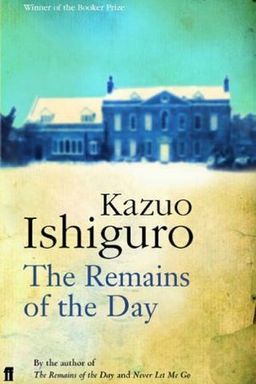
What happens when pursuing pride and duty costs you the warmth of real human connection? In The Remains of the Day, Kazuo Ishiguro explores this question through the quiet, poignant voice of Stevens, an aging English butler whose lifelong devotion to dignity and service leaves him emotionally hollow. The novel asks you to confront what dignity really means—and whether it’s worth the price when it distances you from love, vulnerability, and self-understanding.
Through Stevens’s journey across postwar England, Ishiguro examines not only a man, but an entire social order in decline. The butler’s road trip, ostensibly to visit a former housekeeper, Miss Kenton, unfolds as a deeper expedition into memory, regret, and identity. While Stevens insists his worth lies in his professional discipline—the ability to suppress emotions and maintain composure—his narrative reveals the tragedy of such containment. Ishiguro invites you to consider whether emotional restraint, long prized in British tradition, might be a quiet form of self-erasure.
The Meaning of "Greatness" and Duty
Stevens views his vocation as sacred. He believes a "great butler" achieves perfect dignity: never breaking composure, never revealing emotions, serving loyally even if the moral ground beneath his master shifts. This belief embodies a hierarchy both social and internal, where one’s value depends on serving the powerful. Yet Ishiguro exposes the fragility of this worldview. Lord Darlington—Stevens’s employer during the interwar years—is no monster, but a misguided man deceived by fascist sympathies. Stevens’s loyalty to him becomes tragic precisely because it blinds him to moral responsibility. What Stevens calls professionalism is ultimately complicity cloaked in decorum.
Memory as a Mirror of Self-Deception
The novel unfolds as Stevens recounts his life over six days of motoring through England. His narration, precise and subdued, is riddled with evasions and self-corrections—classic hallmarks of unreliable memory. What you realize gradually is that Stevens isn’t just recalling history; he’s rewriting it to maintain the illusion that his life was meaningful. His reflections on small domestic incidents—his father’s decline, Miss Kenton’s departure, his failed banter with his American employer—echo the larger collapse of Britain’s empire and class system. Ishiguro’s episodic structure mirrors the fragmented ways we justify our past, patching pride over heartbreak.
Emotional Blindness and the Loss of Love
At the heart of Stevens’s repression stands a love he never acknowledges. Miss Kenton, his perceptive and spirited housekeeper, repeatedly attempts to break down his stoic exterior with small gestures of warmth. Yet Stevens always retreats behind professionalism, treating affection as improper. When he finally meets her years later, she confides that she once imagined a life with him—but now loves her husband. Ishiguro makes this revelation devastatingly quiet. Stevens responds with politeness, realizing too late that his devotion to duty has cost him the deepest connection of his life. This moment crystallizes the theme of lost humanity beneath the mask of dignity.
Postwar England and Shifting Values
The decline of Darlington Hall parallels the fading of Britain’s aristocracy and ideals. Stevens’s new American employer, Mr. Farraday, embodies the postwar shift toward informality and humor—qualities Stevens finds alien. The old codes of deference are dying; what was once a national virtue now seems absurd. As Stevens struggles to master “bantering,” his awkward jokes symbolize an entire society learning to converse differently—with less distance and more humanity. Ishiguro thus transforms the personal story of an aging butler into a universal meditation on how institutions and individuals outlive their usefulness, clinging to pride while the world moves on.
Why It Matters Today
Ishiguro’s novel remains profoundly relevant because it examines how people justify their roles in unjust systems. Stevens’s emotional paralysis mirrors how many of us—whether through loyalty to careers, traditions, or authority—avoid questioning what we serve. Ishiguro doesn’t condemn Stevens; he reveals the sadness of a human life lived as a function rather than a self. The question lingers long after the final page: what remains of your day when your devotion has consumed your capacity to feel, to love, to live freely? The Remains of the Day is not merely the story of a butler—it’s a meditation on what dignity demands and what it destroys.