
Idea 1
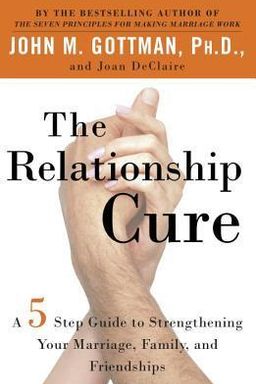
The Relationship Cure: Learning the Language of Connection
How can you repair and strengthen every relationship—from marriage and friendship to work and family? In The Relationship Cure, psychologist John Gottman (with Joan DeClaire) argues that emotional connection isn't built through dramatic gestures or endless therapy, but through small, daily moments he calls bids. A bid is any act—verbal or nonverbal—that says, “I want to connect.” Whether you respond to that bid determines the health and trajectory of your relationship.
Gottman’s central claim is that emotional intelligence in relationships arises not from personality or luck but from habits: noticing bids, turning toward instead of away, recognizing emotional patterns from childhood, and building shared meaning. His program condenses decades of Love Lab research—meticulous studies of how couples interact—into five teachable steps that help you build connection in every sphere of life.
From research lab to daily life
Through the Love Lab, Gottman and his team videotaped couples living together and discovered that long-term stability wasn’t about grand romantic gestures but about how partners handled bids in mundane moments. When one said “Look at that bird,” did the other respond (“turn toward”), ignore (“turn away”), or insult (“turn against”)? Couples who consistently turned toward built what Gottman calls an emotional bank account—a reserve of goodwill that cushioned conflicts later. Marriages that lacked daily turning-toward behaviors often deteriorated silently, not explosively.
The anatomy of emotional connection
He frames bids as the unit of emotional connection. You bid through words, gestures, humor, or shared activities, and climb what he calls the ladder of intimacy: casual bids at the bottom (“Want coffee?”), deeper emotional disclosures in the middle, and vulnerable or meaning-sharing bids at the top (“I’m scared about our future”). Successful relationships evolve because both partners recognize and answer bids—even the quiet ones. Gottman illustrates this through stories: Kristine and Alice improving their bond by exchanging genuine concern during a family crisis; Phil and Tina rebuilding intimacy by naming their longing openly; Paul and Marly transforming a first date through curiosity rather than interrogation.
Emotional systems and heritage
Your ability to make and answer bids depends on inner emotional command systems—seven biological circuits (Explorer, Nest‑Builder, Sentry, and others) that organize your instincts. Conflict often arises when partners operate from mismatched systems—like an adventurous Explorer married to a cautious Sentry. Equally significant is your emotional heritage, the philosophy your family modeled about feelings: coaching, dismissing, laissez‑faire, or disapproving. If you grew up where emotions were minimized, you probably under‑bid or mistrust others’ bids as intrusive. Awareness of these inherited styles allows you to rewrite the script.
Communication and repair
In the middle chapters, Gottman teaches skills for reading nonverbal emotion (“your feelings are leaking”) and naming feelings and metaphors (“I feel boxed in by work”). Training yourself to label moods and interpret others’ cues makes empathy actionable. He also identifies six bid‑busters—mindlessness, harsh startup, criticism, flooding, crabby thinking, and avoidance—that interfere with connection, offering antidotes like twenty‑minute relaxation breaks and gratitude rituals (“Thanksgiving every day”).
Shared meaning and ritual
Beneath practical tools lies a deeper philosophy: healthy relationships are built on shared meaning—understanding the dreams beneath conflicts. Disagreements often mask genuine ideals (security, freedom, beauty). When partners uncover those dreams, gridlock breaks down into cooperation. Gottman also urges creating rituals of connection—daily or seasonal acts (morning coffee, bedtime stories, reunion dinners) that make turning-toward automatic and preserve trust.
The five‑step cure in action
The book culminates in a structured Five‑Step Cure: (1) Notice bids, (2) Understand command systems, (3) Explore emotional heritage, (4) Sharpen communication, and (5) Find shared meaning. Used together, these steps work across marriages, families, and workplaces. The simplicity hides profound wisdom: relationships flourish not from perfection but from ordinary moments of emotional awareness, kindness, and mutual curiosity.
Core message
Connection begins not in grand gestures but in subtle recognition. When you notice bids, respond with warmth, and create rituals of empathy, you transform everyday exchanges into the lifelong glue of intimacy.
In sum, The Relationship Cure teaches that repairing relationships isn’t about analyzing what’s wrong—it’s about learning to recognize what’s right in front of you: the tiny bids for attention, kindness, and understanding that, when answered, accumulate into lasting love.