
Idea 1
Rethinking the Work-Centered Society
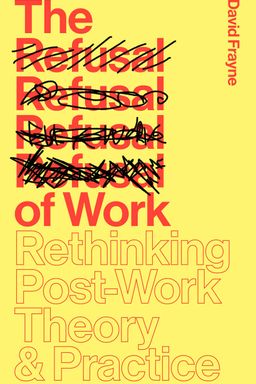
When was the last time you questioned why you work so much—or what you might do if you didn’t have to? In The Refusal of Work: The Theory and Practice of Resistance to Work, sociologist David Frayne invites you to do exactly that. He contends that our culture’s idolization of productivity has blinded us to the immense personal, social, and environmental costs of living in what he calls a “work-centered society.” We’ve been taught that work equals virtue, success, and identity—but Frayne exposes this as a dogma that demands reconsideration.
Frayne builds on a long line of radical thought—from Marx and Weber to André Gorz and the Frankfurt School—arguing that full-time and lifelong work is neither inevitable nor ethically superior. Instead, he posits that reducing work and expanding leisure could foster autonomy, health, and richer human relationships. Through theoretical exploration and vivid ethnographic interviews, he paints the lives of real people who have resisted the work ethic—downshifting to part-time jobs, rejecting high-status careers, or living on less to reclaim their time and sense of purpose.
Life in a Work-Centered World
Frayne begins by diagnosing the modern obsession with work. Since early industrial capitalism, we’ve come to see paid employment as the moral center of life—the proof of maturity and worth. Drawing from Weber’s concept of the Protestant ethic, he shows how devotion to work evolved from religious duty into secular necessity, reinforced today by neoliberal policies and consumer culture. Governments, corporations, and even self-help media promote hard work as both civic virtue and medicine for personal unhappiness. The result? A culture where identity, social status, and belonging hinge on having a job, even when work itself has become increasingly insecure, meaningless, or unhealthy.
Challenging the Dogma
Frayne’s central thesis is that this dogma—what he calls the work ethic—should be dismantled. He doesn’t advocate laziness or naive escapism. Instead, he suggests a politics of time: reimagining how society distributes work so everyone can enjoy greater autonomy and self-development beyond employment. Drawing inspiration from André Gorz, he argues for a dramatic reduction in working hours and a shift in social policy to support creative and community-based activities. This, he says, could restore balance to lives consumed by overwork and reframe leisure not as mere recovery but as a space for true living.
Human Costs of the Work Dogma
Frayne details how the glorification of work undermines wellbeing. Work colonizes our time and consciousness, infecting education, family life, and leisure with instrumental goals. People are not merely working; they are constantly preparing to work—polishing resumes, maintaining employability, and performing emotional labor. The result is stress, alienation, and a pervasive sense that life itself must be justified through productivity. Through his interviews, Frayne reveals the emotional toll of this reality: participants who felt exhausted and “burnt out,” yet believed they’d be seen as failures if they quit.
Resistance and Renewal
The book’s heart lies in stories of everyday rebels against work. These “refusers”—teachers turned tutors, attorneys turned waitresses, programmers turned part-time adventurers—shatter the stereotype of the lazy non-worker. They are guided by an alternative morality that privileges creativity, friendship, compassion, and health over financial gain. Frayne dubs this the worthwhile ethic, contrasting it with society’s obsession with productivity. Yet their resistance is not easy. It comes with financial sacrifices, social stigma, and pressure to justify their choices to employers, families, and even themselves.
Why It Matters
Frayne’s work resonates deeply because it reveals how cultural change begins in personal awakening—the moment someone realizes, as one interviewee put it, “there is no Santa Claus” of work. The book is less a call to quit than an invitation to imagine differently: to see time as a collective resource that could be freed from the market’s grip. His concluding chapters advocate policies like a universal basic income and a shorter workweek to redistribute time, combat inequality, and restore dignity beyond employment. The ultimate question he leaves you with is powerful and personal: if work did not define who you are, what would?
Frayne’s thesis challenges you to reconsider the ordinary rhythms of your own life. What if leisure could be reclaimed not as escape from drudgery but as the foundation of freedom itself?