
Idea 1
Faith and Doubt in a Skeptical Age
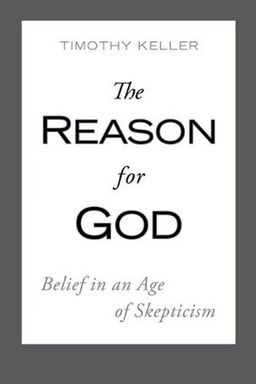
What does it mean to believe in an age where skepticism dominates nearly every conversation? In The Reason for God: Belief in an Age of Skepticism, Timothy Keller addresses this profound question by bridging the divide between belief and unbelief. As a pastor in Manhattan, Keller has engaged with skeptics, professionals, and thinkers who question Christianity on moral, intellectual, and cultural grounds. He argues that both belief and doubt require acts of faith—and that true understanding comes not by dismissing doubt but by examining it honestly.
At its core, Keller’s book asserts that Christianity offers one of the most coherent and reasonable accounts of the world—one that aligns with our deepest intuitions about morality, love, justice, and meaning. But rather than demanding blind belief or defending Christianity with heavy-handed dogma, Keller invites readers into a reasoned dialogue. He acknowledges the legitimacy of doubt yet shows how skepticism itself rests on unprovable assumptions. In this way, the book seeks to create a modern framework for faith that can withstand the pressures of pluralism and postmodern thought.
The Dividing Line Between Belief and Skepticism
Keller opens by observing a polarized world. On one side, secularism and atheism are growing more confident, represented by writers such as Richard Dawkins, Christopher Hitchens, and Sam Harris. On the other, traditional religion—particularly Christianity—is expanding globally, especially in Africa, Asia, and South America. He calls this cultural moment a paradox: belief and unbelief are both intensifying. Despite predictions of religion’s decline, faith remains resilient, while skepticism has also grown increasingly sophisticated and pervasive.
Keller situates himself as someone who understands both sides. Raised in a traditional church but educated in a liberal university, he struggled with conflicting views of God. He experienced firsthand what he later calls “the third camp”—a community of intellectually rigorous believers committed to justice, reason, and grace. This perspective allows him to speak credibly to skeptics while remaining deeply rooted in orthodox Christianity. His own journey reveals that faith is not a retreat from reason but a mature response to the questions reason cannot fully answer.
Doubting Your Doubts: The Book’s Central Method
A cornerstone of Keller’s approach is the invitation to “doubt your doubts.” Each disbelief, he argues, is itself a kind of belief. When you say “there can’t be one true religion,” you are expressing faith in cultural relativism. When you assert “there is no absolute moral truth,” you are making an absolute moral statement. Keller insists that skepticism functions as its own worldview, complete with assumptions that must be justified. Recognizing this symmetry between doubt and belief helps both believers and skeptics engage in meaningful dialogue rather than mutual dismissal.
In the first part of the book, Keller examines common objections to Christianity—such as the exclusivity of faith, the existence of suffering, and the church’s moral failings—showing that these objections often rest on equally unprovable propositions. In the second half, he builds a positive case for Christianity as the worldview that best explains our experiences of meaning, morality, and longing. His argument is cumulative rather than deductive; he assembles a set of “clues” that, taken together, point toward the plausibility of God.
Why It Matters: The Call for Humble Reason
Keller’s cultural analysis goes beyond theology—it speaks to the tone of modern discourse. In a world where belief and unbelief caricature one another, he urges a “critical rationality” that neither demands absolute proof (as in strong rationalism) nor collapses into relativism. Drawing on thinkers like Alvin Plantinga and Alasdair MacIntyre, Keller proposes that faith and reason are not enemies but partners in the human search for understanding. By rejecting the extremes of blind dogmatism and arrogant skepticism, he restores space for respectful debate and intelligent conviction.
“A faith without some doubts is like a human body without any antibodies in it,” Keller writes. “Only if you struggle long and hard with objections to your faith will you be able to provide grounds for your beliefs.”
In this way, Keller calls both camps—believers and doubters—to intellectual integrity. Believers must not dismiss skepticism as rebellion but engage it humbly. Skeptics must not dismiss faith as fantasy but recognize the faith assumptions hidden in rationalism itself. This mutual reckoning, he believes, is the foundation for a more honest and compassionate public conversation about religion and truth.
The result is a vision of Christianity as both intellectually credible and existentially satisfying: a faith that affirms reason, confronts suffering, and offers hope in the modern world. The Reason for God thus becomes both a roadmap for the perplexed and a manifesto for humble conviction—a guide for anyone seeking to believe wisely in a skeptical age.