
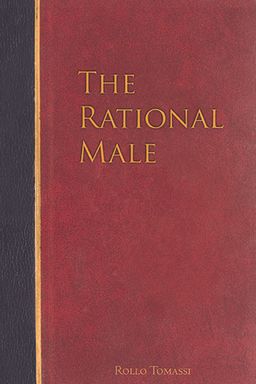
The Rational Male cover

The Rational Male

by Rollo Tomassi

The Rational Male challenges men to rethink intersexual relationships through the lens of evolutionary psychology. By adopting a pragmatic approach, men can prioritize their needs and navigate relationships with confidence. Discover the insights to redefine traditional roles and assert your autonomy.

Masculine Power and the Red Pill Paradigm

What does it mean to reclaim masculine power in a culture that has redefined gender behavior? In The Rational Male, Rollo Tomassi argues that modern men have been conditioned into powerlessness by feminine social conventions, romantic idealism, and misinformation about desire. His work combines evolutionary psychology, behavioral observation, and practical Game theory to reveal how men can rebuild autonomy and confidence within the matrix of intergender dynamics.

Tomassi’s thesis is straightforward but unsettling: most men are raised and socialized to serve feminine imperatives, not their own self-interest. They are told that empathy, sacrifice, and emotional dependence make them virtuous lovers. Yet these scripts produce long-term frustration and disempowerment. To regain control, men must recognize how need, power, and sexual strategy intersect—and how biology and social conditioning reinforce feminine primacy.

Unplugging from Cultural Conditioning

Tomassi begins by describing the process of unplugging—the mental and emotional deprogramming that frees men from the “AFC” pattern (Average Frustrated Chump). You awaken by abandoning myths like the soulmate ideal, romantic fatalism, and the belief that love conquers all. This awakening resembles shock therapy: denial, anger, bargaining, depression, and acceptance. Only after accepting these hard truths can you truly rebuild identity and agency.

Once unplugged, you learn the first principle of relational power: in any relationship, the one who needs the other the least has the most power. That rule becomes the cornerstone of your behavioral evolution. Abundance, boundaries, and self-improvement are tools that reinforce independence rather than compliance.

The Feminine Imperative and Social Conventions

Tomassi contends that feminine primacy operates through programming and social myths—many perpetuated unconsciously. Norms like “let’s just be friends,” “men are shallow,” and “a woman can always change her mind” create hidden rules that favor female choice and reduce male leverage. Even the culture’s moral language—shaming men for sexual standards while celebrating female selectivity—serves this purpose.

By recognizing these operative social conventions, you stop playing blindly within them. You start reading patterns as adaptive strategies rather than contradictions. This shift from moral interpretation to behavioral analysis is the foundation of rational awareness. (Note: Tomassi’s framing borrows from behaviorism—he suggests evaluating women by actions, not words, to escape covert persuasion.)

Hypergamy and the Real Marketplace

At the heart of Tomassi’s system lies hypergamy—the evolved female preference for higher-value mates. Hypergamy explains many paradoxes: why women oscillate between desiring “bad boys” and settling for “good dads,” why older women panic at “the Wall,” and why social media magnifies the illusion of limitless choice. Understanding hypergamy is key to interpreting female behavior not as malice but as evolution in action.

Tomassi insists hypergamy isn’t moral or immoral—it’s operative. It shapes both the “Alpha phase” of raw attraction and the “Beta phase” of resource security. Recognizing this lets you avoid emotional turmoil when feminine priorities shift with age or circumstance. Hypergamy doesn’t care about your sacrifices or promises; it only responds to perceived value.

Game as Applied Knowledge

Tomassi uses “Game” not as manipulation but as adaptive competence—the study of behavior, psychology, and biology for effective intersexual negotiation. Game teaches men how desire operates, why you cannot negotiate genuine attraction, and how confidence and abundance trigger competition anxiety and longing. Ethical Game requires knowledge and self-control, not cruelty. When you understand the map, you can choose your moral path rationally rather than blindly following inherited scripts.

From Scarcity to Abundance

Finally, Tomassi proposes the abundance mindset—the antidote to ONEitis. If you treat relationships as exclusive salvation quests, you become needy and predictable. Plate Theory teaches that keeping multiple prospects (or “spinning plates”) restores balance by proving to yourself that there are options. You learn detachment, self-sufficiency, and perspective. When one plate falls, you still have motion. (Note: The metaphor is not about deceit, but about maintaining sovereignty until you consciously choose exclusivity.)

Altogether, The Rational Male maps the transformation from reactive Beta behavior to deliberate masculine design. Its aim isn’t hatred or domination—it’s awareness. You’re asked to stop living by comforting myths and start observing how attraction, power, and desire actually function. When you align behavior with truth, you don’t just attract better relationships; you regain authorship of your life.


Killing the Beta Within

Tomassi’s concept of “killing the Beta” is psychological rebirth. It’s about unlearning dependence, idealization, and neediness so you stop deriving identity from female validation. The Beta, in his framing, is a man who seeks intimacy through moral performance—being safe, sensitive, and self-sacrificing—rather than sexual polarity or authentic power.

Recognizing Beta Conditioning

You’re taught from adolescence that good men provide emotional labor and patience while women choose based on feelings. These conventions produce “Friend Debt,” martyrdom, and serial monogamy as self-soothing patterns. Killing the Beta means rejecting those buffers and tolerating discomfort. It’s the first step to identity autonomy—seeing attraction as behavioral stimulus rather than moral reward.

Stages of Unplugging

Transformation follows a progression similar to grief: denial of red pill truths, anger at being deceived, bargaining to keep comfort, depression at the loss of illusion, and ultimate acceptance of autonomy. Men who stop halfway often relapse into bitterness (the MGTOW stage) or ideological echo chambers. Success lies in synthesis—learning Game and masculine virtues without losing empathy.

Tomassi’s counsel

"You cannot help anyone until you’ve first helped yourself."

Building the New Identity

Change begins with action: practice boundaries, approach freely, invest in health, and cultivate purpose. You stop performing “Alpha” behavior as theater and start embodying independence genuinely. Incremental pressure and competence produce real confidence. (Note: Tomassi echoes cognitive-behavioral logic—belief follows consistent action rather than abstract affirmation.)

Killing the Beta doesn’t mean denying emotion; it means removing dependence. When you act from abundance and deliberate strength, you no longer chase validation—you become the source of it.


The Soulmate Illusion and ONEitis

Tomassi labels romantic obsession with one person as ONEitis—the paralysis from believing there is a single destined partner who completes you. This illusion breeds vulnerability, complacency, and emotional servitude. Culture, religion, and media reinforce it through soulmate myths, moral narratives, and algorithmic matchmaking, convincing you that failing to find “the One” equals moral or existential failure.

Symptoms and Consequences

ONEitis manifests as emotional fixation, fear of loss, and obsessive idealization. You stop improving yourself because your worth becomes contingent on keeping that imagined soulmate. Tomassi describes the ONEitis man as risk-averse and manipulable—so desperate to avoid loss that he concedes power. For women, the parallel is “Alpha Widow” syndrome—the persistent memory of a high-value man who sets her future standards.

Escaping the Myth

You break ONEitis by rejecting destiny and building options. Treat relationships as choices, not fate. Improvement becomes the substitute for worship. Self-worth grows not from being chosen but from being valuable. Tomassi’s formula is pragmatic: cultivate abundance and emotional detachment so no single outcome defines you. (Note: His argument resonates with stoic philosophy—focus on control over self, not externals.)

Tomassi’s maxim

"There is no ONE. There are some good Ones and some bad Ones, but there is no ONE."

By dismantling the soulmate myth, you reclaim choice and reduce pain from rejection. It’s not cynicism—it’s clarity. Emotional sovereignty starts when you stop equating love with survival and begin viewing it as mutual selection between equals.


Power, Desire, and Relationship Dynamics

Tomassi’s Cardinal Rule of Relationships states: the person with the most power is the one who needs the other the least. Every dynamic—romantic, sexual, social—operates on this principle of relative dependence. You wield power when your life is self-contained, when you choose companionship through preference rather than need.

Need and Negotiation

When you derive self-worth from a partner, you surrender decision-making control. Negotiating desire through compliance (“If I do more chores, she’ll want me again”) never works because desire cannot be traded—it must be inspired. Tomassi’s warning is sharp: you can buy compliance but not genuine longing. Emotional leverage flows to the player demonstrating least dependence.

Cultivating Desire Indirectly

To renew attraction, adjust your behavior rather than negotiate affection. Confidence, competition anxiety, imagination, and visible growth all trigger desire’s natural mechanisms. Pass her tests calmly. Display value through initiative instead of reassurance. Never frame your improvement as appeasement—it must appear organic and self-driven.

Key insight

"You can force compliance, but you cannot make someone want to behave that way."

The implication: emotional independence is erotic. When you lead confidently without seeking approval, you create the conditions for spontaneous desire rather than routine obligation. Power flows not from dominance but from self-sufficiency.


Female Strategy and Hypergamy

Hypergamy explains female mating behavior—an inherent drive to seek partners of greater status, fitness, or resources. Tomassi explores it as both biological and cultural phenomenon, arguing that women’s dual-strategy nature (short-term for genes, long-term for stability) defines modern romantic patterns. Social institutions amplify this through permissive norms, post-Wall mythmaking, and moral double standards.

Good Genes vs. Good Dad

Women pursue short-term excitement via high-testosterone men, while securing provisioning from dependable partners later. This double logic produces scenarios like proactive cheating and single motherhood. Tomassi warns men not to moralize it but to recognize incentives that make such choices evolutionarily viable. Hypergamy favors those perceived as high value at any given moment, which shifts over time and context.

Social Conventions as Cover

Female strategy is shielded by social narratives—moral clauses that justify reversibility (“she changed her mind”) and encourage ambiguity in accountability (“let’s just be friends”). These conventions are adaptive forms of selection insurance: they maintain female choice and control while minimizing reputational cost. Understanding this helps you interpret behavior patterns rationally rather than emotionally.

Ultimately, the takeaway isn’t resentment but realism. You win in the sexual marketplace by knowing how selection operates and structuring your life around independent value creation rather than moral assumptions about equality or destiny.


Abundance, Plates, and Frame Control

Tomassi’s Plate Theory teaches you to maintain multiple options—spinning plates—to internalize abundance rather than scarcity. When you depend on one romantic prospect, you lose frame; when you have several, you naturally project confidence and discernment. This abundance effect shifts your behavior, posture, and emotional equilibrium, all of which raise your sexual market value.

Practical Rules for Plate Spinning

Avoid cohabitation, maintain mystery, and set boundaries on time. Treat weekends as rewards for proven plates; keep non-exclusivity subtle but honest. Women themselves spin plates through orbiters and ambiguous communication, so mirroring that frame triggers the same competition anxiety that fuels attraction. (Note: Tomassi references POOK’s quip, “Women would rather share a high-value man than be saddled with a faithful loser.”)

Abundance as Mindset

The real lesson isn’t quantity—it’s perception. When you believe in options, rejection stops being existential. You act calmly, set standards, and project unpressured energy. Over time, this self-perception becomes self-fulfilling. Abundance creates authority; scarcity breeds submission. Tomassi frames this as preventive spiritual hygiene against the paralysis of ONEitis.

Through abundance, you avoid need-based decisions and cultivate criteria-based selection. Spin plates until commitment arises from choice, not desperation.


Alpha Mindset, Context, and Moral Dimension

Tomassi redefines “Alpha” as mindset, not ethical rank. Alpha isn’t a moral title—it’s situational dominance, self-possession, and confidence that directs social gravity. Moral outcomes depend on how you use power. His examples contrast Corey Worthington, the unfiltered “Alpha Buddha,” with James Hooker, a teacher whose authority made him contextually Alpha but morally questionable.

Natural vs. Learned Alphas

Tomassi and commentators like RooshV argue both biology and experience matter. Testosterone may predispose, but practice and competence refine dominance. “Naturals” are often men who started experimenting early. Cultivation and feedback loops build behavioral ease, not inherent superiority.

Contextual Alpha

Alpha presence varies with social role—uniforms, professions, or authority framings. You can be Alpha in one context and subordinate in another. Learning when and how to project command without arrogance defines mature masculinity. Women respond to confidence, not cruelty. (Parenthetical: Tomassi’s ethic parallels Jung’s concept of integrating shadow traits—you use assertiveness responsibly rather than suppress it.)

By distinguishing Alpha as situational energy, you free yourself from caricature. Master living with purpose and resolve, not dominance for its own sake.


Biochemistry, Dread, and Emotional Reality

Behind desire lies biology. Tomassi explores how testosterone, dopamine, oxytocin, and pheromones influence attraction and bonding. Men with higher testosterone exhibit assertive cues and pheromonal signals that trigger female response. Repeated sexual depletion, such as habitual masturbation, reduces these cues—creating the “Pheromonal Beta,” a man subconsciously broadcasting low urgency.

Chemistry and Control

Evolutionary signals still govern attraction today. Oxytocin, released post-orgasm, lowers male testosterone temporarily. Understanding cycles and perception lets you strategize behavior around genuine biology—training, rest, and desire management—to maintain aura and intensity.

Dread and Desire Maintenance

Tomassi presents dread game as calibrated tension—the awareness that loss is possible, making a partner reengage emotionally. Ethical dread is created through improvement, not manipulation: upgrading wardrobe, health, or social visibility induces subtle fear of competition. Women’s dread originates in hypergamy—the anxiety of lost provisioning or missing higher-value opportunities. Used responsibly, dread sustains attraction through lived value, not cruelty.

You can’t force emotional chemistry, but you can signal vitality, mystery, and potential. Biological cues and social proof together sustain erotic tension, making long-term desire feel organic rather than negotiated.


Communication and Frame Mastery

Women and men communicate differently. Tomassi distinguishes overt versus covert communication—men convey information; women convey emotion. Mixed signals aren’t contradictions; they’re cues. Real understanding means decoding behavior rather than parsing words. Flaking, hesitation, and tone are signs of preference shifts, not puzzles to rationalize verbally.

Speaking Without Speaking

Tomassi’s phrase Dijo sin hablar (“told without speaking”) summarizes male effectiveness—act, don’t announce. When you declare dominance verbally, it becomes negotiation; when you embody confidence silently, it becomes genuine stimulus for desire. Women want initiative that appears unprompted; that behavior translates as strength.

Frame as Language

Every message carries frame—whose reality defines the context? The man who holds frame dictates emotional narrative. Tomassi’s iron rules reinforce this: never self-deprecate, don’t explain why she refuses sex, and never cede disclosure control. Maintaining frame means speaking through consistent action—your behavior is your argument.

Covert communication turns into mastery when you pair perception with composure. You stop reacting; you start interpreting. Once you see communication as signaling, not storytelling, interactions become transparent windows into desire and power.

Dig Deeper

Get personalized prompts to apply these lessons to your life and deepen your understanding.

Go Deeper

Get the Full Experience

Download Insight Books for AI-powered reflections, quizzes, and more.