
Idea 1
Reweaving the Social Contract
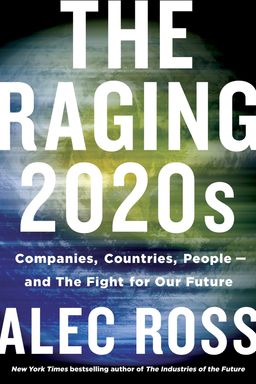
How do societies stay stable when technology, markets, and inequality shift faster than the public institutions designed to manage them? In The Raging 2020s, Alec Ross argues that the old social contract—the implicit bargain among citizens, business, and government—has frayed. Over the past half century, we’ve privatized gains and socialized costs: profits flow upward to shareholders and executives, while taxpayers shoulder the burden of decaying infrastructure, public bailouts, and social dislocation.
Ross contends that this imbalance is not just economic but moral. The book opens with a simple morning: your coffee brews thanks to a global network of trade, technology, and public systems—each the result of past collective investments. Yet those foundations are weakening. As governments lose capacity, workers lose leverage, and corporations gain dominance, societies drift toward instability. Ross’s call is direct: we must rewrite the contract for the digital age.
What the Old Bargain Was
In the industrial era, technological revolutions led to new social contracts—the New Deal, labor protections, pensions, and education reforms—built to distribute the gains of progress widely. These were negotiated moments of rebalancing: new roles for business, expanded roles for the state, and stronger rights for workers. But since the 1970s, neoliberal ideology recast corporate purpose around Milton Friedman’s dictum that a company’s sole responsibility is to its shareholders. Everything else—workers, communities, even long-term resilience—became secondary.
This pivot reorganized the flow of value in modern economies. Corporations grew, public investment declined, and political cynicism deepened. Where the New Deal built middle-class mobility, deregulation and financialization hollowed it out. Ross likens our current dissatisfaction to the 1930s: when the bargain cracks, societies either rebuild democratic governance or slide toward authoritarian alternatives. The stakes, in other words, are civilizational.
Privatized Power, Weakened States
The imbalance is clearest when crisis hits. After Hurricane Maria, Puerto Rico waited weeks for coordinated federal relief, while the nonprofit World Central Kitchen—led by chef José Andrés—delivered hundreds of thousands of meals a day. FEMA floundered; a chef succeeded. This anecdote crystallizes a global pattern: private actors doing the work of the state. Ross warns that efficiency without accountability is not governance. Corporate response may save lives, but it undermines democratic legitimacy when it substitutes for public capacity.
Meanwhile, political gridlock and underfunded bureaucracies have drained state competence. Lobbying and political spending exploded—$3.5 billion annually by 2019—and corporate lawmaking now rivals public deliberation. When governments cannot audit the powerful, regulate monopolies, or invest in infrastructure, you live in a managed democracy, not a responsive one. Ross insists on realism: unless the state reclaims capability, every problem—from inequality to climate change—gets outsourced to the whims of a few powerful firms.
Globalization and the Tax Wormhole
Ross exposes another fracture: the global tax system built for an economy of physical goods, now exploited by digital corporations to shift profits into low-tax havens. He tracks a €3.96 Google ad payment that vanishes into a labyrinth of Irish, Dutch, and Bermudian shells—a legal trick that costs nations hundreds of billions in lost revenue each year. The irony is moral as much as fiscal: doctors and teachers pay more proportionally in tax than trillion-dollar firms moving money across spreadsheets.
These systems thrive on deliberate opacity, from the City of London’s offshore network to American states like Delaware that function as domestic secrecy havens. Developing countries suffer most: Africa loses more to illicit financial flows than it gains in foreign aid. For Ross, taxation is the skeleton key of fairness—how you fund shared goods and rebuild legitimacy. Without global cooperation and transparency, democracy’s fiscal foundation erodes.
Labor Without Leverage
As capital flows borderlessly, work becomes precarious. Unions once forged by sit-down strikes in Flint have been weakened by deindustrialization, automation, and anti-labor policy. Today’s workers drive for Uber, contract for Amazon, or freelance online—with few protections or benefits. Ross doesn’t romanticize the past; instead, he envisions new models: portable benefits, sectoral bargaining, and digital networks like Rideshare Drivers United that organize gig workers across platforms. The lesson: adapt solidarity to new forms of labor, or inequality hardens into class stasis.
The Global Contest of Models
Ross situates these domestic struggles in a global competition of governance systems. China demonstrates a coherent alternative: a techno-authoritarian model merging state direction, corporate power, and massive data surveillance. Its success pressures democracies to prove that open systems can still deliver prosperity and order. The Nordic nations, by contrast, exemplify a rebalanced social contract—flexible markets coupled with universal safety nets—that protects both dynamism and dignity. Africa, with its youthful demographics and contested influence, represents the frontier where these models compete.
In sum, Ross’s argument unfolds as both diagnosis and call to action. He identifies the broken systems—shareholder primacy, tax havens, eroded labor, and state incapacity—and then points toward the tools to fix them: global coordination, ethical capitalism, empowered workers, and high-functioning governments. The challenge to you is moral and strategic at once. The social contract can no longer be assumed; it must be rewritten, deliberately, for an interconnected age.