
Idea 1
The Pursuit of Excellence and the Infinite Game of Growth
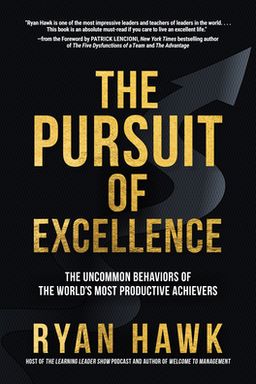
What does it actually mean to live excellently rather than merely successfully? Ryan Hawk’s The Pursuit of Excellence: The Uncommon Behaviors of the World’s Most Productive Achievers asks you to reimagine what achievement looks like—and why most of us stop short. Success, Hawk argues, is comparative; it’s measured against others. Excellence, in contrast, is measured against your own potential. Excellence is the fanatical commitment to getting just a little better every single day.
Hawk’s central claim is disarmingly simple yet incredibly demanding: to pursue excellence is to adopt an infinite mindset of improvement. His guiding metaphor—borrowed from Simon Sinek—is that this is not about climbing one mountain but finding the next taller one, over and over. This pursuit requires deliberate intention, disciplined action, and the willingness to embrace discomfort.
Success Versus Excellence
In one of the book’s most memorable contrasts, Hawk shares the wisdom of basketball coach Brook Cupps: “Success is based on comparison with others; excellence is measured against your own potential.” Success can feel fleeting, a momentary win. Excellence is enduring—a commitment to progress rather than perfection. If today you are a little wiser, stronger, kinder, or more prepared than yesterday, you are living excellently. Cupps’s observation reframes the entire achievement mindset away from competition toward self-mastery.
The Infinite Game and Purposeful Action
Hawk interprets excellence as an “infinite game”—a continuous, never-finished chase for growth. Your goal is not victory but sustained play. In this sense, excellence demands endurance and curiosity. The book draws from a vast array of stories—from marathoner Eliud Kipchoge’s disciplined simplicity to Steve Prefontaine’s refusal to “sacrifice the gift” of effort—to show that greatness is rarely about dramatic triumphs. It’s about showing up, consistently hammering away, even when no immediate reward appears.
Hawk’s own journey—from collegiate quarterback to corporate leader to podcaster and author—serves as case study and confession. He describes learning from hundreds of leaders through his podcast, The Learning Leader Show, searching for patterns among those who sustain excellence. What he discovered is that excellence is built through curiosity, discipline, humility, and generosity. It’s a practice, not a destination.
A Framework for the Pursuit
The book’s architecture reinforces this concept through three parts—The Build, The Fuel, and The Chase—each focusing on a stage of personal evolution:
- The Build: establishing core disciplines like purpose, mindset, focus, resistance, and relationships. You can’t grow without self-awareness and integrity at the foundation.
- The Fuel: discovering what lights you up, harnessing community (“the power of others”), and building genuine confidence. Motivation comes from love of the craft, not willpower alone.
- The Chase: making long-term commitments, building your band or team, and realizing excellence is a lifelong journey rather than a finish line.
Why This Matters
In a culture obsessed with external status—titles, awards, income—Hawk’s message is revolutionary in its humility. He insists that living excellently means returning to the basic disciplines of mastery: caring deeply, preparing meticulously, listening with presence, and giving generously. It’s not glamorous, but it’s incredibly effective. His examples—John Chambers’s “hold onto the fishing pole,” Admiral McRaven’s story of the sugar cookie, or Jim Collins’s “trust wager”—reflect that the uncommon behaviors of top performers are surprisingly human ones: they persist, adapt, and help others rise.
If success is fleeting applause, excellence is the quiet satisfaction of mastery. Hawk invites you to redefine greatness as growth—the infinite pursuit of small, smart, purposeful actions that compound over time. The pursuit doesn’t end with achievement; it continues with curiosity. As Michelangelo put it centuries ago, “Yet, I am learning.”