
Idea 1
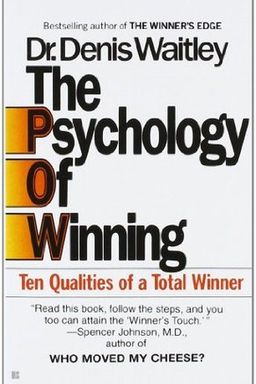
The New Psychology of Winning: Building Inner Mastery in a Noisy World
What does it truly mean to be a "winner" in today’s hyperconnected, distracted world? In The New Psychology of Winning, Denis Waitley, one of the most enduring voices in personal development, challenges the outdated model of success based on external victories—money, fame, and status—and redefines winning as an inner journey of mastery, character, and meaning. Drawing from decades of experience with Olympians, astronauts, and executives, Waitley argues that the key to a fulfilling life isn’t competition against others, but victory over ourselves. In his words, the private victories always precede public success.
Waitley updates his classic 1970s philosophy for the 21st century, integrating insights from neuroscience, psychology, and the digital revolution. He warns that while we’ve gained infinite knowledge and connectivity, we’ve lost touch with the habits of introspection, imagination, and integrity that build inner excellence. The result: many people look successful online but feel empty offline. To reverse that trend, he lays out timeless principles—self-discipline, optimism, responsibility, creativity, and self-awareness—each reexamined in light of today’s challenges and opportunities.
Winning as Inner Mastery, Not Outer Glory
Waitley distinguishes between two types of victory: the external win that others see, and the internal one that only you can experience. Echoing Stephen Covey’s idea of the “private victory” in The 7 Habits of Highly Effective People, he stresses that lasting success starts within. You can’t control an unpredictable world, but you can control your thoughts, feelings, and responses. This form of mastery fosters resilience, emotional intelligence, and self-esteem—qualities more crucial than ever in an era dominated by social media’s comparison culture.
To Waitley, winners aren’t defined by beating others but by becoming the best versions of themselves. Character—not image—is the real scorecard. He draws a sharp contrast between living by external validation (likes, followers, titles) and by inner conviction, urging readers to reclaim their identity from a digital culture obsessed with hype over substance.
A Synthesized Model of Human Potential
The book weaves together disciplines once seen as separate: psychology, neuroscience, philosophy, and performance science. Waitley discusses how modern research on neuroplasticity supports his long-held insight that you can rewire your mind at any age. Whether you’re twenty or eighty, you can form new neural pathways through repetition, visualization, and positive self-talk. These mental habits gradually replace the self-limiting beliefs—what he calls the “mental cul-de-sacs”—that keep people stuck repeating the past.
He also emphasizes that biology mirrors belief. Optimism isn’t naive—it produces measurable effects in your brain and body. Through stories ranging from Olympians like Nadia Comaneci scoring a perfect 10 to Norman Cousins laughing himself back to health, Waitley shows how thought creates chemistry. The mind, he insists, is a goal-positioning system: once you set a destination clearly and visualize it repeatedly, your brain adjusts course like GPS, guiding your behavior toward the outcome you imagine.
Why It Matters Today
Why revisit these timeless truths now? Because the twenty-first century’s extraordinary technological progress has made self-mastery harder, not easier. We live in what Waitley calls “a skin-deep society”—impatient, confrontational, and obsessed with instant gratification. In this environment, genuine winners must cultivate psychological fitness: the ability to think long-term, recover from setbacks, and stay centered amid chaos. Waitley’s message is a reminder that while tools, trends, and technology change, human fundamentals do not. Success still depends on what you believe, how you think, and what you habitually do.
The book’s nine chapters explore this holistic model of excellence. It begins with self-understanding (the brain as a goal-seeking mechanism) and self-regulation (motivation through desire, not fear), moves through optimism and belief, and ends with integrity and legacy. Along the way, Waitley demystifies habit formation through neuroscience, illustrates emotional intelligence through stories from sports and business, and even reimagines imagination itself as a force that “rules the future.”
For readers overwhelmed by constant change, The New Psychology of Winning offers both comfort and challenge. Yes, the world is unpredictable—but that unpredictability makes internal anchoring more valuable than ever. Waitley’s enduring message is clear: in a century defined by speed, technology, and distraction, true winners are those who master themselves first, serve others with integrity, and remain anchored in optimism and purpose. The new psychology of winning is not about conquest, but contribution.