
Idea 1
The Mindset Behind Exceptional Sales Success
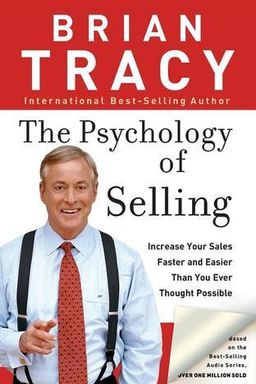
Have you ever wondered why some salespeople seem unstoppable while others barely survive? In The Psychology of Selling, Brian Tracy argues that the difference lies not in the product or even the pitch, but in what goes on inside your mind. Selling, he asserts, is far more a psychological game than a technical one. What separates the top 10 percent—the sales superstars—from the rest is not charm or luck, but mindset, habits, and the belief that success is predictable. If you understand and apply these mental laws, you can move from struggling salesperson to top performer.
Tracy contends that high-performing salespeople have discovered what he calls the “Law of Cause and Effect”—a universal principle stating that every result has a cause. Success, therefore, is not random; it’s the product of specific actions and attitudes repeated consistently. He insists that if you do what successful salespeople do, you’ll inevitably achieve similar results. The secret lies in understanding the psychology of high performance and applying it with discipline.
Selling as the Engine of Civilization
To Tracy, sales isn’t just another profession—it’s the driving force behind everything in society. “Nothing happens until a sale takes place,” he writes. Without sales, there would be no companies, no growth, no jobs, no tax revenue, and no progress. Recognizing the dignity and importance of the sales role reframes it as a noble occupation. This mental shift is vital: you perform better when you believe your work matters.
Sales is also a microcosm of free enterprise. As President Calvin Coolidge once said, “The business of America is business,” and Tracy extends that to “The business of business is selling.” Salespeople are the spark plugs that ignite the economy. Internalizing this idea builds pride in your role and strengthens the self-esteem that fuels performance.
The 80/20 Rule of Selling Power
Tracy builds much of his philosophy on the Pareto Principle: in virtually every sales organization, 20 percent of salespeople earn 80 percent of the money. The pattern continues upward—the top 20 percent of that 20 percent (the elite 4 percent) earn 80 percent of the top group’s income. The difference between an average salesperson and a top performer isn’t massive talent—it’s a small difference in habits, focus, and persistence that compounds over time. Tracy calls this the Winning Edge Principle: small improvements in key areas lead to huge differences in results.
For instance, if you’re just “a nose better” than a competitor, like a racehorse that wins by a fraction of a second, you can earn ten times the prize money. In sales, being just slightly more prepared, confident, or persistent can yield exponential gains. This explains why top producers often earn sixteen times more than their average peers. Tracy challenges you to commit to joining this top tier, because that choice alone sets you on a different trajectory.
The Inner Game: Sales Starts in Your Head
At its core, the psychology of selling is about mastering your mind. Tracy highlights the self-concept—the mental blueprint that dictates your performance. You will always act, feel, and perform in harmony with your self-image. If you see yourself as average, you’ll earn accordingly. To raise your external income, you must first raise your internal self-concept—he calls this resetting your “financial thermostat.”
Interestingly, Tracy notes that many people unconsciously limit themselves to their parents’ income levels or their own past performance. To break free, you must consciously envision higher goals and see yourself already achieving them. Visualization, self-talk, and affirmations (“I like myself,” “I’m the best,” “I love my work”) begin reprogramming your subconscious to expect and attract success. (This echoes teachings in Napoleon Hill’s Think and Grow Rich and Maxwell Maltz’s Psycho-Cybernetics.)
Overcoming Fear and Building Confidence
Two mental enemies dominate sales: fear of failure and fear of rejection. Tracy argues that these arise from childhood criticism, but can be conquered through self-esteem. When you like yourself, rejection no longer stings; you interpret “no” as a normal step toward “yes.” High self-esteem acts as armor, turning sales into an impersonal numbers game rather than a personal referendum. Every “no” simply moves you closer to the next sale.
He underscores that courage in selling is like a muscle—the more you exercise it, the stronger it becomes. Persistence, resilience, and enthusiasm are the visible signs of internal confidence. Tracy insists that success in sales isn’t about avoiding rejection but mastering how you respond to it. Boldness and perseverance are what eventually separate the top producers from those who quit early.
Why The Psychology Matters
Ultimately, Tracy’s thesis is that selling success is 80 percent psychological and only 20 percent technical. Techniques matter, but only when your mindset supports them. The best closing lines, scripts, and strategies fail if you carry fear, doubt, or low self-worth into each meeting. The journey to becoming a sales champion therefore begins not with the product, but with your perception of yourself.
In the chapters that follow, Tracy expands this psychological foundation into practical systems: setting and achieving clear goals, understanding why people buy, using visualization and affirmations, developing creative selling strategies, managing appointments, and mastering persuasion and closing skills. Each concept reinforces the fundamental idea that sales mastery begins with self-mastery. If you can upgrade your inner game, the outer game will take care of itself—and your results may quickly astonish you.