
Idea 1
How Children Construct Knowledge: Piaget’s Revolutionary Vision of Development
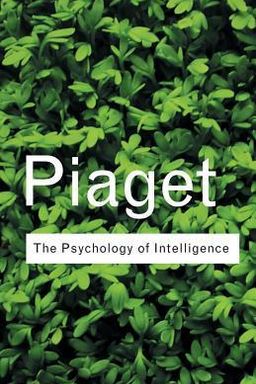
How does a child move from grasping objects with tiny fingers to grasping abstract ideas with a sophisticated mind? In The Psychology of the Child, Jean Piaget answers this timeless question with a groundbreaking theory of how intelligence itself evolves through interaction between a growing organism and its environment. Piaget contends that children are not empty vessels waiting to be filled; rather, they are active builders of knowledge, constantly organizing and re-organizing their experiences to make sense of the world. Understanding that process—how the mechanics of human thought unfold—is essential to understanding who we are as thinking beings.
Piaget was not simply cataloging childhood behaviors; he was tracing the very architecture of cognition. Across early infancy and adolescence, the child passes through distinct but integrated stages of mental growth. From sensori-motor actions (grasping, sucking, moving) to symbolic play, to logical reasoning and abstract thought, these stages mirror the way human understanding is built—like scaffolding, each new structure standing upon the foundations of the previous one. His famous stages—sensori-motor, preoperational, concrete operational, and formal operational—don’t just describe ages; they reveal how thinking itself transforms.
The Core Argument: Intelligence as Active Construction
At the heart of Piaget’s theory lies the idea of constructivism: learning and development arise from active engagement with the world. Children assimilate experiences into what they already know, and then accommodate their mental structures when new information doesn’t fit. This dynamic equilibrium—what Piaget calls equilibration—drives intellectual growth. Through cycles of assimilation, accommodation, and adjustment, the mind constantly reorganizes itself toward higher levels of coherence. It’s a living process, not a passive one.
This explains why a five-year-old can think that pouring the same amount of water into a taller glass means there’s “more water”—and why, two years later, that same child understands conservation. What changes isn’t the sensory input but the underlying operations of thought. Intelligence, Piaget argues, emerges from the coordination of actions turned inward, eventually organized as mental operations—internalized actions that can be reversed, combined, and logically structured.
The Journey Through Cognitive Stages
Piaget’s developmental map begins at birth, with sensori-motor intelligence, a period of pure physical exploration. Babies learn through their senses and movements, discovering permanence (that objects still exist when out of sight) and early cause-and-effect. He shows how perception transforms from fleeting “tableaux” into stable spatial, temporal, and causal orders—a kind of proto-logic of action.
Next comes the semiotic or symbolic function—the ability to evoke things in their absence. Around age two, children begin to play symbolically, using objects and gestures to represent reality. This marks the dawn of imagination, language, and memory—the mental bridge between perception and thought.
Then come the concrete operations, arriving at about seven or eight years old. Here, children learn to perform logical operations on tangible objects, understanding conservation, reversibility, and classification. They can seriate (arrange things by order), group, and reason about cause and effect, but still rely on concrete experiences. Between eleven and fifteen, the formal operations develop, allowing the adolescent to handle abstractions—to think about hypotheses, possibilities, and hypothetical worlds. Here, logic becomes a system of relationships independent of immediate reality, setting the stage for scientific and moral reasoning.
Why It Matters: Intelligence as a Moral and Social Process
Piaget’s insights go far beyond childhood behavior. He connects cognitive growth to social and moral development, arguing that the ability to coordinate ideas parallels the ability to coordinate perspectives. When a child learns that water remains the same even if the shape changes, he’s mastering reversibility. When he learns to play by shared rules or judge fairness, he’s applying the same principle socially—a decentering from self-centered thought toward cooperative reasoning.
This unifies Piaget’s framework: the same patterns that govern logic—coordination, reversibility, equilibrium—also shape moral judgment and social cooperation. The journey from egocentrism to objectivity and mutual respect echoes the journey from simple sensory contact with the world to abstract reflection upon it.
The Big Vision
Piaget’s legacy rests on his view of development as a living construction of coherence. Children don’t passively inherit knowledge; they create it through dynamic equilibrium between understanding and experience. Just as the body grows toward balance, the mind grows toward logic—a form of internal order achieved through continual interaction with the world. In this sense, intelligence is not only cognitive but moral, social, and creative.
As you read through Piaget’s stages—from the first grasp to the first theorem—you see not just the evolution of thought but the story of human self-construction. The child doesn’t merely grow in what he knows; he grows in how he knows. And in that growth, Piaget sees the essence of humanity: a species always learning to think about its own thinking.