
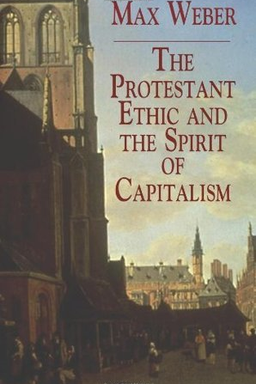
The Protestant Ethic and the Spirit of Capitalism cover

The Protestant Ethic and the Spirit of Capitalism

by Max Weber

Max Weber''s classic text explores how the Protestant work ethic influenced the rise of capitalism, reshaping Western mindsets about work, wealth, and ethics. Delve into this foundational analysis of culture and economy, still relevant today.

Islam and the Making of the West

The book’s central argument is striking: Islam is not just the West’s outsider but its constitutive other — the mirror against which Western political, legal and cultural identity continually defines itself. This theme runs from early Christendom through colonialism and into the twenty-first-century war on terror. You will see how religion, race, gender and law intertwine so deeply that to understand modern Westernness, you must trace how Islam was imagined, feared and disciplined across centuries.

From Theological Enemy to Political Blueprint

The story begins with early Latin Christendom, where figures like St John of Damascus and Pope Urban II defined Islam as heresy and Muslims as existential antagonists. The Crusades and Iberian Reconquista were not merely military campaigns; they became formative scripts producing Europe as a Christian homeland purified of Muslim and Jewish presence. This religio-political architecture gave the West its initial sense of territorial and moral coherence. (You might compare this to Edward Said’s thesis in Orientalism, which also treats representation as a means of imperial governance.)

Race and Religion as a Single Formation

As Europe secularized, religious difference mutated into racial taxonomy. Kant and Hegel reframed theological hierarchies as civilizational ones, translating religious inferiority into the language of biology and culture. The ‘Moor,’ the ‘Semite,’ the ‘Oriental’ — all became racial types that carried religious residues. Modern international law, as Antony Anghie explains, emerged through colonial encounters with ‘pagans’ and ‘Saracens,’ positioning Muslims and other colonized peoples as outside legal personhood. These genealogies reveal how deeply religio-racial logic structured sovereignty itself.

Sexuality and the Enemy

Western depictions of Islam also hinge on sexual tropes. Medieval writers cast Muslims as lustful and sexually deviant; later Orientalists turned this into erotic fascination. You find echoes of these phantasms in colonial postcards of Algerian women, in Shakespeare’s Othello (interpreted by Daniel Boyarin as a racial-sexual anxiety play), and in modern military culture where torture becomes sexualized — as in Abu Ghraib. Sexual fantasy and moral condemnation converge to justify domination. (Note: Judith Butler, Jasbir Puar and Joseph Massad each examine this sexual geopolitics from different angles — queer nationalism, liberal rescue and global sexual taxonomy.)

Law, Liberalism and the War on Terror

Contemporary policies re-inscribe these old hierarchies. The ‘unlawful enemy combatant’ and drone target lists operationalize medieval ideas of lawless infidels. Talal Asad and Gil Anidjar read such practices as reactivations of Western political theology, where the friend/enemy distinction (as Carl Schmitt proposed) defines political being itself. The book insists that the war on terror is not an aberration but a reprise of this longue durée pattern: Islam cast as violent, illiberal and malevolent so the West can appear lawful, liberal and rational.

Gender, Feminism and Civilizational Rescue

Western feminism often folds into these narratives of rescue. Post-9/11 campaigns to ‘save Muslim women’ replay older imperial gestures — unveiling the Orient, liberating the harem, and proving Western gender superiority. Scholars such as Leila Ahmed and Meyda Yeğenoğlu show that the feminist ‘rescue’ fantasy legitimizes military intervention, while anti-colonial feminists contest these simplifications. Similarly, Jasbir Puar’s term ‘homonationalism’ captures how queer inclusion in the West becomes a marker of civilizational modernity, reinforcing Islam as backward.

Historical Continuities and Political Consequences

From medieval crusade sermons to modern presidential speeches invoking ‘Judeo-Christian values,’ Islam consistently functions as the West’s shadow figure. Even moments of trauma — the Holocaust, memorialized through the figure of the Muselmann — reconfigure this relationship by integrating Jews into whiteness and recasting Muslims as the new racialized others. The founding of Israel, the language of ‘civilization,’ and the securitization of Muslim bodies all stem from this deep historical sediment. You are invited to see Islam not just as the West’s object of discourse but as the unseen motor of its political imagination.

Core Takeaway

You should leave this section recognizing that Western modernity — including its legal, racial and gender orders — cannot be understood without the enduring construction of Islam as its constitutive enemy. To study the West means tracing how this imagined enemy shapes institutions, affects bodies and structures moral hierarchies across centuries.

In short, this book offers you a long historical lens: from Crusade to counterterrorism, from the harem to human rights, Western identity repeatedly renews itself by defining and sexualizing Islam as the threat that must be managed, repressed or redeemed.


Religio‑Racial Logic of Western Power

You learn that race and religion are not independent frameworks but fused axes that organize modern power. The author calls this fusion a religio‑racial formation, showing that theological oppositions built in early Christianity evolved seamlessly into racial hierarchies that underpin capitalism, empire and international law.

From Theology to Science

Early condemnations of Muslims and Jews rested on bodily tropes — degeneracy, impurity, lust. When Enlightenment thinkers secularized Europe, they carried those metaphors forward as racial traits. Kant’s taxonomy of humanity and Hegel’s historical ladder echo the Church Fathers’ contrast of spiritual versus carnal peoples. Language studies and ethnography codified these binaries: the Aryan versus the Semite, the civilized versus the barbaric. (Note: Tomoko Masuzawa’s The Invention of World Religions is cited here for showing how religious classification masked racial sorting.)

Law and Sovereignty

Legal theorists like Francisco de Vitoria and Hugo Grotius justified conquest by declaring non‑Christians outside natural law. Modern doctrines such as protectorates and mandates inherit these assumptions. Antony Anghie’s work underscores how international law emerged through colonial encounters — defining rational humanity through Christian‑European standards and labeling Muslims as lawless or uncivilized. You can map this directly to today’s practices around ‘unlawful combatants,’ refugees and humanitarian warfare.

The Muselmann and Racial Reconfiguration

The camp figure of the Muselmann embodies the seam between religion and race: its name (‘Moslem’) signified doom, and its image enabled Jews to be reabsorbed into Western whiteness after 1945. Giorgio Agamben and Gil Anidjar read this as the pivot where European anti‑Semitism mutates into anti‑Islamic racialization. Survivors’ disavowal of the ‘Moslem’ identity symbolically cleared space for the Jew as modern Westerner while casting Arabs and Palestinians as the new outsiders. The establishment of Israel fixed this transformation geopolitically.

Key Point

Religio‑racial formation means that modern race is never purely biological; it is theological at its core. It sanctifies global inequality by retaining moral hierarchies from Christian doctrine in secular form.

By tracing this genealogy, you can see why racial violence, colonialism and Islamophobia persist even when societies proclaim secular tolerance: because the grammar of religion lives inside the modern idea of race.


Gender, Sexuality and Civilizational Fantasies

You encounter the book’s sustained examination of how Western representations fuse sex and civilizational hierarchy. The Muslim figure — whether man or woman — becomes the canvas on which the West projects its erotic anxieties and moral superiority. These imaginations recur from medieval hagiography to military policy.

Sexualizing the Muslim Man

Medieval Christian texts depicted Muslims as lustful and perverse, casting chastity as a Christian virtue by contrast. Shakespeare’s Othello, read through Daniel Boyarin, crystallizes this logic: the Moor’s sexuality fuses racialized desire with religious betrayal. Colonial explorers like Richard Burton repeated the pattern through pseudo‑science — measuring Arab and African penises to prove racial difference — epitomizing the obsession with mastering and emasculating the Other. Such practices inaugurated a ‘racial castration’ that continues in wartime rhetoric where Muslim men are mocked as feminized bodies.

Eroticizing the Muslim Woman

The colonial gaze turned Muslim women into symbols of oppression. Malek Alloula’s Algerian postcards exposed the voyeurism of French imperial culture, where unveiling became both sexual and political conquest. Western women travelers, analyzed by Meyda Yeğenoğlu, entered harems and wrote of rescuing Eastern sisters — performing masculinized authority while claiming humanitarian virtue. Modern echoes appear in Amira Jarmakani’s study of ‘Sheikh’ romances, in which liberated Western heroines civilize exotic Muslim men.

War, Feminism and Sexual Domination

At Abu Ghraib, sexual humiliation became an instrument of military control. What shocked observers — including feminists — was women’s participation in torture. Yet as the book notes, their shock often restored empathy for female perpetrators rather than victims, centering Western moral consciousness. The incident revealed that sexual domination is not deviant but systemic — a performance of empire.

Core Insight

Sexual tropes make Islam legible to Western audiences; they justify intervention and sustain fantasies of rescue, mastery and civilization. From Othello to Abu Ghraib, eroticized racism defines who counts as modern and who must be disciplined.

By the end of this section, you realize that sexualization is not peripheral—it is foundational to the politics of race, empire and faith. Gender and sexuality become technologies through which the West continually manufactures its own moral superiority.


Law, Sovereignty and the Logic of Exception

Law appears throughout the book not as a neutral safeguard but as an instrument of exclusion. The designation ‘unlawful combatant,’ the denial of asylum and extrajudicial killing trace back to colonial precedents. The author teaches you to read these doctrines historically: sovereignty itself was invented as a mechanism to regulate religious and racial difference.

Colonial Genealogy of Modern Law

Antony Anghie’s lineage of sovereignty begins with Francisco de Vitoria’s notion that Christian rulers could lawfully wage war against pagans. This principle institutionalized the idea that some peoples existed outside law’s protection. Later international law codified conquest, protectorate and mandate systems that justified domination over Muslim lands. Post‑9/11 detention regimes — Guantanamo, rendition programs and drone strikes — repeat these patterns under secular guise.

The State of Exception

Borrowing from Carl Schmitt and Hannah Arendt, the author notes that sovereignty always entails the power to decide who has rights. Casting someone as ‘unlawful’ suspends the ‘right to have rights,’ producing what Giorgio Agamben calls bare life. The Obama administration’s kill-lists and JSOC’s ‘manhunting’ missions embody this mechanism: law transforms into bureaucracy of death.

Legal Violence and Race

Legal exclusion is racialized. Muslim bodies marked as violent become rationalized targets. Asad argues that secular legalism cloaks moral judgments inherited from Christian governance. This insight reframes the liberal narrative that law protects against excess: sometimes, law is the excess. The category of the enemy is not outside law but generated by it.

Lesson

You should read legal norms as archives of empire. The words ‘security,’ ‘enemy,’ and ‘combatant’ carry centuries of theological and racial sediment. Law protects citizens precisely by unmaking others.

When you understand law as political theology, you see why the war on terror’s violence is not exceptional but systemic. Legal language itself constructs the frontier between humanity and disposability.


Feminism, Queer Politics and Liberal Empire

You find that gender and sexuality discourses, long symbols of liberation, can also operate as instruments of empire. The book critiques how Western feminism and queer advocacy have been harnessed to justify wars, sanctions and cultural supremacy under the banner of civil rights.

Imperialist Feminism

After 9/11, Western feminists joined campaigns to rescue Muslim women. Groups like the Feminist Majority explicitly urged military intervention in Afghanistan to end ‘gender apartheid.’ Writers such as Phyllis Chesler invoked an alliance between feminism and Zionism, framing Islam as anti‑woman and anti‑Jewish. The author calls this alignment a recycling of colonial tropes—benevolent rescue cloaking occupation.

Critical and Complicit Voices

Zillah Eisenstein critiqued empire yet still relied on global patriarchy as a flattening frame. Judith Butler’s Precarious Life mourned Western vulnerability while sidelining non‑Western suffering. The result across these texts: feminist and queer discourse recenters Western subjectivity as the universal moral authority.

Queer Nationalism and the Gay International

Jasbir Puar’s concept of homonationalism and Joseph Massad’s critique of the ‘Gay International’ expose how sexuality becomes a civilizational measure. Western states use gay rights as a litmus test for modernity, distinguishing liberal allies from ‘barbaric’ Islamic cultures. The irony is that inclusion of queer citizens at home often coincides with exclusion of racialized others abroad.

Ethical Challenge

You are asked to examine whether your commitment to gender justice or queer rights is being weaponized to sustain geopolitical hierarchies. The book does not reject these causes—it warns against their instrumentalization.

By tracing feminist and queer complicity in imperial rhetoric, you see how even emancipatory politics can reproduce the religio‑racial grammar of empire, transforming care into conquest.


Islamist Movements and Anti‑Colonial Memory

This part reframes Islamist politics as complex responses to colonial history rather than pure fundamentalism. You learn to read these movements through social, moral and historical contexts—their roots in anti‑colonial resistance and their relation to secular nationalism’s failures.

Islam in Decolonization

Frantz Fanon’s Wretched of the Earth inspired many analyses of liberation, yet the book notes his silence on Islam’s role in Algerian resistance. Later scholars like Fouzi Slisli reveal that Sufi orders and Islamic networks were central to mobilizing peasants. When you reinterpret Fanon’s ‘spontaneity’ as structured by faith-based organization, you see Islam as integral to decolonization, not its obstacle.

Varieties of Islamism

Movements such as the Muslim Brotherhood, Hezbollah, Hamas and Iran’s revolutionary networks showcase diversity in goals and methods—from social welfare to armed struggle. The book positions Islamism within modern crises: neoliberal reforms, collapsing welfare states, and authoritarian rule. It thus refuses reductive binaries of modern versus medieval.

Emancipatory Potentials

For many adherents, Islam provides moral resources against inequality and cultural subordination. The author argues for studying Islamic activism as a field of internal debate rather than a monolith. Some factions align with empire; others challenge global injustice. Understanding these dynamics demands sensitivity to history rather than alarmist labels.

Analytical Advice

Approach Islamist politics through socio‑historical conditions, not stereotypes. Anti‑colonial memory shapes their ethics; neoliberal oppression shapes their militancy.

By recognizing Islamism’s plurality and historical roots, you avoid reproducing the Western narrative that equates Islam with terror and see instead how faith can serve as a vehicle for justice and resistance.


Secularism, Critique and Cultural Power

The book uses the Danish cartoons controversy to test secularism’s claim to universality. You will see that ‘free speech’ and ‘critique’ are not neutral values but instruments of governance born from Christian‐liberal histories. Scholars Talal Asad, Saba Mahmood and Judith Butler offer contrasting readings that reveal how secular discourse handles religion, race and injury.

Asad’s Genealogy of Secular Rule

Asad argues that secular governance grew from Christian categories — moral autonomy, sin and civilization — retooled for state management. European free speech laws emerged from property and class conflicts, not pure liberty. When Muslims protest blasphemy, they confront an order that already defines rational humanity through Christian temporalities.

Mahmood’s Moral Injury

Saba Mahmood explains that portraying the Prophet is not merely symbolic offense but moral injury to embodied piety. European law, designed for speech harms among individuals, cannot grasp this collective ethical wound. For Muslims as racialized minorities, the law’s blindness reinforces exclusion.

Butler and the Limits of Liberal Sympathy

Judith Butler defends critique as vital to democratic and queer thought, stressing vulnerability across identities. Yet, as the author notes, her focus on Western fragility recenters the liberal ‘we,’ placing Muslim religiosity again as the problem. Wendy Brown’s framing of the debate repeats this hierarchy by treating secular critique as the analytical center.

Takeaway

Critique is political: depending on who wields it, it can either challenge or reinforce Western authority. You must ask who gets to critique, and whose pain counts as legitimate expression.

This debate shows that secularism’s self-image as neutral hides its racial and theological foundations. To imagine a post-secular ethics, you must rethink how critique itself is distributed through histories of power.


The Judeo‑Christian West and Global Alliances

Finally, the book traces how the term ‘Judeo‑Christian’ reconfigured Western identity after World War II. Integrating Jews into the civilizational narrative helped absolve Europe and consolidate a new religious‑racial alliance that cast Islam as the enduring adversary.

The Rise of the Judeo‑Christian Idea

Scholars such as Masuzawa and Peter Berger show that the notion gained currency to contrast liberal democracies with fascism. After the Holocaust, Western societies recoded Jewishness from theological threat into civilizational core, allowing political solidarity with Israel and spiritual continuity within Christianity.

From Inclusion to Exclusion

As Jews were folded into whiteness, Muslims became the new foil. Presidents Bush, Obama and Trump all invoked ‘Judeo‑Christian values’ to frame the West’s mission and link faith to security policy. The discourse merges religion, race and geopolitics—casting Israel as bulwark of civilization and Palestine as locus of threat. The phrase thus translates theological unity into political alliance.

Consequences for Global Politics

These civilizational narratives justify interventions and define enemies. Balfour’s colonial dismissal of Arab ‘prejudices’ anticipates current rhetoric that erases Palestinian claims. The Judeo‑Christian frame anchors Islamophobia as policy and cements Western hegemony in the Middle East.

Historical Lesson

Civilizational vocabularies are not innocent moral unities—they are ideological mechanisms that choose allies and enemies. ‘Judeo‑Christian’ inclusion required a Muslim exclusion.

By revealing this genealogy, the book ends where it began: Islam as constitutive absence through which the West defines itself. The Judeo‑Christian myth perfects this process, merging religion, race and power into a single global order.

Dig Deeper

Get personalized prompts to apply these lessons to your life and deepen your understanding.

Go Deeper

Get the Full Experience

Download Insight Books for AI-powered reflections, quizzes, and more.