
Idea 1
The Spiritual Voyage of the Human Soul
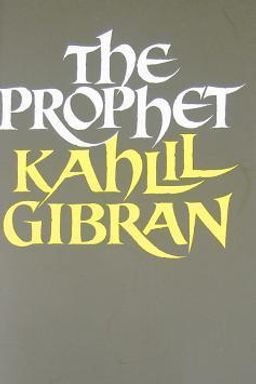
What does it mean to live fully—to love, labor, give, and die with grace? The Prophet by Kahlil Gibran invites you to ask this question not from the head, but from the heart. Gibran’s beloved work, published in 1923, is far more than poetry—it is a luminous philosophical guide that speaks to the enduring rhythms of human existence. Told through the voice of Almustafa, a prophet who has lived twelve years among the people of Orphalese and is about to return to his homeland, the book unfolds as a farewell dialogue between the prophet and the townspeople who ask him to speak on life’s most profound subjects.
Through these conversations, Gibran distills the essence of spiritual wisdom, using musical, symbolic language to reveal universal truths about love, marriage, work, joy, sorrow, freedom, and death. His words transcend religion or culture—they are both deeply mystical and deeply human, echoing in the same contemplative spirit as the teachings of Rumi or the Stoics. Each chapter shines a light on a universal experience, helping you see that to live meaningfully means to merge the sacred and the ordinary, to see divinity pulsing in every act of daily life.
The Prophet’s Journey as a Mirror for You
Almustafa’s ship symbolizes departure, transformation, and homecoming. As he prepares to leave Orphalese, the people gather to hear his final words. This moment of parting becomes a symbolic exchange between wisdom and the world—it reflects your own journey toward self-awareness. Like Almustafa, you are both the teacher and the student, the one speaking and the one listening. His reflections offer pathways through which you can navigate your emotional, ethical, and spiritual self.
Each teaching is framed as a miniature revelation. For instance, when asked about love, he reveals that true love both crowns and crucifies; it exalts but also tests. About marriage, he counsels unity that preserves individuality—an ideal balance mirrored in the phrase, “Let there be spaces in your togetherness.” His reflection on giving reminds you that the purest gifts come not from wealth but from the heart’s open rhythm. And on work, he redefines labor as prayer, suggesting that work done with love becomes devotion itself.
Unity of Opposites: The Heart of Gibran’s Teaching
One of Gibran’s central insights is that opposites are not enemies but companions. Joy and sorrow are two sides of the same vessel; freedom and responsibility mirror each other; life and death are one movement of divine rhythm. “Your joy is your sorrow unmasked,” says the prophet, expressing how truth always arises from the tension between extremes. This echoes Eastern philosophies and mystic traditions (such as the Taoist emphasis on yin and yang) that teach harmony through balance.
For Gibran, every human experience—whether love’s bliss or grief’s shadow—is sacred. You cannot reject pain or chase only joy, because both carve the soul into deeper receptivity. His faith in divine unity asks you to embrace life whole, to stop seeking perfection through avoidance and instead to find grace in participation and awareness.
Ethics Without Dogma: Religion in Everyday Acts
Gibran deconstructs religious formalism and argues that the truest worship is living well. Prayer, he says, is not only for moments of distress—it is the daily breath of gratitude and wonder. In his final chapters, the prophet redefines faith as participation: “Your daily life is your temple and your religion.” This insight connects him with thinkers like Emerson, who believed that ethical living is the highest act of devotion. Thus, Gibran’s faith is universal—“life itself is God made visible.”
This spirituality doesn’t require monastic detachment. It asks that you infuse holiness into simple acts—working, eating, building, raising children. Through this lens, morality is not imposed by law but discovered through love. You are invited to treat your surroundings, your relationships, and even your sorrows as altars of transformation.
Why These Teachings Matter Today
In an age of distraction and division, The Prophet feels surprisingly modern. It offers the stillness and depth our fragmented minds crave. Gibran challenges materialism (“the lust for comfort murders the passion of the soul”) and reminds you that authenticity matters more than appearance. His poetic wisdom encourages a return to simplicity—trust in silence, faith in generosity, and reverence for the living moment.
Moreover, his compassionate tone models a form of spiritual humanism—a way to honor the divine without doctrine, to meet others without judgment. His language of love can feel like therapy for the spirit. Whether you’re wrestling with loss, ambition, love, or meaning, Gibran whispers the same message that mystics always have: that everything you seek already lives within you.
The Circle of Return
The book’s conclusion—Almustafa’s farewell as he sails into the mist—closes the circle of being. His departure is not an ending but a return, like the soul’s release into eternity. “And when the earth shall claim your limbs, then shall you truly dance.” In this view, death is not annihilation but reunion, the final homecoming to the greater ocean of life.
Reading The Prophet is like holding a mirror to the eternal patterns of existence. Its wisdom calls you to live more consciously—to love generously, to work with devotion, to suffer with dignity, and to die without fear. Gibran’s poetry reminds you that none of these moments are separate: to live deeply is already to have glimpsed eternity.