
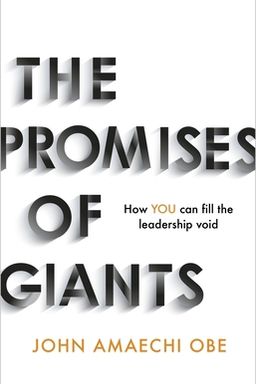
The Promises of Giants cover

The Promises of Giants

by John Amaechi

The Promises of Giants by John Amaechi provides transformative strategies to become an exceptional leader. With practical tips, this book empowers you to unlock your potential, elevate others, and create environments that foster growth and success.

Becoming a Giant: The Responsibility of Influence

When was the last time you realized how much your presence affected the people around you? In The Promises of Giants, John Amaechi—a psychologist, former NBA player, and thought leader on inclusion—asks this question not to flatter, but to awaken readers to the truth that everyone is a giant to someone. Whether you realize it or not, your size, voice, or title magnifies your actions—and with that comes responsibility. Amaechi contends that modern society is suffering from a crippling leadership void: a deficit of self-aware, compassionate, and action-oriented individuals who recognize their influence and wield it consciously.

Drawing from his own remarkable life—growing up an introverted, bullied, six-foot-nine Black boy in Manchester to becoming the first openly gay NBA player, and later a respected organizational psychologist—Amaechi uses vivid storytelling and psychological insight to redefine what leadership means. Leadership, for him, is not about title or authority; it is about choices. It is the daily promise to use your disproportionate power to improve, protect, and empower those around you. Each chapter builds on this foundational idea through a series of personal and organizational promises that challenge readers to rethink how they view themselves, their biases, and their impact on others.

The Philosophy of the Giant

Amaechi begins by recounting what it means to live life as a literal giant. As a child, his size provoked fear and ridicule, shaping his understanding of how disproportionate power works. One New Year’s Eve, he accidentally broke a man’s nose while dancing in a crowded club. That incident haunts him still—not because he was violent, but because he forgot he was a giant. The man’s injury, unintentional yet severe, became a metaphor: when those with power act without vigilance, others pay the price. “Giants play by different rules,” Amaechi warns. “Everything we do is magnified, every interaction meaningful.”

For Amaechi, being a giant is not a privilege to hide from but a truth to embrace. Leaders—whether parents, teachers, managers, or friends—don’t get to shrink when times are hard. Like the African proverb his mother once told him, “When an axe meets wood, only the axe forgets.” Giants, he argues, must remember. They must recognize that the smallest gestures—a word, a look, an email—can either inspire or destroy. The promise of the giant, then, is to be consistently vigilant and deliberate about one’s impact.

Promises as Acts of Leadership

The book’s structure—fourteen “promises”—acts as both a manifesto and a practical guide. The early promises (“I promise to view myself critically, but not cruelly,” and “I promise to commit fully to success”) are internal: they demand that you understand who you are and replace self-doubt with self-accountability. Later promises (“I promise to reflect your potential,” “I promise to deliver timely and effective feedback”) push outward, focusing on interpersonal relationships. The final promises expand even further, urging collective responsibility to nurture culture, equity, and inclusion across organizations.

By using the word promise, Amaechi anchors leadership in moral, intentional commitment rather than corporate performativity. These aren't commandments or guidelines to display in PowerPoint slides; they’re deeply personal pledges that link success to character. A true leader, he insists, is defined not by how loudly they speak but by how consistently they act, especially when no one is watching.

Psychology, Inclusion, and Humanity

Amaechi’s training as an organizational psychologist gives his reflections both intellectual rigor and emotional depth. He weaves cognitive and behavioral science into everyday realities—imposter syndrome, self-sabotage, unconscious bias, and emotional labor—without jargon. Yet beneath the academic clarity lies a deeply human message: leadership is an act of service. Giants, he writes, must carry both boldness and vulnerability, confidence and humility. In an age of polarization, his plea for “earned disclosure” and “everyday inclusion” is not just about diversity; it’s about authenticity. True belonging, he insists, happens only when people feel safe enough to show who they really are.

Throughout, Amaechi relates lessons from his mother, a Nigerian-British physician who blended compassion with discipline. Her wisdom—like “Would you recognize your soul in the dark?”—forms the spiritual backbone of the book. It’s the ethos that introspection, accountability, and care are prerequisites to change.

Why It Matters Now

The Promises of Giants arrives in a time of social unrest, workplace transformation, and moral fatigue. Amaechi argues that waiting for saviors or “better leaders” is futile; we are the leaders we are waiting for. Each of us, from interns to CEOs, shapes culture through our behavior. Leadership isn’t about perfection—it’s about consistency. As he concludes in the story of his mother’s mantra, “If you love me, you’d hoover the landing.” Real love, like real leadership, is proven through daily, tangible acts. Collectively, these promises challenge us to elevate our influence, reject excuses, and create environments so humane, inclusive, and inspiring that people never want to leave.


Knowing Yourself Without Cruelty

The first promise—“I promise to view myself critically, but not cruelly”—sets the foundation for all others. Amaechi argues that you cannot lead others until you can lead yourself, and you cannot lead yourself until you truly know who you are. Self-awareness, therefore, isn’t a luxury—it’s survival. “Would you recognize your soul in the dark?” his mother once asked him. It’s a poetic but piercing question: can you describe yourself without titles, roles, or relationships? Can you name your values, flaws, and motivations with clarity and compassion?

Amaechi recounts how his mother guided him through introspection as a teenager. When he announced his dream to play in the NBA, she didn’t praise or mock him. She simply asked him to identify who he was, and what habits or blind spots could hinder that dream. Together, they dissected his character: his laziness, his love of pie, his procrastination. This exercise wasn’t about beating himself up—it was about understanding himself enough to build strategies for improvement. It’s this practice he hopes all leaders will embrace: be objective about your strengths and weaknesses, but reject self-cruelty.

The Mirror of Imposter Syndrome

According to Amaechi, most professionals swing between two poles of self-assessment—narcissistic overconfidence or debilitating self-doubt. The latter, often described as imposter syndrome, stems not from individual pathology but from systemic environments that reward specific archetypes of leadership (white, male, extroverted, assertive). When you don’t fit the mold, you begin to feel like a fraud. This internalized pressure can be corrosive, not only to your self-esteem but to entire teams. Leaders consumed by self-doubt withdraw, avoid accountability, and spread anxiety through their behavior.

To manage that inner critic, Amaechi offers a structured tool called the Effective Feedback Model. It’s a simple seven-question checklist that challenges distorted thoughts. Before accepting harsh feedback—especially from your internal voice—ask: Is this true? Useful now? Cruel? Who benefits from me believing this? These questions serve as a cognitive “fact-check,” helping you tune your mental feedback toward accuracy instead of punishment.

Critical, Not Cruel Leadership

Viewing yourself critically but not cruelly also applies to how you treat others. Amaechi argues that great leaders model self-compassion; their accountability comes without unnecessary shame. Just as cruelty toward yourself diminishes performance, so too does cruelty toward your team. He warns against confusing honesty with hostility—critical feedback should aim to improve, never to wound (a theme he later expands on in the promise about feedback).

Ultimately, Amaechi’s first promise is an invitation to continuous introspection. It’s not an exercise you check off once; it’s a lifelong practice. By routinely examining your intentions, actions, and impact with fairness and curiosity, you sharpen both resilience and empathy—two traits central to being a giant who lifts others instead of crushing them.


Committing Fully to Success

Success, in Amaechi’s view, is not a race to vanquish others—it’s a promise to pursue excellence with integrity. In his second pledge, “I promise to commit fully to success,” he dismantles toxic ideas of winning that glorify cruelty and burnout. He outlines seven truths that redefine success, among them that niceness isn’t weakness, cruelty adds no value, and the smallest details matter more than supposed “pivotal moments.”

Redefining What It Means to Win

Amaechi challenges the old cliché that “nice guys finish last.” He admits that he’s fiercely competitive—he wants to “beat his competitors so soundly that they can’t compete again”—but his emphasis is inward. Winning, he says, isn’t about crushing rivals; it’s about being so compelling in your craft that others must rise to your level. Cruelty, arrogance, or domination are shortcuts for leaders who can’t inspire excellence by example.

He urges readers to replace being “nice” with being authentic, fair, and precise. “Nice,” he writes, is a superficial word—too easily discarded in crises. Organizations dismiss “nice-to-haves” when disruption hits, but essential qualities like clarity, empathy, and rigor are what sustain teams. These “soft” skills are actually strategic assets.

The Long Game of Compromise and Detail

Amaechi recounts building a groundbreaking corporate training platform that failed commercially—not because the product was poor, but because his ambition ignored the market’s readiness. The lesson: success often demands compromise, timing, and humility. He advises asking, “Do I want to be right, or do I want to win?”—a reframing that shifts focus from ego to outcome. Winning in the long game may require short-term flexibility, even “eating crow” when necessary to protect future goals.

Perhaps his most powerful insight is that success hinges on minutiae. The myth of heroic turning points, he says, is misleading. Transformation stems from consistent attention to the small—swiveling your chair fully when someone approaches, showing up prepared. These marginal gains compound into extraordinary results, echoing performance research by the British Cycling team and thinkers like James Clear (Atomic Habits).

By redefining success as a disciplined commitment to clarity, compassion, and consistent excellence, Amaechi restores the word’s dignity. Winning no longer means others must lose—it means you’ve honored your potential, your promises, and your people.


The Power of Boldness and Vulnerability

Boldness and vulnerability, Amaechi argues, are twins—each incomplete without the other. The third promise challenges readers to reject timidity in the face of risk yet remain open to challenge, connection, and emotion. He begins with a childhood memory: sitting terrified atop a towering slide until his mother gently nudged him forward. When he finally let go, exhilaration replaced fear—but regret followed close behind. He had wasted a year fearing a joy he could have owned. Leadership, he concludes, is full of such moments of delayed courage.

Courage as Preparation, Not Recklessness

Boldness alone can be reckless; vulnerability alone can be paralyzing. True strength lies in their synthesis—bold enough to act, humble enough to prepare. Amaechi compares firefighters: their heroism stems not merely from running into flames but from acknowledging their flammability. Preparation grounded in awareness of risk transforms fragility into capability. In leadership, that means acknowledging uncertainty while pressing forward.

Declaring Intent and Inviting Accountability

Amaechi illustrates this through his teenage dream to join the NBA. Instead of keeping it private, he declared it publicly—in his yearbook, in letters to American coaches, and even to skeptical peers. His vulnerability invited mockery but also opened the door to allies who ultimately helped him achieve that audacious goal. “Speaking it into existence” works not through magic, he notes, but through accountability. Public commitments force persistence because others now share in your expectation.

He encourages readers to balance ambition with humility: share your goals and ask for help. Vulnerability harnessed this way cultivates trust and camaraderie. In teams, transparency about fears or limitations gives others permission to contribute; invulnerability, by contrast, breeds apathy and compliance.

Ultimately, Amaechi defines boldness and vulnerability as leadership technologies for adaptation. Quoting LSU professor Leon Megginson’s interpretation of Darwin, he reminds us it’s not the strongest that survive, but the most adaptable. Organizations mired in tradition risk becoming “beautiful ruins like Stonehenge”—ancient, admired, and irrelevant. Giants, therefore, must be bold enough to change and vulnerable enough to admit when they don’t know how.


Vigilance Against Bias

Amaechi’s fourth promise—“I promise to act with vigilance against my biases”—delivers one of the book’s most provocative arguments: unconscious bias training is bunkum. From his work as a behavioral scientist, he asserts that awareness alone does not change behavior. Biases, he says, are not mystical subconscious forces beyond our control—they’re entrenched assumptions that persist unless we actively interrogate them and change what we do.

Through a vivid metaphor, he compares unconscious bias training to a doctor prescribing Air Jordans for a broken foot. Awareness might raise spirits, but it doesn’t set the bone. Real progress requires behavioral change—what psychologist Susan Michie calls the four elements of change: knowledge, capability, opportunity, and motivation.

Thoughts Versus Actions

Bias in thought isn’t the real danger; it’s bias in behavior that wounds. For example, Amaechi recounts how his mother changed his Nigerian name, Uzoma, to “John” to shield him from prejudice. Research later confirmed her instinct: Black applicants with “white-sounding” names receive 2.5 times more callbacks. The problem was never that hiring managers had biased thoughts—it was that they acted on them. True vigilance, therefore, means interrupting the translation of bias into discriminatory conduct.

Benign Ignorance and Enthusiastic Inquisitiveness

To counter bias constructively, Amaechi offers a mental model of benign ignorance and enthusiastic inquisitiveness. He describes watching desert sunsets in Arizona—each one different if you bother to look. Similarly, every person you meet is a unique landscape. Approach them with curiosity and no assumptions. Ask, listen, and observe before judging. This intentional humility is what allows leaders to see people, not categories.

In organizational terms, Amaechi urges replacing token diversity campaigns with systems that emphasize behavior: mandatory, evidence-based training tied to measurable outcomes in recruitment, retention, and inclusion. Culture improves not through slogans but through consistent modeling of fair, empathetic behavior. Giants, he insists, must lead this vigilance daily until fairness becomes habit—not aspiration.


Rejecting Excuses and Embracing Discomfort

Amaechi’s fifth promise may be the most practical: “I promise to reject excuses and embrace discomfort.” Excuses, he says, multiply easily—they’re often socially accepted substitutes for courage. Everyone claims to be “too busy,” “too tired,” or “simply following process.” But giants don’t hide behind busyness. They understand that genuine progress requires discomfort, discipline, and focus.

Paying the FEE: Focus, Effort, Execution

To combat inertia, Amaechi trains readers to “Pay the FEE”—a mnemonic for Focus, Effort, Execution. Focus means concentrating on meaningful goals instead of distractions. Effort is bringing enthusiasm even to mundane tasks. Execution ensures consistency and precision, eliminating unnecessary variance. These principles echo high-performance psychology models (e.g., Anders Ericsson’s deliberate practice) and remind you that sustained excellence isn’t glamorous—it’s repetitive mastery executed daily.

The Jedi and the Hoover

Amaechi recalls his mother’s extraordinary composure as a doctor comforting families in grief using only presence and words. As a boy, he identified her calm assurance as “the Force.” Later, he realized it wasn’t magic—it was attention. “Your attention is a weapon,” he writes. Leaders wield it to heal or to harm. Every neglected conversation or distracted glance can damage trust. Being “too busy” to notice people is the leadership equivalent of cruelty.

He closes this section with a symbol of his mother’s discipline: when he once neglected a simple chore, she told him, “If you love me, you’d hoover the landing.” For Amaechi, this phrase encapsulates all leadership: love is proven through action. Giants don’t proclaim values—they perform them.

Rejecting excuses means saying yes to discomfort—the awkward feedback, the demanding conversation, the self-improvement we’d rather postpone. Progress is never convenient; it’s always earned. Those who accept that truth, he insists, become unstoppable.


Reflecting Others’ Potential

Every leader holds a mirror in which others see themselves. Amaechi’s seventh promise—“I promise to reflect your potential”—underscores how perception shapes performance. Drawing on psychologist Robert Rosenthal’s “Pygmalion effect,” he shows that people rise—or shrink—to meet the expectations reflected in others’ eyes. “Our identity,” Amaechi writes, “is shaped by how we see ourselves reflected in those around us.”

He illustrates this with painful honesty. As a child, he viewed himself as ugly and monstrous until adults reflected otherwise. When teachers flinched or mocked his size, he internalized their fear. It wasn’t until a stranger said, “You’d be great at basketball,” that he glimpsed greatness within himself. That single reflection redirected his life.

The Ethical Mirror

Amaechi challenges leaders to wield this mirror ethically. Every frown, impatience, or dismissal communicates value—or lack of it. When you smile with belief, you give others permission to succeed. When you look at someone through prejudice or irritation, you imprison them within limitation. “Your face alone,” he writes, “has power.”

Representation and Redemption

He ties this to representation: why media images like Black Panther matter to him. Seeing T’Challa—Black, dignified, and brilliant—offered a reflection of possibility rarely afforded to Black men. But in workplaces, representation still fails when people of difference are seen as “monsters” instead of superheroes. Leaders must make visible the reflective message: I see your potential, not your stereotype.

Ultimately, this promise turns leadership into artistry. Leaders sculpt confidence through gaze and gesture. They become the lens through which others measure their worth. Giants must, therefore, reflect others’ humanity back to them—whole, luminous, and capable of greatness.


Driving Culture Through Choice

In one of the book’s most systemic chapters, Amaechi reframes culture not as an abstract “vibe” but as the sum of individual choices. “People make choices. Choices make culture,” he repeats like a drumbeat. The eleventh promise—“I promise to bear responsibility for driving the culture”—declares culture everyone’s job, not HR’s or leadership’s alone.

The Cigarette Butt Metaphor

Amaechi describes watching office workers drop cigarette butts in a courtyard. At first, only one or two. Within days, seeing no correction, others joined in. Soon, trash piled high, culminating in a fire. His observation: organizations burn not because of major scandals but because of tolerated small lapses. Culture, he says, is defined not by the best behaviors celebrated but by the worst behaviors tolerated.

Culture as Micro-Action

From sports to corporations, Amaechi dissects how “small” moral compromises metastasize. When mistreatment or mediocrity goes unchecked, it resets norms. Yet change doesn’t demand rebellion—it starts with courage in micro-actions: thanking invisible workers, correcting bias, picking up “the cigarette butt.” Each act realigns the standard. True leaders, he insists, are custodians who pick up litter others ignore.

Driving culture means modeling consistency. Values only matter when tested. “If you don’t stick to your values when they’re being tested,” he quotes Jon Stewart, “they’re not values, they’re hobbies.” By choosing integrity in the small moments, you not only shape culture—you protect it from catching fire.


Creating Environments People Never Want to Leave

The final promise—“I promise to create an environment that people never want to leave”—is the culmination of all others. Using stories from his basketball teams and professional experience, Amaechi paints a portrait of workplaces transformed into sanctuaries of trust, joy, and humanity. When people feel seen, challenged, and safe, excellence follows naturally.

The Joy of True Teams

He contrasts teams with groups. Groups share space and goals; teams share belief and accountability. In true teams, success is communal—when one scores, everyone celebrates. In dysfunctional groups, blame replaces belonging. The difference is emotional intimacy, built daily through psychological safety and consistent care. The best environments—like his time with the Orlando Magic—make even hard work joyful.

Belonging as Performance Catalyst

Amaechi explains how inclusion and performance are inseparable. When people drop the act of fitting in and can bring their full selves to work, their energy is redirected from self-protection to innovation. This is why giants prioritize belonging not as sentimentality but as strategy. Teams built on trust outperform even high‑talent groups bound by fear.

His closing story—adopting two boys he once met while training in Orlando—perfectly captures the moral of the book. The boys told him years later that they chose him as their guardian simply because he remembered their names. “You’re always being observed,” Amaechi concludes. Leadership, he says, resides in those unseen moments. Make people feel valued in small ways, and they’ll stay, contribute, and grow. That’s what it means to create an environment no one wants to leave—and what it means to keep the promises of giants.

Dig Deeper

Get personalized prompts to apply these lessons to your life and deepen your understanding.

Go Deeper

Get the Full Experience

Download Insight Books for AI-powered reflections, quizzes, and more.