
Idea 1
Bitcoin and the Redesign of Money
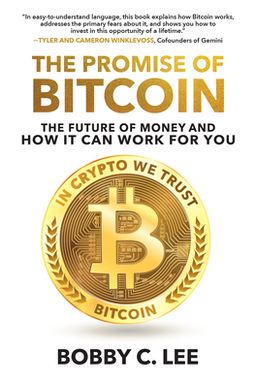
What if money could be redesigned from the ground up? Bobby Lee’s book frames Bitcoin not as a passing technology but as a civilization-level rethink of monetary design. He argues that cryptocurrency—specifically Bitcoin—embodies a deliberate attempt by Satoshi Nakamoto to separate money from political and institutional control while preserving trust through mathematics.
From Trust to Proof
Bitcoin replaces institutional trust with cryptographic proof. Instead of relying on a central bank or payment processor, consensus arises from distributed verification—mining nodes that validate transactions and store them in a public ledger. This process creates transparency and removes intermediaries. Lee breaks down Satoshi’s triad: cryptographic proof replaces trust, a public ledger records history, and economic incentives sustain honesty. Together, they form a self-sustaining system.
Scarcity and Monetary Engineering
Satoshi capped Bitcoin’s supply at 21 million units—a design choice that mirrors gold scarcity and resists inflationary policy. Lee interprets this as a direct rebuttal to fiat systems where governments can expand supply arbitrarily. The halving mechanism (block rewards halved about every four years) imposes predictable deflation. Like gold, Bitcoin is durable and limited—but unlike gold, it’s digital, portable, and divisible to eight decimal places. That scarcity changes how value perceives time and ownership.
Money Without Middlemen
One of Bitcoin’s social revolutions is that you can now transact without middlemen. A chain of digital signatures replaces banking functions, and consensus ensures integrity. Lee notes that early adoption moments—like Laszlo Hanyecz buying two pizzas for 10,000 BTC—illustrate the transformation of perception: from hobbyist novelty to scarce store of value as awareness spread. The principle is simple but radical: with cryptography and distributed incentives, you own and verify your money yourself.
The Broader Meaning
Viewed as an economic experiment, Bitcoin’s design fuses computer science with political philosophy. It revives older ideals of monetary sovereignty—independence from centralized issuance—and adapts them to a digital reality. Lee shows how this architecture confronts fiat’s “dark underbelly”: inflation, confiscation, and control. Bitcoin, in contrast, ties issuance to transparent code and access to individual custody.
Key takeaway
Cryptography, public ledgers, and incentives together create a digital monetary protocol that functions without institutional permission. Understanding this equation—math replaces trust—is the foundation for every other concept in Lee’s exploration of Bitcoin.
For you, this chapter means recognizing that Bitcoin is not a speculative instrument first—it’s an engineered alternative monetary system designed to restore autonomy and transparency. Once you grasp that, the rest of Lee’s book—practical guides on mining, wallets, regulation, and freedom—unfolds as expressions of that central design.