
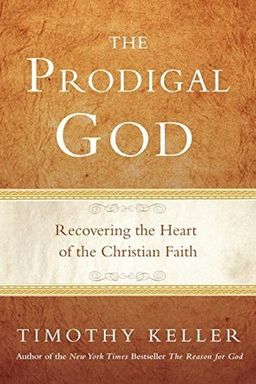
The Prodigal God cover

The Prodigal God

by Timothy Keller

The Prodigal God by Timothy Keller re-examines the parable of the prodigal son, shifting focus from the wayward younger son to the self-righteous older brother. This insightful interpretation reveals how both rebellion and misplaced righteousness can hinder true spiritual connection, urging readers to build a genuine relationship with God rooted in humility, joy, and community.

Rediscovering the Heart of Christianity Through the Prodigal God

When was the last time you felt truly understood by a story? Timothy Keller’s The Prodigal God begins with one of history’s most familiar tales—the Parable of the Prodigal Son—but reframes it so profoundly that the reader begins to question what they thought they knew about faith, sin, and grace. Keller argues that this parable isn’t just about a wayward son returning home; it’s about the radical, often unsettling heart of the Christian gospel itself. At its core, Keller contends that Christianity isn’t merely a moral guide or a set of beliefs—it’s a relationship of reckless grace between a prodigal God and His lost children.

Throughout the book, Keller uses the parable to peel away layers of misunderstanding that have built up around Christianity. He points out that the story Jesus told wasn’t meant to comfort the smugly religious or to shame the irreligious—it was a direct challenge to both. The father in the story represents God, who lavishes His love on both the rule-breaking younger son and the rule-keeping elder son. In other words, both sons are lost, just in different ways. And yet, God’s response to both is the same—extravagant, undeserved grace.

The Shocking Nature of Grace

Keller begins with a provocative question: do you really understand grace? Most people think grace means forgiveness for our mistakes, but Keller takes it further. He reminds us that the word “prodigal” doesn’t mean “rebellious” or “runaway”—it means “recklessly extravagant” or “lavishly wasteful.” In this light, the story’s true prodigal is not just the younger son, but also the father, who welcomes his son home with a feast that defies convention, justice, and reason. His generosity is scandalous. It offends the older brother, who feels that such love is unfair. But this “reckless” grace, Keller argues, is precisely the point—it is the heart of the Christian message.

What makes this shocking is how it redefines who is truly “lost.” Jesus tells the parable to an audience of sinners and Pharisees—the immoral and the hyper-moral. He’s deliberately holding up a mirror to both. The sinners identify with the lost younger brother who runs off to live carelessly, while the religious elite resemble the elder brother who stays home, does everything right, and yet feels alienated from his father’s joy. This dynamic reveals how both moral rebellion and moral conformity can serve as ways of avoiding God. One avoids God by breaking His rules; the other avoids Him by trying to control Him through rules.

Two Ways to Be Lost

In today’s culture, Keller’s insight lands powerfully. On one hand, you have a growing number of people who reject religious constraints to live as they please. On the other hand, many religious individuals hold tightly to moral codes, hoping their performance earns them favor or identity. Both paths miss the radical nature of Christianity—because neither rests in grace. Keller invites you to see how your heart may mirror either son’s condition: yearning for independence or security, but missing intimacy with the Father.

Imagine a person who ran away from their family, spent all their inheritance, and returned home expecting to be rejected. Then imagine a father sprinting toward that person, tears streaming, calling for a robe and a celebration. That image captures what Keller calls “reckless grace.” It’s a love that disregards reputation and risk, that restores rather than punishes, and that reaches beyond human fairness.

Why the Elder Brother Matters

Keller insists that to grasp the gospel fully, we can’t overlook the elder brother. Jesus leaves the story open-ended—the father pleads with the angry older son to join the feast, but the response is never revealed. This unfinished quality invites reflection: how will you respond to a God who loves unconditionally? The elder brother’s resentment exposes a version of faith obsessed with control. He’s done everything right but for the wrong reasons—hoping for reward, not relationship. Keller shows that such religiosity is as spiritually deadly as rebellion. Without grace at the center, righteousness becomes self-righteousness.

A Prodigal God

The ultimate twist in The Prodigal God is Keller’s claim that it’s not the sons who are truly prodigal—but God Himself. God spends His love and mercy recklessly, holding nothing back, giving all for His children even when they reject Him. Quoting 2 Corinthians 5:19, “God was in Christ reconciling the world to himself, not reckoning to them their trespasses,” Keller emphasizes that Jesus embodies the same costly, compassionate grace as the father in the parable. This radical generosity makes Christianity utterly distinct among worldviews—it’s not about earning your way up to God, but about God throwing a feast to bring you home.

By meditating deeply on this single parable, Keller revives Christianity’s central message: grace is not a doctrine to affirm but a transformative power that rewires your entire understanding of sin, salvation, and hope. Over seven chapters, he unpacks how this story reshapes everything: what sin really is (not just wrongdoing but self-sufficiency), what it means to be lost (not just reckless but also self-righteous), and what true hope looks like (a feast with the Father). Ultimately, Keller’s message isn’t just that God accepts you despite your failures—it’s that He delights in restoring you, spending everything to bring you home. That, Keller says, is the heart of the Christian faith—the heart of the Prodigal God.


The Two Lost Sons

Timothy Keller reframes one of Christianity’s most famous stories by revealing a startling truth: both sons in the Parable of the Prodigal Son are lost. While the younger brother’s rebellion is obvious—he demands his inheritance and wastes it all—the elder brother’s lostness hides behind respectability. He obeys every rule but does it from pride and self-interest. Keller explains that both symbolizes two paths people take to find meaning: the path of self-discovery and the path of moral conformity. Neither leads to freedom.

The Younger Brother Path

The younger brother represents the modern secular mindset—the desire for autonomy and self-definition. He demands life on his own terms and ends up in ruin. Keller connects this to many today who reject religion in the name of freedom, yet find themselves emotionally and spiritually starving. The son’s return home symbolizes repentance—a realization that independence from God brings emptiness. Yet the father’s response interrupts the usual rule-following redemption arc: instead of punishment, there is celebration. Grace precedes reform.

The Elder Brother Path

But the elder brother’s story is equally sobering. He never left home but still distanced himself from the father’s heart. His obedience is laced with resentment: “All these years I’ve been slaving for you.” Keller interprets this as a warning to moral people—the danger of using virtue to control God. You can obey all the rules yet miss God entirely if obedience becomes a transaction rather than love.

In modern terms, Keller observes, younger brothers avoid God by breaking the rules, while elder brothers avoid God by keeping them. What both need is grace—a love that cannot be earned or lost. The father’s plea to the elder son echoes God’s invitation to all self-righteous hearts: “You are always with me, and everything I have is yours.”


Redefining Sin and Lostness

Keller radically redefines what it means to sin. He shows that sin isn’t just breaking divine rules—it’s trying to be your own savior, to control God through either rebellion or morality. The younger brother’s sin is self-evident; the elder’s is self-righteousness. Both forms of lostness stem from the same root: pride in the self rather than dependence on grace. Keller challenges religious readers most of all: morality itself can become idolatry when it replaces relationship with performance.

The Moral and the Immoral Lost

Defining lostness in this broader way makes the gospel universally relevant. The sinful rebel and the disciplined religious person are equally distant from God if they rely on their own righteousness. Keller notes that Jesus often found more openness among thieves and tax collectors than among Pharisees. Why? Because those who know their failures are closer to understanding grace. Those who trust their virtue often miss their need for it entirely.

Freedom Through Grace

Keller reframes freedom itself—not as the absence of boundaries but as the presence of love. True freedom is living in alignment with God’s design, not running from it. When the younger son comes home, he doesn’t lose his identity; he finally finds it in relationship with the Father. This view of sin and lostness anchors the rest of Keller’s message: the gospel is not about behaving better; it’s about being transformed by love.


The True Elder Brother

In what is perhaps the most moving argument of the book, Keller introduces the idea of a “true elder brother.” The parable’s elder sibling fails to go after his lost brother, caring only about his inheritance. Keller invites readers to imagine what a true elder brother would have done—gone into the distant land, found the lost sibling, and paid any price to bring him home. This hypothetical perfect elder brother, Keller writes, is Jesus Christ Himself.

Jesus, the true elder brother, left His Father’s home, entered the broken world, and bore the cost of our restoration on the cross. While the elder brother in the story resented the cost of his sibling’s redemption, Jesus paid it gladly. Keller connects this directly to the heart of the Christian gospel—our salvation is costly, but God bore the cost Himself. Love always pays a price, and God’s love paid the ultimate one.

This vision reframes the entire parable as not just a moral lesson but a revelation of divine grace. The story ends with an invitation to join the feast because the true elder brother has already gone ahead to make it possible. In recognizing Jesus as that elder brother, you discover that salvation is not earned—it’s a gift of sacrificial love.


Redefining Hope and the Feast of the Father

The book concludes with a powerful picture of hope: the Father’s feast. Keller interprets the party not as a metaphor for moral improvement, but as a vision of what God ultimately desires—a restored relationship celebrated in community. The feast symbolizes heaven, the renewal of all creation, and the homecoming of every lost child. But to join it, one must accept grace rather than resist it. The elder son’s refusal to enter the celebration becomes a sober warning: self-righteousness excludes us from joy as surely as rebellion does.

Feasting as Restoration

For Keller, the feast is Christianity’s ultimate image of hope. It represents not merely forgiveness, but restoration of identity and community. The Father doesn’t just let the son back in; he honors him with robe, ring, and sandals—symbols of full reinstatement. In doing so, Keller contrasts religion’s conditional acceptance with the gospel’s extravagant welcome. The Christian hope is not to escape the world but to see it renewed, to sit at God’s table with healed hearts.

Keller closes by urging readers to identify where they stand—outside the feast like the elder son, or inside it like the repentant younger. The Father is still pleading, still waiting, still prodigal in His generosity. The story ends without closure because our response is what completes it. Grace extends the invitation, but each of us must decide whether to join the celebration.

Dig Deeper

Get personalized prompts to apply these lessons to your life and deepen your understanding.

Go Deeper

Get the Full Experience

Download Insight Books for AI-powered reflections, quizzes, and more.