
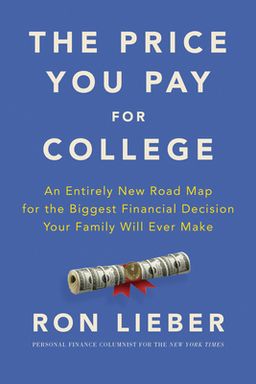
The Price You Pay for College cover

The Price You Pay for College

by Ron Lieber

The Price You Pay for College offers a comprehensive guide to navigating the maze of college choice and finance. Author Ron Lieber demystifies financial aid, highlights the importance of mentorship, and provides strategies to make informed, cost-effective decisions. This essential resource ensures families are equipped to make one of their biggest financial decisions with confidence.

How College Became a Marketplace

Why does college cost so much, and what are families really buying? The central argument of the book is that higher education in America has become a deeply complex marketplace—one shaped by emotion as much as economics, where cost, prestige, and educational value rarely align neatly. Understanding that system means learning how colleges set prices, how aid truly functions, how families make choices under pressure, and how to read the institutional data behind the marketing gloss.

The book contends that while sticker prices have skyrocketed, the underlying structure of college finance—discounts, cross-subsidies, consulting algorithms—has turned pricing into a strategic game. Colleges now behave less like public trusts and more like small businesses optimizing yield, aided by a billion-dollar consulting industry. Meanwhile, students and families must navigate a tangle of financial forms, merit offers, and emotional baggage while the supposed moral clarity of education has become transactional.

Price, Cost, and the Discount Illusion

When a private college advertises a $70,000 price tag, few families actually pay it. Institutions have learned to raise advertised prices each year, then quietly discount through need and merit aid. NACUBO reports that nearly 90% of students at private schools receive some form of institutional discount, with average reductions exceeding 50%. That means the real cost of running a campus is supported by a patchwork of tuition revenue, endowment draws, and government subsidies—yet families rarely know what portion they fund or what value they receive in return.

At the heart of these costs lies labor: wages and benefits typically consume over 60% of institutional budgets, confirming that higher education is a people business. Administration has expanded, but many of those added roles—counselors, IT staff, diversity officers—respond to genuine needs rather than luxury. The real expense of college, then, reflects both the resource intensity of teaching and the growing complexity of serving diverse student bodies.

Financial Aid: The Morality of Numbers

The federal aid system, led by the FAFSA and Expected Family Contribution (EFC), functions less as a moral measure and more as a rationing device. It estimates what families can afford using formulas heavily weighted toward income, lightly toward assets, and oblivious to local cost differences or hidden obligations. Families experience it as both opaque and judgmental, yet it’s designed to distribute limited aid dollars efficiently rather than fairly. The CSS Profile used by private colleges adds complexity by counting home equity and retirement assets differently, often penalizing careful savers.

The author highlights the experience of families like Ann Garcia’s, who learned to treat aid forms as tactical data rather than verdicts. The practical takeaway: use net price calculators, understand institutional quirks, and appeal when reality diverges from the calculated ability to pay. Financial aid, in short, is bureaucratic math that shapes moral expectations of parental sacrifice.

Emotion and Identity in a Market System

College decisions aren’t driven by spreadsheets alone. Fear of downward mobility, guilt over perceived parental shortcomings, and status anxiety turn market choices into moral dramas. Anthropologists such as Caitlin Zaloom call this “moral technology”—a system that translates emotional hopes for class continuity into financial terms. Whether it’s fear of falling behind or the desire for prestige, these feelings often push families to overpay or ignore viable lower-cost paths.

Lauren Rivera’s studies show elite employers do recruit disproportionately from high-prestige schools, but Frank Bruni and others remind us that most successful adults come from a wide range of institutions. The emotional calculus—status versus substance—remains one of the hardest obstacles to rational decision-making.

The Larger Market: Price, Policy, and Perception

At public colleges, declining state appropriations since 2008 explain most tuition growth. At private colleges, modest endowment yields and competitive discount policies keep prices high. Consultants like Ruffalo Noel Levitz advise institutions how much to cut per student to hit enrollment and revenue targets, treating students like yield-managed seats on a plane. Their data models decide which applicants to recruit, how much merit aid to deploy, and even what messaging converts clicks to commitments. Transparency suffers, but the system works to sustain institutional solvency.

Ultimately, the book argues that higher education’s financial maze is not a broken market—it is a deliberately engineered one. Families cannot simply opt out, but they can become sharper consumers: read the data, separate emotion from myth, and focus on measurable value—teaching quality, mentorship, mental health, and outcomes—rather than sticker shock or prestige. Colleges remain vital but uneven institutions; understanding their financial and psychological architecture is the first step to buying wisely in this extraordinary marketplace.


Hidden Economics of College Pricing

The book dismantles the illusion that posted tuition equals real cost. Price serves as both signal and instrument—a way to court prestige and flex financial aid strategy. Colleges use high sticker prices partly to appear valuable, then distribute “merit” or “need” awards tailored through analytics to recruit the desired mix of students. Consulting firms like Ruffalo Noel Levitz orchestrate much of this process, developing price-target algorithms akin to airline yield optimization. Families perceive generosity where institutions see revenue management.

Labor, Amenities, and the Cost Debate

Contrary to public myth, ballooning tuition isn’t primarily funding lazy rivers or climbing walls. Studies by the Delta Cost Project and OECD reveal that salaries, health benefits, and instruction remain the dominant expenses—over 60% of budgets. Amenities and administration add costs but rarely at the scale suggested by critics. New administrative roles often emerge from necessary student services like technology support or mental-health care. When adjusted for inflation and reduced state subsidies, colleges spend surprisingly consistent real dollars on instruction.

Cross-Subsidies and the Decline of Public Funding

Public universities once relied heavily on state appropriations. When those declined—especially after the 2008 recession—tuition filled the gap. Private schools without state support leaned harder on tuition, supplemented by modest endowments. To sustain finances, many recruited international and out-of-state students capable of paying near full price. This blend of strategic pricing, tuition dependency, and cross-subsidies created the modern American model: a high-price, high-discount equilibrium designed to survive reduced government support.

Key takeaway

Colleges are not irrationally expensive—they are structurally expensive. The cost reflects labor intensity, reduced public support, and a deliberate pricing strategy that treats tuition as market theater rather than commodity pricing.

As a result, the number you see on the brochure rarely resembles what families actually pay. Understanding this tactic turns you from a passive payer into an informed negotiator in a marketplace governed by perception, not transparency.


Merit Aid and the Consulting Machine

Merit aid, often touted as a scholarship reward, functions in practice as a discount mechanism structured by data science. First launched by small liberal-arts colleges in the 1980s—Denison and Ohio Wesleyan were early movers—it evolved into a national arms race. Once one competitor offered merit dollars to attract marginally better students, others followed suit. By the mid-2000s, even flagship publics like Alabama spent hundreds of millions annually recruiting affluent out-of-state students with merit aid, shifting resources from need-based grants to enrollment incentives.

Enrollment Management as Price Science

Consultants analyze applicant behavior—when you open emails, which pages you browse—to assign yield probabilities. Each admitted student becomes a data point in a model estimating how little money the school can offer while still ensuring enrollment. Firms run optimization loops using test scores, geography, race, and socioeconomic data to maximize net tuition. In that system, merit aid operates more as a revenue-control lever than a moral reward. Price becomes fluid; fairness, secondary.

Ethics and Inequality

The dark side of this strategy is social inequity. Merit aid often flows to higher-income families whose students meet academic benchmarks, while truly needy students see stagnant support. Colleges justify this by insisting they must compete for desirable students to preserve financial health. Enrollment managers call it a “necessary evil”—a balancing act between ethics and solvency. But the effect is regressive: scarce aid dollars chase yield rather than need.

How to Compete as a Family

You can treat merit and aid awards strategically. Use net price calculators, collect competing offers, and appeal when appropriate. Many schools quietly adjust awards upon evidence of better competing packages. Transparency remains limited, but persistence works. Think of these offers as negotiable business proposals, not moral verdicts. Schools value yield; you hold leverage.

Behind the smiling admissions letters lies a multibillion-dollar machine where consultants use predictive analytics to decide how much each family pays. The winners are those who learn to decode its patterns—and use them to their advantage.


Emotions Behind Educational Choices

Even the best financial planning falters under the weight of emotion. Parents and students fear decline, crave status, and feel guilt for not providing more. The book probes these emotions through real family stories and research by Caitlin Zaloom, Frank Bruni, and Lauren Rivera to show how social anxiety translates into irrational spending or misplaced priorities. Recognizing these psychological forces is essential if you want to make rational educational investments.

Fear of Downward Mobility

Many American parents believe their children’s economic future depends on elite college access. Pew data show a majority fear their kids will be worse off financially. This encourages overpaying for prestige, even when data show limited marginal returns beyond certain thresholds. The danger is mistaking selectivity for security. Some networks—like elite finance recruiting—favor certain campuses, but for most careers, performance and skills trump pedigree.

Guilt and “Cruel Optimism”

Families often internalize the idea that “good parents pay whatever it takes.” Anthropologist Zaloom calls this “cruel optimism”: believing sacrifice ensures upward mobility even as debt risk rises. Marguerite Royo-Schottland’s decision to choose SUNY New Paltz over Mount Holyoke exemplifies pragmatic love—refusing unsustainable sacrifice while affirming value through choice.

Status Signaling and Rational Reflection

Snobbery compounds guilt. Rivera’s research on elite hiring reveals how few firms recruit beyond a narrow set of schools, reinforcing the perception that brand matters more than learning. Yet Frank Bruni’s counterpoint reminds you that many CEOs, researchers, and innovators hail from public and regional institutions. The rational question is not “How elite is the college?” but “How well does it fit my child’s goals and learning needs?”

The lesson is simple: emotion is the most expensive bias in higher education. Name it, confront it, and base major decisions on data rather than inherited anxiety.


Learning, Mentorship, and Wellbeing as Value

Beyond the marketing, educational value resides in teaching quality, mentorship, and mental health support. These invisible factors often matter more than facilities or rankings. The Gallup-Purdue Index found that having a professor who cared, inspired learning, and encouraged dreams predicted lifelong well-being far better than institutional prestige. Yet only a small share of graduates reported that experience.

Teaching and Labor Realities

Incentive structures in higher education often reward research over teaching. At many R1 universities, faculty advancement depends on publications, not pedagogy. This has contributed to the adjunctification of instruction: over 70% of faculty now work off the tenure track. Studies connect heavy adjunct use to lower student persistence and engagement. Good teaching requires institutional will, not slogans.

Mentorship in Practice: The Wooster Model

The College of Wooster’s Independent Study requirement embodies how mentorship can anchor value. Every student completes an intensive, faculty-guided research project culminating in public presentation. This model redefines “value” around personal attention and deep learning rather than amenities. Wooster even discloses real cost structures and provides early aid estimates—showing that transparency reinforces trust.

Mental Health: The Overlooked Infrastructure

Rising psychological need has turned campus counseling into a core necessity. Utilization increases of 30–40% in recent years contrast with stagnant staffing ratios—often one counselor per 800 students. Wait lists and outsourcing dominate the landscape. Institutions differ dramatically, so families should ask detailed questions: staff ratios, psychiatrist availability, and average wait time. A school’s response to mental-health demand reflects its overall commitment to student well-being.

If mentorship and mental health truly define educational quality, then parents must measure them as seriously as costs or rankings. Ask who teaches, who supports, and who notices when students struggle. Those answers reveal the real product you’re buying.


Peer Effects, Paths, and Outcomes

College life is partly social architecture: your peers, roommates, and networks shape long-term value. Research highlights that who surrounds a student can matter as much as institutional type. Janice McCabe’s work on friendship networks, Armstrong and Hamilton’s Paying for the Party, and studies of women’s colleges all show that campus culture shapes both academic success and personal growth.

Social Pathways and Opportunity Structures

Large universities house multiple social pathways—from party cultures to pre-professional enclaves. Fit matters: a misalignment between financial commitment and social environment can undermine outcomes. Women’s colleges, by contrast, demonstrate how intentional community design can strengthen mentoring and leadership confidence. Institutional culture is part of ROI.

Career Preparation and Regional Leverage

Some campuses integrate career development deeply (Wake Forest, Butler), while others rely on geography. Proximity to industry hubs or strong alumni networks—like Macalester’s Twin Cities connections—amplifies internships and first jobs. The best offices start mentorship and career conversations early, embedding them into the undergraduate experience.

Reading the Data

Public data like the College Scorecard and Common Data Set help you verify institutional claims. Scorecard numbers reflect primarily federal-aid users, so they underrepresent wealthier students. Still, they reveal program-level earnings and graduation rates. Cross-check those with section H2 of the CDS to see who receives merit versus need aid; ask for major-level outcomes, not just institutional averages. The practical goal is to replace perception with measurable performance.

Ultimately, you must view college as a social ecosystem and data puzzle. Peers, mentors, and career bridges matter; so do transparent outcomes. Value lives where social structure, academic opportunity, and evidence intersect.


Smart Alternatives and Strategic Planning

The traditional four-year residential path is not the only or necessarily the best route. Alternatives—community colleges, honors programs, international degrees, gap years, athletics, or military service—can drastically reshape cost and experience. But they succeed only when approached with planning and precision.

Community College Transfers

Two-year paths can yield enormous savings, but completion data warn of risk. Only about 14–18% of community-college starters in recent cohorts graduated from four-year institutions within six years. The difference between failure and success lies in proactive advising: early choice of major, continuous communication with target institutions, and confirmed transfer equivalencies. The story of Stephen Harbeck’s seamless transfer, guided by faculty mentor Lisa Frye, demonstrates that structure, not luck, produces success.

Honors and Specialized Tracks

Honors colleges promise small seminars, priority registration, and capstone projects in big university settings. But quality varies. Ask whether courses are genuinely separate or merely “honors contracts.” Investigate demographics and retention; many honors programs remain demographically narrow and experience high attrition. The distinction between meaningful enrichment and decorative branding is critical.

Alternative Routes

Abroad programs, gap years, and service pathways like ROTC add nontraditional options. Overseas degrees may compress timelines and cost less (e.g., McGill or St. Andrews), but require independence and adaptation to limited support. Gap years can reset maturity and finances, especially if paired with work or AmeriCorps service. Military programs such as ROTC convert commitment into full tuition and benefits, albeit at the cost of multi-year service. Each route is viable if aligned with personal capacity and goals.

The lesson: alternatives save money and build character only when designed intentionally, cross-checked for transferability, and chosen with full awareness of constraints. Otherwise, shortcuts risk becoming detours.


Planning, Saving, and Negotiating Wisely

The ultimate section turns insight into action. Planning, saving, and negotiating aid require discipline akin to managing a small family enterprise. Financial planner Kevin McKinley’s rule of thirds—save a quarter before college, pay a quarter during, borrow half—offers a manageable baseline. Mark Kantrowitz suggests aiming for less debt if possible but stresses realism: the key is structure, not guesswork.

Using Tools and Transparency

Start with net price calculators and verify data through the Common Data Set (sections H2–H2A). Wooster’s Early Aid Estimator exemplifies ethical transparency, giving families a realistic pre-application estimate. Tools like TuitionFit, Edmit, and Hechinger’s Tuition Tracker help benchmark potential packages. Treat every aid letter as an opening bid, not a final offer.

Appealing Awards and Managing Loans

Many families succeed in appealing under either “changed circumstances” (job loss, medical costs) or competitive offers. Colleges respond because yield matters more than pride. On borrowing, start with federal loans—they cap totals at roughly $27k and retain flexible repayment terms. Parent PLUS loans can fill gaps but demand caution; they lack robust income-driven protections and can burden families for decades.

Long-Term Thinking

College remains a high-return investment overall, but not every degree from every institution justifies every cost. Avoid gambling on a system “bubble.” Demographic decline may pressure weaker colleges, but no mass price collapse is imminent. Instead, focus on the controllable: clarity, planning, and ethical self-assessment about what your family can and should pay.

Treat college as you would a complex purchase—research, comparison, and negotiation matter as much as aspiration. The smartest families blend heart and data, ensuring that educational dreams do not morph into financial regrets.

Dig Deeper

Get personalized prompts to apply these lessons to your life and deepen your understanding.

Go Deeper

Get the Full Experience

Download Insight Books for AI-powered reflections, quizzes, and more.