
Idea 1
Prepared Leadership: Navigating Crises with Foresight and Strength
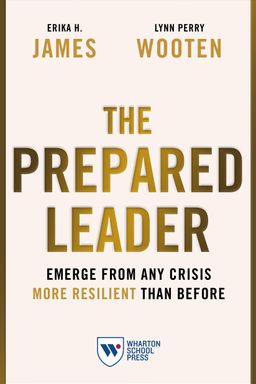
When the world seems to tilt overnight—when markets collapse, a pandemic strikes, or your team faces chaos—how do you respond? Do you freeze, react, or lead? In The Prepared Leader, Erika H. James and Lynn Perry Wooten argue that crises are not aberrations of leadership—they're its truest test. The question isn't whether a crisis will happen again, but when. Their mission is clear: to help you build the mindset, systems, and capabilities to lead effectively before, during, and after the next disruption.
The authors—both pioneering university presidents and crisis scholars—speak from lived experience. Just as they assumed major leadership positions in early 2020, the COVID-19 pandemic forced them to lead schools, faculty, and students remotely through unprecedented upheaval. They blend these firsthand lessons with three decades of research into how organizations and leaders respond to volatility. What emerges is a clarion call for what they term Prepared Leadership: an approach that integrates foresight, emotional intelligence, and structured learning to thrive through inevitable crises.
From Panic and Neglect to Preparation
Human psychology, they reveal, makes us particularly bad at anticipating disasters. As the World Bank’s Jim Yong Kim once said, societies follow a “cycle of panic and neglect”—we panic during crises, then swiftly forget the lessons once normalcy returns. COVID-19 exposed these tendencies on a global scale. Despite decades of warnings from scientists about pandemics, global systems failed to prepare. James and Wooten frame this not as a failure of intelligence but of leadership.
Breaking that cycle requires turning preparation into a core organizational value. The authors propose expanding the traditional triple bottom line—people, planet, profit—into a quadruple bottom line that adds a fourth P: Prepared Leadership. Being prepared isn’t pessimism; it’s an act of optimism grounded in realism. By embedding preparedness into your culture, you enable your teams not only to survive disruption but to innovate through it.
The Framework of Prepared Leadership
The book unfolds through a step-by-step framework organized around five phases of crisis management—early warning, preparation, containment, recovery, and learning—and nine core leadership skills—sense-making, perspective-taking, influence, agility, creativity, communication, risk-taking, resilience, and learning. Throughout, the authors illuminate these principles through vivid stories: NBA commissioner Adam Silver’s creation of the “bubble” that saved the 2020 season, British health leader Mark Turner’s reorganization of London’s hospitals, and Burger King CEO José Cil’s bold rethinking of fast-food during lockdown.
Each story shows that the difference between leaders who thrive under pressure and those who crumble lies not in charisma or instinct, but in preparation. Silver’s controversial decision to suspend the NBA season—a move that cost millions but averted a larger catastrophe—illustrates how preparedness allows rapid, ethical decision-making amid uncertainty. Similarly, Turner’s diversification of NHS crisis teams into collaborative mega-communities of doctors, strategists, and nurses demonstrates the importance of diverse expertise and trust in emergencies.
Why This Matters Now
Our era is defined by compounding crises—pandemics, climate change, racial injustice, technological disruption. As the authors argue, these shocks will only intensify in an interconnected world where “what starts in one corner of the planet can spread in days.” Most leaders remain unprepared because they see crises as rare anomalies instead of recurring tests of resilience. Prepared Leadership flips this outlook: anticipate the inevitable, rehearse the unthinkable, and use every challenge as a springboard for collective growth.
In this philosophy, preparation becomes an ethical responsibility. Every decision you make today determines your organization’s capacity to endure tomorrow’s crises. This means building diverse teams, flattening hierarchies, and fostering open communication so that information flows freely when it’s needed most. It also means learning—systematically—from every setback. The best leaders treat each crisis as a classroom. They turn pain into data, data into insight, and insight into sustained transformation.
The Promise of Hope in Turbulent Times
Beneath its research and frameworks, The Prepared Leader is an optimistic book. James and Wooten insist that crises can be sources of creativity and community rather than despair. They highlight how adversity—when met with empathy and readiness—reveals hidden strengths: a frontline nurse’s ingenuity, an educator’s adaptability, a CEO’s courage to pause operations for safety’s sake. In their view, crises are the crucibles where real leadership is formed.
Ultimately, the authors urge you to stop asking how to predict the next crisis and start preparing for it now. Through case studies, reflective questions, and actionable guidance, The Prepared Leader teaches how to turn turbulence into transformation. As they write, “Prepared Leadership will be what determines your ability to deliver in terms of people, planet, and profit when the unthinkable happens.” The crisis is coming—it always is—but so are the leaders ready to meet it.