
Idea 1
The Transformative Power of Human Connection
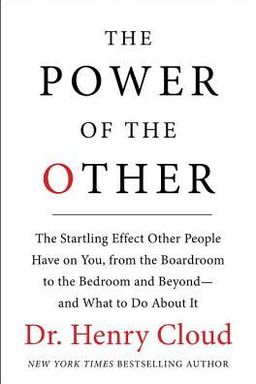
When was the last time someone’s encouragement pushed you beyond what you thought possible? Perhaps a friend’s confidence, a mentor’s advice, or a loved one’s simple reminder that “you’ve got this” made all the difference. In The Power of the Other, psychologist and leadership expert Dr. Henry Cloud argues that these seemingly small exchanges reveal a profound truth: no one reaches their highest potential alone. Human connection—what Cloud calls “the power of the other”—is not just supportive; it is biologically, psychologically, and spiritually essential for performance, growth, and fulfillment.
Cloud contends that many leadership and personal development philosophies have missed this neglected truth. Most focus on strengthening the individual—improving self-discipline, cognition, habits, or skills—while overlooking how others shape those very capacities. He insists that whether you are a Navy SEAL surviving Hell Week, a CEO navigating crisis, or an everyday person striving to thrive in relationships, your success hinges on the kind of people you connect with. Relationships literally rewire the brain for resilience and capacity; they are the hidden fuel behind high performance.
The Invisible Engine of Connection
Cloud opens with a vivid story: Bryce, a Navy SEAL candidate, reaches physical exhaustion during training until a fist pump from his teammate Mark—already standing on the shore—miraculously restores his strength. That brief moment of connection transforms what Bryce’s body could do. Neuroscience supports the phenomenon. Our relationships regulate the flow of energy and information in the brain; they can either fuel thriving or trigger decline. As Cloud puts it, from the womb to the tomb, humans are wired for connection. He even cites studies showing that babies who are fed but not emotionally bonded fail to grow or develop normal brains. Adults, too, falter emotionally and physically when isolated.
Beyond Self-Help: The Triangle of Well-Being
Most modern advice emphasizes personal mastery—think harder, act smarter, strengthen your discipline. Cloud calls this “the missing half of the conversation.” Drawing from UCLA neurobiologist Daniel Siegel, he introduces the “triangle of well-being,” composed of three interdependent elements: the brain/body (the hardware), relationships (the energy source), and the mind (the software regulator). When these three work in harmony, people flourish. When disconnection disrupts the flow between them, performance declines. Real change, therefore, isn’t merely about learning new strategies—it requires connection that builds better internal equipment.
The Four Corners of Connection
From this premise, Cloud maps what he calls the “Four Corners of Connection.” These relational spaces determine whether we flourish or flounder. Corner One—Disconnection—leaves us isolated and drained. Corner Two—Bad Connection—entangles us with relationships that make us feel “not good enough.” Corner Three—the Pseudo-Good Connection—offers addictive highs that distract but don’t heal. Only Corner Four—True Connection—empowers authentic growth, accountability, and mutual vulnerability. Getting to Corner Four is the essential task of life and leadership.
Why This Matters
Cloud’s message matters because our fast-paced, hyperconnected world often leaves people relationally undernourished. We may network widely but connect shallowly. High performers—leaders, parents, athletes—often isolate themselves under pressure, believing they must appear strong at all times. Yet, as Cloud observes, “freedom requires responsibility,” and responsibility is only sustainable when fueled by healthy bonds. The power of the other doesn’t diminish autonomy; it amplifies it. Greatness arises when support, challenge, and trust work together to expand what you can do alone.
What You’ll Discover
This book explores why relationships are the engine of growth (The Science of Connection), how to identify and move toward healthy ones (The Four Corners of Connection and Go to Corner Four), and what kinds of relational dynamics fuel high performance (Freedom and Control, Responsibility, and Trust). Along the way, Cloud interweaves gripping stories—from CEOs facing setbacks to SEALs enduring impossible tests—to show that success, healing, and transformation all begin at the moment of genuine connection. His ultimate conclusion is simple yet radical: when you find the right others, you don’t just feel better—you become better. Their power literally makes you more than you could be on your own.