
Idea 1
The Rhythm of Restoration
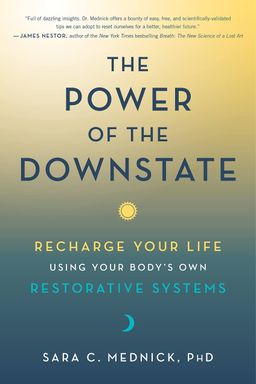
You live in a dynamic rhythm: moments of energy and effort cycle with periods of recovery and restoration. In The Power of the Downstate, neuroscientist Sara C. Mednick argues that modern life has tilted dangerously toward constant activation—the frenetic, doing-oriented Upstate. The antidote is rediscovering the restorative counterpart, the Downstate: those biological, psychological, and behavioral windows that replenish your cells, stabilize your emotions, and renew your capacity for focus and empathy.
Mednick blends neuroscience with practical self-care, showing that your body’s natural cycles—sleep-wake rhythms, breath patterns, autonomic nervous system balance—already contain a built-in restorative system. The challenge, she says, is not inventing recovery but protecting it from chronic stress, poor sleep, and artificial stimulation. Her message echoes themes found in Matthew Walker’s Why We Sleep and Peter Attia’s Outlive: longevity and high performance depend on rhythm, not raw productivity.
Upstate and Downstate: The Daily Dance
Every organism—down to single neurons—alternates between excitation and recovery. When neurons fire action potentials, they need micro-rests called refractory periods. That microscopic rhythm scales up through sleep’s slow waves, your heartbeat, your breath, and even social contact. All of these mini Downstates repair and prepare your system for the next Upstate challenge. In effect, the book teaches you to see rest as productivity’s partner, not its pause.
Mednick calls the combined rhythm of activation and recovery the REV and RESTORE two-step. REV—sympathetic activation—builds alertness and mobilization. RESTORE—parasympathetic dominance—handles digestion, growth, and healing. Daily life should oscillate between them like a tide, but sustained stress traps you in chronic REV, raising cortisol, suppressing immune function, and dulling cognition. Understanding this balance gives you levers to train resilience through breathing, sleep, and rhythm awareness.
Your Internal Timekeeper
Underlying all Upstate/Downstate activity is the circadian clock—a 24-hour program directed by the suprachiasmatic nucleus (SCN) in the brain. Light is the conductor, signaling when to ramp up metabolism and when to shut down. Mednick describes how morning blue light raises cortisol and prepares you for daytime REV, while darkness at night triggers melatonin and RESTORE. Aligning your sleep and meals with this natural rhythm prevents the ‘social jet lag’ that many experience when their schedules fight their biology.
Chronotypes—individual tendencies toward early or late activity—matter deeply. Owls forced into early work suffer more metabolic stress than morning types. Simple rhythm realignment—early light exposure, dim evenings, regular sleep timing—enhances Downstate quality without drugs.
From Restoration to RecoveryPlus
Mednick extends the idea of restoration beyond simple recovery. RecoveryPlus occurs when a demanding Upstate challenge—such as an intense workout or hard learning session—is paired with enough Downstate time to leave you stronger than before. This dynamic, borrowed from sports physiology, shows that rest isn’t neutral; it is growth’s engine. Consistent sleep, nutritious food, and scheduled recovery can permanently raise your set-point for energy, focus, and emotional regulation.
Core idea
You can’t rely on caffeine or willpower to recharge indefinitely. Your biological systems depend on rhythm—periodic Downstates—to maintain resilience. Deliberate recovery is not indulgence; it’s maintenance for your longevity and clarity.
Technology, Aging, and Modern Imbalances
The book traces how modern habits—screen exposure, all-day eating, chronic stress—break this intricate rhythm. Aging itself, Mednick argues, is partly the long-term erosion of Downstate function. Slow-wave sleep, heart rate variability, and hormonal balance decline when recovery windows shrink. Yet these processes can be preserved and even restored via sleep hygiene, strategically timed exercise, balanced nutrition, and social connection.
By seeing your body as a biological symphony of alternating states—REV and RESTORE, light and dark, effort and restoration—you gain a more sustainable framework for health. Instead of chasing endless doing, Mednick teaches you to live rhythmically: to build deliberate Downstate rituals that return you to balance, clarity, and growth. Every breath, nap, meal, and hug becomes an investment in your system’s repair and resilience.