
Idea 1
The Sacred in the Everyday: Rediscovering Meaning Through Ritual
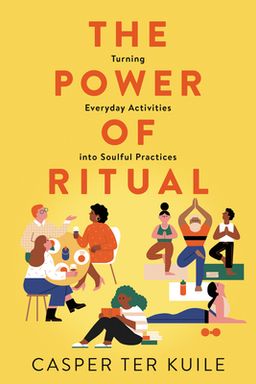
When was the last time you paused to experience something as truly sacred? In a culture of nonstop notifications, endless productivity, and chronic loneliness, many of us long for a sense of purpose and connection yet struggle to find it in traditional religion. In The Power of Ritual, Casper ter Kuile offers a transformative reframe: our daily habits—reading, walking, eating, resting—can become pathways to meaning when we infuse them with intention and attention. The challenge, he says, isn’t that we’re unspiritual. It’s that we’ve forgotten how to notice the sacred already surrounding us.
Ter Kuile, a Ministry Innovation Fellow at Harvard Divinity School and cohost of Harry Potter and the Sacred Text, invites readers to embrace a new kind of spirituality: one that honors ancient wisdom while blossoming in modern, secular life. Rather than attend church, you might gather around a dinner table or a podcast. Instead of formal prayers, you may find transcendence in music, sport, or literature. The essence isn’t belief, but practice—what he calls the art of ritualizing the ordinary.
A Changing Spiritual Landscape
Ter Kuile begins by describing a dramatic cultural shift: the rise of the “nones”—people who identify with no formal religion. He cites data showing that nearly a quarter of Americans now place themselves outside traditional affiliations. Yet spiritual hunger hasn’t vanished; it’s simply migrating. Communities like CrossFit, SoulCycle, or mindful maker-spaces recreate the fellowship, discipline, and transcendence that once thrived in churches and temples. Ter Kuile’s research with Angie Thurston (in their landmark study How We Gather) revealed that these environments mirror religious communities in offering belonging, transformation, moral purpose, and care.
But what’s missing in many of these modern collectives is the deep wisdom of ritual—the capacity to structure experience so that meaning becomes visible. “Just because we’ve left church doesn’t mean we’ve left our need for sanctity behind,” he writes. The book is his guide for unbundling traditional ritual forms (like sabbath or sacred reading) and remaking them for today’s lives.
Four Levels of Connection
To ground this practice, Ter Kuile proposes four interlocking levels of connection that together form a “latticework of meaning”:
- Connection with Self – cultivating authentic selfhood through reflection, reading, and rest.
- Connection with Others – creating community through shared rituals of food, body, and vulnerability.
- Connection with Nature – reawakening our sense of place and belonging to the earth.
- Connection with the Transcendent – accessing awe and mystery through prayerful attention and creativity.
Each chapter pairs ancient practice with a modern expression: sacred reading meets Harry Potter; sabbath reappears as a tech-free weekend; pilgrimage becomes a mindful hike. Through story and scholarship, he demonstrates how these rituals offer antidotes to alienation and a framework for joy.
Rethinking the Sacred
For Ter Kuile, the sacred isn’t confined to temples or doctrines. Drawing from sociologist Émile Durkheim, he challenges the sacred/profane divide, insisting that sacredness is not a category but a verb—something we do. When we treat an activity as sacred, we lift it out of routine through intention, attention, and repetition. This echoes the wisdom of Buddhist mindfulness and Quaker stillness: meaning arises not from belief but from presence.
He encourages readers to use three core elements to transform ordinary acts into rituals: an intention (why you do it), attention (how you focus), and repetition (how you sustain it). A morning coffee shared with gratitude or a weekly walk could become as spiritually potent as formal worship. As author Barbara Brown Taylor writes, “Earth is so thick with divine possibility that it’s a wonder we can walk anywhere without cracking our shins on altars.”
Why This Matters Now
The power of ritual, Ter Kuile argues, is not nostalgia for religion’s past but a humane response to today’s epidemic of isolation, burnout, and disembodiment. He cites research showing that loneliness harms health as much as smoking fifteen cigarettes a day and that young adults increasingly crave community yet distrust institutions. Ritual offers a grammar for belonging—a way to “make visible our invisible connections.” Through shared meals, intentional pauses, pilgrim walks, and sacred texts, he envisions a culture where meaning-making becomes a collective act again. This is not about believing something new—it’s about remembering what we are already part of. As the book’s final chapter declares, “Connection isn’t something to build; it’s something to remember.”