
Idea 1
The Power of Pressure: Turning Stress into Strength
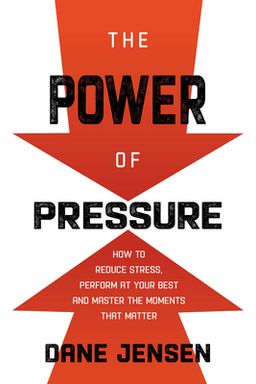
When was the last time you felt your heart race before a big moment—an exam, a presentation, or a crucial decision? Most of us instinctively try to fend off that rush of pressure, believing it’s the enemy of calm and clarity. Yet in The Power of Pressure, Dane Jensen flips that idea on its head. He argues that pressure isn't the villain—it’s the fuel. The very energy we experience under strain can forge resilience, create mastery, and drive peak performance. Pressure, as Jensen reminds us, is the crucible where growth happens: “No pressure, no diamonds.”
Jensen’s central thesis is both energizing and sobering: we live in an age of rising pressure fueled by uncertainty, complexity, and sheer volume. But instead of trying to eliminate pressure—a losing battle—he shows how to channel it. His decades of work with Olympic athletes, CEOs, Navy SEALs, and frontline professionals reveal repeating patterns in how people thrive under strain. Some use pressure as an accelerator; others let it become corrosive. The difference, he shows, lies in how we manage the interplay between importance, uncertainty, and volume.
Pressure as a Catalyst, Not a Curse
The book begins with a visceral story: Jensen’s three-year-old son disappears at their lakeside cottage. For ten terrifying minutes, Jensen searches frantically, imagining worst-case outcomes—the dock, the water, the silence. Every heartbeat, every thought shows the body’s full response to acute pressure: fear, tunnel vision, and the desperate drive to act. That experience becomes the lens for the entire book: whether we’re saving a life, pitching at work, or chasing a dream, the same physiological and psychological forces are at play. Pressure is energy—capable of burning the house down or lighting the furnace that powers achievement. The key, Jensen argues, is learning to channel pressure instead of resisting it.
The Pressure Equation
To demystify pressure, Jensen introduces a clear formula: Pressure = Importance × Uncertainty × Volume. When any of these three variables spike, tension rises. When they combine—say, an important task with unclear outcomes and too much to juggle—pressure escalates exponentially. Understanding which factor dominates allows you to choose the right tool: reframing importance, taking direct action against uncertainty, or simplifying volume. This equation becomes a practical map throughout the book, guiding readers from awareness to action.
Peak Pressure and the Long Haul
Pressure comes in two forms. Peak pressure moments are short bursts—like delivering a presentation or competing for a medal—when performance must be instant and precise. Long-haul pressure, by contrast, is the grinding, slow burn of sustained responsibility: parenting, caring for aging parents, or building a career. Both demand different strategies. In emergencies, taking rapid, tangible action helps—the SEAL who calls in helicopters to gain control. Over time, however, trying to control every variable leads to burnout; you must instead embrace uncertainty and trust the process. Jensen calls this becoming pressure ambidextrous, able to thrive in both the sprint and the marathon.
The Body Under Pressure
One of Jensen’s most compelling insights is biological. Pressure isn’t external; it’s internal. Our bodies react through the sympathetic nervous system, flooding us with adrenaline and cortisol. Our vision narrows, muscles tighten, creativity and empathy shut down. We retreat to biases and default behaviors—exactly the opposite of what good performance requires. Drawing on sport psychology and biofeedback research (notably from Dr. Penny Werthner at the University of Calgary), Jensen shows how physical training, controlled breathing, and awareness can rewire these responses. Pressure literally remaps the body, but awareness—“creating space between stimulus and response”—can break the cycle.
Why It Matters Now
Today’s world feels more pressurized than ever: emails, notifications, global crises, shifting work norms. Jensen argues that our modern life amplifies all three elements of the pressure equation simultaneously—everything feels important, uncertain, and endless. The antidote isn’t another productivity hack but a philosophical shift. Pressure isn’t a threat to be avoided; it’s an opportunity to grow. Like Thomas Carlyle’s famous line, “No pressure, no diamonds,” Jensen reframes discomfort as a developmental necessity. Every challenge—whether physical, emotional, or professional—becomes a training ground for resilience.
A Framework for Thriving
Across eleven chapters, Jensen builds a toolbox for thriving under pressure: connecting with meaning, reframing stakes, acting quickly on controllable factors, simplifying distractions, sleeping and recovering, and recruiting support networks. He backs every concept with vivid real-world stories—from Olympic champions Johann Koss and Rosie MacLennan to trauma surgeon Andrew Petrosoniak and executive Gerry Butts—showing how human physiology, mindset, and purpose intersect when the heat is on. The book threads science, storytelling, and actionable techniques into a clear model for converting energy into excellence.
Ultimately, Jensen’s argument lands with clarity: pressure is inevitable, but suffering is optional. What separates thriving from struggling isn’t the intensity of life’s demands, but your response to them. If you learn to manage importance, uncertainty, and volume—if you create awareness between trigger and action—pressure stops being a weight and starts being your superpower.