
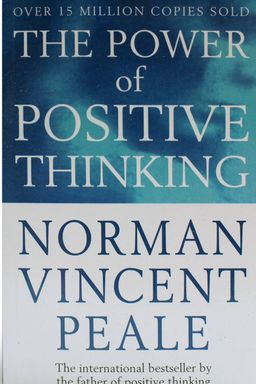
The Power of Positive Thinking cover

The Power of Positive Thinking

by Norman Vincent Peale

Discover how a positive mindset can change your life in ''The Power of Positive Thinking.'' Norman Vincent Peale offers timeless strategies to boost self-confidence, foster meaningful relationships, and transform challenges into opportunities for happiness and success.

Harnessing the Power of Positive Thinking

How can you transform your worries, doubts, and limitations into confidence, energy, and faith? In The Power of Positive Thinking, Norman Vincent Peale argues that our thoughts are not passive reflections of reality—they are powerful forces that shape our health, relationships, and destiny. Peale contends that by cultivating faith-based optimism, anyone can unlock spiritual and psychological strength to overcome fear, failure, and anxiety.

Rooted in mid-20th-century American Christianity and influenced by psychology and self-help (similar to Dale Carnegie’s How to Win Friends and Influence People and William James’s pragmatic philosophy), Peale’s work bridges spiritual conviction with practical living. He urges readers to combine prayer, visualization, and affirmative mental habits to renew their minds, heal emotionally and physically, and live with purpose. Through countless anecdotes, from businessmen and physicians to homemakers and students, Peale shows that faith in God and self-belief literally generate power.

Faith as Mental Energy

At the heart of the book is Peale’s view that faith is not merely a belief—it's an energy system. When you believe that God works within you, creative thoughts replace anxiety and produce strength. This idea echoes Isaiah’s promise that “they that wait upon the Lord shall renew their strength.” In Peale’s world, belief transforms neurons, emotions, and circumstances. Negative thinking drains vitality; believing taps divine electricity.

A Spiritual Psychology of Success

Peale presents positive thinking as both theology and therapy. He integrates biblical promises with the emerging “psychosomatic” medical understanding of his time, arguing that the body responds directly to emotional states. His anecdotes—from healed heart conditions to recovered businesses—illustrate how prayer and visualization can rewire mental patterns. The techniques are practical: memorize faith verses, pray deeply, visualize peace, and imagine God beside you in every decision.

Combining Science and Spirit

Peale distinguishes his method from pure psychology or mere religion. He believes true healing and success come from harmonizing medical science with spiritual faith. Quoting physicians like Dr. Rebecca Beard and Dr. Smiley Blanton, he shows how fear, guilt, and resentment physically damage the body, while forgiveness, love, and belief act as medicine. The book’s stories repeatedly reveal emotional healing turning into literal health recovery—a theme modern research on stress and faith continues to support.

Why It Matters

Peale wrote during postwar America, an era anxious about insecurity and discouragement. His prescription—faith, prayer, and positive visualization—offered millions the ability to cope with modern tension. He insisted that life’s battles are inner battles: you are never defeated until you think you are. Believing activates divine partnership; doubting shuts it off. Ultimately, Peale’s philosophy is a call to spiritual mastery—a lifelong practice of affirming, visualizing, and believing good into being.

Essential Message

You become what you think. Fill your mind with faith, hope, and divine assurance, and life will shape itself to the quality of your thoughts. As Peale declares, “Change your thoughts—and you change your world.”


Faith, Confidence, and Self-Belief

Peale begins his philosophy with the conviction that self-belief is not arrogance—it’s the ownership of your God-given power. He opens with the Biblical affirmation, “I can do all things through Christ which strengtheneth me,” urging readers to use faith as a practical tool to erase inferiority complexes. By injecting positive spiritual thoughts, you change your mental chemistry and awaken dormant energy.

Overcoming Inferiority

Peale’s anecdotes show how inner weakness often begins in childhood. A man haunted by feelings of inadequacy found strength when he memorized Philippians 4:13 and visualized confidence daily. Another salesman who feared rejection overcame insecurity by keeping cards on his dashboard printed with faith affirmations like “If God be for us, who can be against us.” These visible reminders reprogrammed his subconscious, turning fear into optimism.

Building Confidence Through Faith

Confidence, Peale insists, grows from believing God works through you. Prayer, affirmation, and repetition fill the mind with assurance. He quotes Romans 8:31 and emphasizes that obstacles shrink when we visualize divine partnership. He warns that doubts are mental poisons, while faith produces vitality. In his words, “According to your faith be it unto you.” Practice thinking success ten times daily; see yourself guided by divine intelligence, and your subconscious mind organizes your powers to match the vision.

Thinking Boldly

Influenced by Emerson’s maxim “They conquer who believe they can,” Peale declares that attitudes matter more than facts. A failure complex shrinks potential; a faith complex expands it. He suggests practical self-training: write down your assets—family, health, faith, opportunities—to remind yourself of your abundance. Like Stonewall Jackson telling his men “Never take counsel of your fears,” Peale teaches that courage grows through mental practice of faith statements such as, “I am in God’s hands.”

Lesson

Faith isn’t just belief—it’s confidence applied daily. When you affirm divine partnership and act upon it, strength flows, fear fades, and success follows naturally.


Peaceful Mind, Powerful Life

Peale teaches that true power is born from peace. A turbulent mind drains energy, but serenity renews it. In a world addicted to noise, tension, and speed, he offers ancient wisdom repackaged for modern living: practice silence, faith, and relaxation to generate power.

Emptying the Mind

Peale’s method of “mental catharsis” begins with emptying fear, hate, and guilt twice daily. He describes telling people to imagine throwing their worries overboard from a ship. One businessman found relief by envisioning problems vanishing in the sea’s wake. When the mind releases negative emotions, divine energy fills the space.

Refilling with Peace

Emptiness is not enough—you must replenish your inner reservoir. Peale recommends reading psalms, memorizing serene phrases like “tranquility” and “serenity,” and filling mental imagery with calm scenes—moonlight on water, valleys at dusk. Words and pictures, he teaches, have healing power. People who speak peaceful words induce physiological calmness, proving that “thought conditions the body.”

Practicing Silence and Faith

Fifteen minutes of silence daily—what Peale calls the supreme therapy—restores clarity. Quiet is not idleness but communion with divine rhythm. Just as farmers once found peace in nature’s slow tempo, you can cultivate inner harmony by reducing pace and avoiding emotional fuming. Peale’s anecdote of praying with a businessman over the telephone reveals how spiritual calm can return instantly when surrendered to God’s presence. Calm thought releases physical strength; nervous thought leaks it away.

Insight

Peace of mind is not escape—it’s power conservation. The serene person channels spiritual electricity efficiently, living in rhythm with divine order.


Prayer as Practical Power

For Peale, prayer is not ritual; it’s dynamic energy and scientific technique. When used correctly, prayer releases the same kind of spiritual forces that run the universe. Affirmative, visualized prayer transforms situations by aligning human will with divine creative law.

The Three-Step Formula

Peale’s famous process—Prayerize, Picturize, Actualize—turns hope into realization. First, talk naturally to God throughout the day. Second, form vivid mental pictures of success blessed by divine approval. Third, act confidently as if the prayer is fulfilled. He recounts stories of entrepreneurs and homemakers who practiced this and saw tangible results—businesses revived, marriages healed, bodies strengthened.

Faith Visualization

Visualization is not fantasy; it’s disciplined faith imaging. People who picture success under divine sanction attract opportunities aligned with those mental images. A woman pictured forgiving love for her estranged husband until the visualization manifested; her marriage was restored. This echoes modern “mental rehearsal” techniques in cognitive psychology.

Scientific Prayer

Quoting medical and psychological authorities, Peale treats prayer as measurable energy. Like electricity, spiritual power must be consciously connected. He cites Dr. Franklin Ebaugh and others who argued that emotional ailments are often healed when patients restore faith. When prayer fills subconscious thought, creativity is released in business, health, and family life. True prayer harmonizes thought with divine law and turns worry into creative momentum.

Takeaway

Prayer is the bridge between belief and reality: visualize right aims, surrender results to God, and you access the highest creative power in existence.


Healing Through Faith and Wholeness

Peale devotes large sections of his book to one of his most radical ideas for mid-century religion—that faith can physically heal. He sees religion and medicine as partners, not rivals, and equates holiness with wholeness.

The Combination of God and the Doctor

Through stories of surgeons and patients, Peale illustrates how prayer and medical science should cooperate. A Viennese surgeon, Dr. Hans Finsterer, claimed the "unseen hand of God" guided his operations. A businessman with an incurable tumor recovered through Bible reading and optimism. Doctors across America wrote Peale describing spiritual influences in healing and prescribing inspirational books in place of pills.

Psychosomatic Faith

Peale connects ancient Christian healing with modern psychosomatic medicine. Emotions like fear, guilt, and hatred disrupt body chemistry; forgiveness and faith restore it. Dr. Rebecca Beard explains how grief can exhaust the pancreas, causing diabetes—an example of emotion affecting physiology. Faith, she claims, follows “the healing teachings of Jesus” by reestablishing inner harmony.

The Formula for Healing

Peale distills the healing laws into five steps: surrender to God, cleanse the soul, combine spiritual and medical therapy, accept God’s will, and maintain unquestioning faith. Those who followed this pattern consistently reported visions of light, warmth, and peace—the bodily sensations of healing. Illness is stress violating spiritual law; faith restores divine order.

Insight

Physical health mirrors spiritual harmony. To heal the body, heal fear, resentment, and guilt first—then divine power flows naturally through you.


Releasing Creative Thought Energy

In his chapter “Inflow of New Thoughts Can Remake You,” Peale describes mental renewal like a spiritual rebirth. He cites William James’s insight that changing your mental attitudes alters your life—an idea that became foundational for modern cognitive therapy.

Mental Transformation

Peale recounts the story of a businessman who turned from negativity to faith after re-reading the Bible his mother had given him. The verse “The Lord is the strength of my life” reorganized his thought pattern completely. By flushing out old defeatist thoughts and replacing them with new ones rooted in confidence and faith, his personality and success transformed.

The Law of Belief

Peale formulates a universal law: think in negative terms and you get negative results; think in positive terms and you get positive results. He tells how visualizing success saved his faith-based magazine Guideposts from bankruptcy. Through collective visualization and prayer, the team pictured 100,000 subscribers—and soon reached that exact number. Mental images backed by faith act as creative molds that reality fills.

Practicing a New Thought Life

Peale gives seven exercises to build positive mental habits: speak hopefully, practice optimism, memorize faith verses, choose positive companions, counter negative talk, and pray with thanksgiving. He calls this creative discipline “visualize, prayerize, actualize.” The method connects imagination, emotion, and spiritual law—transforming your inner movie into outer experience.

Lesson

Your thoughts are living forces; feed them with faith and they’ll recreate your world. Think truth, and life shapes itself to it.


Expect the Best, Never the Worst

Peale teaches that expectation determines outcome. Those who fear failure attract it; those who anticipate success draw it in. The simplest mental law—expect the best and it will come—underlies every spiritual principle in the book.

Belief as a Creative Act

Citing Mark 9:23, “All things are possible to him that believeth,” Peale asserts that confidence is spiritual magnetism. His story of a failing young man illustrates how faith reversed his fortune when he stopped doubting and began expecting the best. Similarly, he recounts a baseball team that broke its slump after changing thoughts of defeat into faith in victory. Belief changed physical performance.

Visualizing Victory

Peale’s stories—from stagnant businessmen to anxious parents—demonstrate that mental pictures direct spiritual energy. He encourages aiming high and “throwing your heart over the bar.” Once your heart jumps, your body follows. Expectation aligns circumstance to imagination; what you emotionally believe, you biologically and spiritually manifest.

Practical Expectation

For Peale, expecting the best means practical preparation: pray confidently, visualize good results, and act boldly. His formula—faith power works wonders—is not superstition but disciplined belief. Use affirmations like “If God be for me, who can be against me,” and remind yourself that divine partnership guarantees possibility.

Insight

To expect defeat is to rehearse it; to expect success is to release faith that shapes reality. Faith plus expectation equals creation.


Prescription for Heartache and Loss

Peale’s “Prescription for Heartache” turns grief therapy into faith practice. Pain, he argues, is inevitable—but heartache is curable through spiritual understanding, physical renewal, and belief in immortality.

Active Healing

Peale’s advice begins simply: replace paralysis with action. He tells mourners to fill their days with creative work—scrubbing floors, chopping wood, or volunteering—because physical activity shifts attention from sorrow to vitality. Tears, he says, are natural medicine; crying releases pressure rather than suppressing it.

Faith in Eternal Life

True comfort comes from spiritual realization that death is not separation but transformation. Quoting philosophers from Socrates to William James, Peale affirms continuity of life: the soul moves into a higher dimension. He recounts many documented experiences of dying people seeing deceased loved ones—evidence, he argues, that “we are citizens of eternity now.”

Practicing the Presence of God

Persevering prayer and the presence of God heal heartache. When his own mother died, Peale experienced comfort through hearing her voice inwardly remind him, “Why seek ye the living among the dead? I am not here.” He urges readers to pray, meditate, and visualize reunion to transform grief into joy. Many of his accounts—soldiers sensing departed fathers or wives feeling beloved presences—turn heartbreak into spiritual connection.

Lesson

Loss yields light when reinterpreted through eternity. The soul cannot die; faith transforms mourning into lasting peace.


Drawing Upon the Higher Power

The final chapters of Peale’s book culminate in the ultimate act of faith: the conscious drawing upon the Higher Power of God. This is the source behind all positive thinking, all healing, and all restoration. To live successfully is to plug your consciousness into divine electricity.

How to Connect

Peale shares personal experiences of exhaustion and recovery through Isaiah 40:31: “They that wait upon the Lord shall renew their strength.” He learned relaxation as a spiritual practice—releasing anxiety and letting divine power flow through his mind like current through a wire. Faith, expectancy, and surrender are the conductive materials for this power.

Transformation Through Partnership

Stories of alcoholics, businesspeople, and artists show that transformation begins when ego admits helplessness and calls on God’s strength. Alcoholics Anonymous, which Peale admired, teaches this same principle: recognize your weakness and turn your will over to divine guidance. Through surrender, ordinary people experienced miraculous recovery—proof that spiritual power can alter physical and emotional addiction.

Faith as Power Flow

Peale compares the Higher Power to electricity—you must connect to draw current. Once you do, energy drives out fear and heals defeat. Life’s crises are solved when you consciously affirm “God is with me” and act upon that truth. Like a lamp reconnected to its socket, your once-drained soul illuminates with vitality.

Insight

Ultimate strength comes not from striving harder but from aligning with divine power. Your greatest victories begin the moment you stop struggling and let God’s energy work through you.

Dig Deeper

Get personalized prompts to apply these lessons to your life and deepen your understanding.

Go Deeper

Get the Full Experience

Download Insight Books for AI-powered reflections, quizzes, and more.