
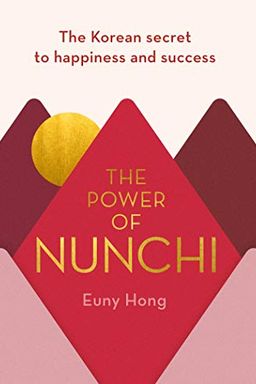
The Power of Nunchi cover

The Power of Nunchi

by Euny Hong

Discover the Korean art of nunchi, a social skill that empowers you to read people and environments, fostering trust and connection. Applicable globally, nunchi enhances your emotional intelligence, helping you excel in relationships and professional settings with subtlety and insight.

The Art of Reading the Room: The Korean Secret to Success and Connection

Have you ever walked into a meeting, a party, or even your own home and instantly sensed tension—but couldn’t quite put your finger on it? That uncanny ability to read the emotional temperature of a space lies at the heart of The Power of Nunchi by Euny Hong. Hong introduces nunchi, a Korean concept meaning “eye-measure”—the subtle art of gauging others’ thoughts and feelings to build trust, harmony, and understanding. She argues that nunchi is not a mystical Asian practice but a deeply human skill, rooted in survival instincts and social intelligence.

Hong contends that developing quick nunchi—the ability to adapt instantly to new information—can transform your relationships, career, and personal peace. It’s both pragmatic and philosophical: the sharper your awareness of others, the smoother your life becomes. Whether in dating, leadership, or everyday social interactions, nunchi helps you thrive, not through dominance or charisma, but through quiet observation and adaptability.

Why Nunchi Matters

In Western culture, we tend to value self-expression—speaking your mind, projecting confidence, and being seen—as the keys to success. But Hong challenges this. She shows that silence, curiosity, and discernment are often more powerful than words. South Korea’s rapid transformation from postwar poverty to technological and cultural sophistication, she argues, is partly a national display of collective nunchi. The country’s ability to “eye-measure” global trends and adapt quickly parallels the personal use of nunchi: flexibility trumping force.

As Hong writes, nunchi is “the Korean superpower.” It’s used by ordinary people to smooth social encounters and by leaders to make winning decisions. Whether you’re meeting a colleague, negotiating a deal, or entering a friend’s living room, your first step should be to empty your mind—one of nunchi’s eight core rules. Only then can you perceive what’s truly happening, beyond assumptions or bias.

From Survival Instinct to Social Grace

Nunchi’s origins are biological and cultural. Koreans developed it over centuries of external invasions and internal hierarchies, learning to sense others’ moods in order to survive. Hong traces this evolutionary wisdom to the “high-context” nature of Korean communication—where silence, tone, and timing matter more than direct words. Having nunchi means picking up cues quickly, recalibrating continuously, and avoiding harm. The author contrasts this with the low-context communication of much of the West, where blunt honesty is often prized but context ignored.

To bring this ancient art into the modern world, Hong emphasizes examples—from the Korean summit between Moon Jae-in and Kim Jong-un, choreographed down to identical bow angles, to business giants like Steve Jobs, who intuitively knew what users wanted before they did. Both, she suggests, are masters of nunchi: able to read subtle dynamics and act with precision.

The Eight Rules of Nunchi

Throughout the book, Hong introduces eight practical rules:

  • Empty your mind: lose preconceptions to see truthfully.
  • Be aware of the Observer Effect: your presence changes a room.
  • Observe first before acting; others have been there longer.
  • Never pass up an opportunity to shut up: silence reveals answers.
  • Manners exist for a reason: they create comfort and boundaries.
  • Read between the lines: notice tone, pauses, and unsaid feelings.
  • Intent is not impact: even unintentional harm matters.
  • Be nimble and quick: adapt continuously to changing dynamics.

A Practical Philosophy for Modern Life

What makes nunchi powerful is its universality. Hong stresses that you don’t need wealth or status—just eyes, ears, and awareness. It’s not manipulation; it’s mutual benefit. In a world saturated with information and distraction, nunchi offers calm perception. It not only fosters “roundness”—the ability to move through life without rubbing people the wrong way—but also acts as a protective shield. As seen in stories like Robyn’s intuition about a predatory film executive and Jacquelyn’s early suspicion about “Dirty John,” trusting your nunchi can literally save you.

In sum, The Power of Nunchi is both a cultural guide and a survival manual. It teaches you how to observe, adapt, and connect, instead of insisting and control. Hong’s argument is clear: civilization advances when people read each other well. You can change your life—build trust, find peace, avoid danger—simply by paying attention. As Koreans say, “Half of public life is nunchi.” Hong shows how, in truth, all of life is.


Empty Your Mind to See Clearly

Euny Hong’s first and most important rule of nunchi is deceptively simple: empty your mind. When you walk into any situation carrying preconceptions—about people, culture, or context—you block your ability to observe truthfully. Hong uses the story of Amanda, a London worker who tried to impress an American visitor with a brash high-five, only to embarrass herself because she acted on stereotypes instead of cues in the room. True nunchi begins when you let go of what you expect and instead notice what actually is.

Silence Before Interaction

Entering a room mindfully means pausing before you speak or act. Hong likens this to quantum physics’ Observer Effect: your mere presence changes the environment. A person with good nunchi honors the room—like kissing a mezuzah, acknowledging that you’re entering shared space. This pause gives you a moment to read others’ emotions instead of projecting your own.

Intent Is Not Impact

Hong clarifies that being well-intentioned doesn’t absolve cluelessness. When she burst into a dinner party apologizing loudly for being late, she didn’t realize she was interrupting a guest’s tragic announcement about terminal illness. She hadn’t acted wrongly, but the harm was real. “Intent is not impact,” she warns. Emptying your mind prevents these accidents of thoughtlessness.

This rule parallels Buddhist and Stoic teachings (Marcus Aurelius’s “untroubled spirit”) and mindfulness practices in the West. The goal isn’t mystical silence—it’s practical awareness: noticing details, tone, posture, and atmosphere. An empty mind makes space for data you might otherwise overlook.

Practical Techniques

Hong recommends breathing methods—like the 4-7-8 technique or box breathing—to calm internal noise and open your perception. You might say quietly to yourself, “I’m not here.” It’s not self-erasure; it’s detachment from ego. By watching before acting, you raise your social IQ and reduce anxiety. In every situation, your best move is observation first, conclusion later.

“We don’t see people as they are; we see people as we are.” Hong invites you to step out of yourself—to read the room, not your reflection.


Speed and Adaptability: Quick Nunchi in Action

In Korea, people don’t praise someone for having good nunchi; they say you have quick nunchi. Euny Hong shows that speed and flexibility are the soul of this skill. Like Heraclitus’s river, the emotional tone of any space changes moment to moment. You must adjust as it flows. Whether in a job interview or a dinner conversation, the person who eye-measures quickly—gauging hierarchy, mood, and social rhythm—gains an invisible advantage.

The Queen and the Finger Bowl

Hong recounts how Queen Elizabeth once demonstrated near-perfect nunchi. At a banquet, a foreign guest mistakenly drank from the finger bowl. To spare him embarrassment, the Queen followed suit, sipping hers as well. Her swift decision changed the atmosphere from awkward to graceful. Quick nunchi means reading cues instantly and neutralizing tension without words.

Every Room Is a Stage

Drawing from Shakespeare’s insight that “all the world’s a stage,” Hong urges readers to treat any space—a meeting, a party, or family dinner—as a dynamic scene. Everyone on the stage affects the story. A newcomer signals change. Nunchi requires you to notice the plot twist in real time, not after disaster strikes. When a woman at a party accused a charming guest of danger, Hong advises watching quietly instead of confronting—observe from the corner of your eye and adjust behavior as new data arrives.

Adaptive Hypothesis

Like Sherlock Holmes, Hong recommends forming a “nunchi hypothesis” and collecting evidence to prove or disprove it. If a coworker keeps boasting, your hypothesis might be that he feels insecure about new hires. Watching how others treat him gives you crucial context before acting. The key: stay fluid. As Hong puts it, “The room you entered ten minutes ago is not the same room you’re in now.” Adaptability—both emotional and cognitive—keeps you safe, trusted, and influential.


Trusting First Impressions: Instinct Over Politeness

One of Hong’s boldest ideas is that your first impression is often right—if it’s grounded in clear observation rather than prejudice. Society, she notes, trains us to suppress gut feelings in the name of politeness, telling us to give everyone the benefit of the doubt. But evolutionary instincts are older and wiser than etiquette. When something feels off, believe yourself.

From Intuition to Protection

Hong illustrates this with Robyn, the young woman who declined a glamorous job offer because the male executive made her uncomfortable—he sat on his desk, crossing boundaries. Years later he was disgraced in the #MeToo movement. Robyn’s quick nunchi overrode ambition and saved her from harm. Similarly, Jacquelyn in the true-crime podcast Dirty John sensed danger in her mother’s fiancé just from his spotless scrubs; her intuition proved tragically correct.

Nunchi vs. Prejudice

Trusting instinct doesn’t mean endorsing bias. Hong distinguishes sharply between nunchi and bigotry. Prejudice is fixed; nunchi is flexible. It updates as new data enters. Racism and sexism ignore evidence, while nunchi relies on it. Thus, nunchi is an antidote to prejudice: it asks you to test impressions against reality rather than defend them blindly.

Denial and Desire

People often silence their nunchi when desire clouds judgment—whether chasing love or opportunity. Hong calls denial the “villain in most life stories”: we cherry-pick data to confirm what we wish were true. The cure is to trust early discomfort as data, not disloyalty. “When people show you who they are, believe them,” she quotes Maya Angelou. Nunchi, at its core, is self-protection disguised as social grace.


Harmony and Roundness: Creating Smooth Human Connection

Hong introduces “roundness” as the emotional geometry of nunchi. Western culture celebrates sharp edges—boldness, assertiveness, individuality—but jagged interactions cut both ways. To have nunchi is to create smoothness: moving through social life without leaving bruises. It’s about being like James’s giant peach—expansive, impervious to sharks.

From Ego to Empathy

Roundness starts when you redirect attention from yourself to others. You don’t need to lose your identity; you simply stop assuming everyone shares your preferences. Hong retells the Korean phrase said to impatient children: “Are you the only person in the world?” It’s not cruelty—it’s a reminder of collective awareness. At the buffet or in traffic, hurry harms harmony.

The “Path of Life” Principle

In one viral Korean video, drivers automatically pulled their cars aside in seconds to let an ambulance through a tunnel. Their instant coordination came from nunchi—the habit of observing others and acting collectively. Contrast that with individualist cultures where confusion or defiance could block rescues. Roundness isn’t weakness; it’s synchronization.

Manners and Boundaries

Hong reframes manners as instruments of emotional safety, not elitism. Observing etiquette signals respect for shared space. Whether honoring someone’s preference not to hug, or waiting to see how colleagues greet each other, such patience creates “round” relationships. Manners aren’t superficial—they’re the architecture of comfort.


Nunchi at Work: Reading Offices Like Living Ecosystems

Hong devotes a full chapter to workplace nunchi, arguing that your career depends less on ambition than on your ability to read the room. Offices, she says, are ecosystems of hidden hierarchies and moods. Those who master eye-measure rise steadily—often mystifying their peers who rely on words alone.

Observation Over Eloquence

Hong describes coworkers who seemed ordinary but moved up rapidly because they watched quietly before speaking. In contrast, “David Brents”—like the oblivious character from The Office—sink careers with tone-deaf jokes and self-centered behavior. Reading subtle shifts—who’s excluded from meetings, who’s volunteering too eagerly—can reveal hidden politics or impending layoffs long before official announcements.

Corporate Titans and Intelligent Adaptation

The same principle scales up. Steve Jobs’ insight that customers wanted simplicity, Bill Gates’ foresight about games overtaking movies, and Jeff Bezos’ obsession with customer trust—all reflect corporate-level nunchi. They sensed direction before data proved it. By contrast, Elon Musk’s infamous tweets exemplify nunchi collapse—ego overpowering perception.

Practical Power

At work, Hong suggests letting others speak first in negotiations or promotions, collecting information through silence. Bring food to meetings to create roundness; watch who accepts politely and who avoids engagement. These micro-details reveal stress, loyalty, and ambition far more than projects or memos. The ultimate lesson: in professional life, seeing clearly beats shouting loudly.


Nunchi and Relationships: Emotional Intelligence Beyond Words

Hong proves that romantic and familial relationships are the ultimate testing grounds for nunchi. Love thrives when partners read each other skillfully and fails when they demand clarity instead of empathy. She calls nunchi “a bridge between people’s unspoken realities.”

Dating and Discernment

Hong compares discovering truth in love to data collection—observe what your date does when frustrated, not what they say about patience. Tonya’s yoga-loving date who preached serenity yet lashed out at waiters revealed everything. Nunchi helps you trust behavioral evidence over verbal charm.

From Lizzy Bennet to Mrs. Ramsay

Using literary models, Hong juxtaposes nunchi-rich characters like Elizabeth Bennet (discernment through humility) and Mrs. Ramsay (from Virginia Woolf’s To the Lighthouse)—a hostess who transforms tension by silently lighting candles. Both demonstrate nunchi’s grace: the power to change relational climate without confrontation.

Empathy vs. Mind-Reading

Not all nunchi looks gentle: sometimes it means backing off to observe, not rushing to fix. Couples who argue about “obvious” needs, like hunger or fatigue, forget that communication styles differ. To read between the lines is not to become psychic—it’s to listen to patterns. Practicing nunchi replaces endless requests to “use your words” with calm understanding that people rarely do.


Nunchi for the Nervous: Anxiety as Superpowered Perception

One of Hong’s most comforting insights is that anxiety doesn’t block nunchi—it often amplifies it. When you’re nervous, she writes, you’re hyperaware of others’ signals. This sensitivity can be turned into skill. Instead of fearing people, study them like Sherlock Holmes: notice breath, posture, tone, and pace. Redirecting focus from self to surroundings dissolves fear.

From Monkey Mind to Observant Mind

Borrowing Buddhist imagery, Hong teaches that anxiety is your “monkey mind”—restless but trainable. Throw it something to observe. When panic strikes, breathe and count details: who’s wearing what, who’s moving fast, who’s calm. The exercise flips fear into data collection. You stop thinking, “They’re judging me,” and start thinking, “She’s distracted; he’s nervous too.”

Distinguishing Fear from Nunchi

Hong offers a physical test: true nunchi fear feels factual and cold, centered in the gut; anxiety feels crushing and irrational, centered in the chest. The distinction teaches discernment. Gut fear warns; chest fear worries. Over time, you learn which to trust.

Travel, Depression, and Recovery

Even depression or loneliness can refine nunchi. Traveling forces adaptation to new cues. Being “a welcome guest” in the world means watching before assuming. When you’re broken, she reminds readers: nunchi is your underdog weapon. Your instincts survived millions of years; listen to them and you’ll find connection again. Calm attention is courage.


The Power of Adaptation: A Universal Human Skill

In her conclusion, Euny Hong ties everything together: nunchi is not just Korean—it's human. It unites Aristotle’s communal ethics, Stoic discernment, and modern emotional intelligence. The world, she says, has forgotten how to watch and listen. Reclaiming these faculties can make societies saner, workplaces kinder, and individuals freer from anxiety.

Beyond Popularity

Nunchi isn’t about being liked; it’s about creating harmony that benefits all. The leader who observes before speaking wins trust; the parent who notices subtle moods builds security. Quiet adaptability outlasts force. Survival of the fittest, Hong reminds us, means “survival of the most adaptable.”

Living Deliberately

Ultimately, Hong urges you to live with eyes and ears open—to notice, recalibrate, and create “roundness” wherever you go. When you err, mend quickly: “Least said, soonest mended.” When success tempts arrogance, remember that ego suppresses sight. Nunchi is both humility and power, a practical antidote to modern self-absorption. Learning it is less about mastering others—it’s about mastering yourself.

Dig Deeper

Get personalized prompts to apply these lessons to your life and deepen your understanding.

Go Deeper

Get the Full Experience

Download Insight Books for AI-powered reflections, quizzes, and more.