
Idea 1
The Power of Presence: Awakening Through the Now
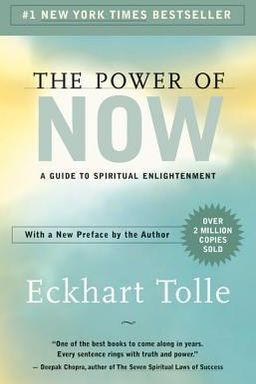
Have you ever caught yourself replaying a conversation from yesterday or worrying about what might go wrong tomorrow? Most people live this way—pulled between past regrets and future expectations—rarely fully present in the moment. In The Power of Now, Eckhart Tolle argues that this scattered attention is the root cause of human suffering. The only true liberation, he contends, is awakening to the present moment, where consciousness is alive, peaceful, and free of the mind’s compulsive noise.
Tolle presents a radical yet simple thesis: that peace and enlightenment are available only in the Now. The human mind, designed as a useful tool, has turned into a tyrant, enslaving people with fear, anxiety, and constant identification with thought. This identification produces the ego—a psychological construct that mistakes thoughts, roles, and possessions for identity. The more we cling to it, the more we lose touch with our true nature: pure consciousness, free of time, story, and form.
The Ego and the Voice in the Head
Tolle begins by exposing what he calls “the thinker”—that incessant voice narrating our lives, judging others, reimagining the past, and projecting hypothetical futures. He likens it to a radio station that never turns off. Yet rather than being who we are, this voice is a form of mental noise. Liberation begins with what Tolle calls “watching the thinker”—observing your thoughts without judgment. The moment you notice the voice, a split occurs between the observer and the observed; awareness dawns. You realize, perhaps for the first time, that you are not your thoughts but the consciousness watching them.
As this awareness grows, the mind’s relentless chatter weakens. Between thoughts, gaps of stillness appear. These gaps are portals into what Tolle calls “no-mind”—a state of pure consciousness without mental activity. In those moments, there’s peace, vitality, and a sense of wholeness that defies comprehension. It’s not an escape from reality but a deep connection to it. As Tolle writes, “You find that the Being you are is beyond the mind, deeper and infinitely more spacious.”
Time as an Illusion
Central to Tolle’s argument is the idea that psychological time is an illusion. He distinguishes between clock time—used for practical purposes—and psychological time—the mental projection that keeps us trapped in past and future. This obsession with time fuels the ego’s belief that salvation lies in external achievement or some future event: a better job, a new relationship, spiritual enlightenment someday. Yet, as Tolle insists, “There is no salvation in time. You cannot be free in the future. Presence is the key.”
When you stop giving future and past your mental energy, you step into the present moment—the only point where life truly happens. This shift ends the ego’s grip. You no longer derive identity from what you once did or hope to do. You rest in what is. This, for Tolle, is the essence of awakening: to realize deeply that the Now is all there is.
Freedom Through Inner Observation
Tolle is not offering an abstract philosophy but a practice of inner observation. He invites readers to notice the present moment in everyday activities—feeling water while washing hands, observing breath while walking stairs, sensing the inner energy of the body. These are simple doorways into presence. When awareness dominates, problems dissolve. “There are no problems in the Now,” he writes. “There are situations to be dealt with or accepted—nothing more.”
This practice, also central to Buddhist mindfulness (and echoed in Thích Nhất Hạnh’s Peace Is Every Step), gradually reprograms our perception of self and reality. Over time, identifying with the eternal stillness beneath thought allows us to transcend fear and suffering. Life remains imperfect on the surface, but inwardly, we become rooted in peace. Tolle calls this the joy of Being—the natural state that existed before we became entangled with the mind’s illusions.
Ultimately, The Power of Now isn’t about adopting a new belief. It’s about dismantling the false identity created by thought and rediscovering the consciousness already within you. It’s not about changing your life situation but transforming your relationship with it. “You are here to enable the divine purpose of the universe to unfold,” Tolle reminds us. “That is how important you are.”