
Idea 1
Embracing the Power of Neurodiversity
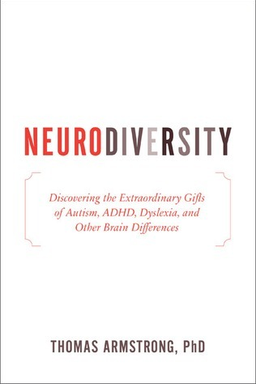
Have you ever wondered whether the human brain was meant to operate according to one universal definition of “normal”? In The Power of Neurodiversity, Thomas Armstrong, PhD, challenges that assumption—and argues that society’s obsession with normality has evolved into a harmful “culture of disability.” He contends that our tendency to medicalize any deviation from an idealized brain has created a worldview that pathologizes difference rather than celebrates it. As he writes, there is no such thing as a standard brain locked inside a vault somewhere—only the gorgeous range of neural configurations that make people unique.
Armstrong’s book flips the usual deficit-based approach to mental and cognitive differences on its head. Instead of asking what’s wrong with individuals who have autism, ADHD, dyslexia, or mood disorders, he asks: what strengths might they possess that most of us overlook? His goal is not to romanticize these conditions but to balance our understanding by identifying gifts embedded within traits society has labeled as defective. Drawing inspiration from biodiversity and cultural diversity, Armstrong claims human brains function more like ecosystems than machines—adaptive, dynamic, and remarkably varied.
The Argument for Brain Diversity
Armstrong invites readers to see mental differences the way we see variations in nature: as evolutionary expressions of creativity and survival. Neurodiversity, he explains, is a framework that recognizes conditions like autism, ADHD, dyslexia, anxiety, and mood disorders not as flaws but as alternative forms of human wiring. Each difference reflects an ecological niche—a set of strengths and adaptations suited to specific contexts. For example, the hyperfocus of a person with ADHD may be a gift in high-stimulation environments, while the detailed perception of someone with autism can be invaluable in analytic or technical work. The problem, Armstrong says, lies not in these individuals but in how society structures environments that exclude them.
From Deficit Thinking to Ecological Metaphors
Medical science has long used mechanistic metaphors to describe the brain as a machine susceptible to malfunction. Armstrong replaces this metaphor with a biological one. He compares the human brain to a rainforest—an ecosystem rich with diversity, competition, and adaptation. Just as rainforests thrive through variation, human societies depend on the diversity of neural pathways to generate intelligence, creativity, and emotional depth. In this sense, “different” doesn’t mean “broken”; it means the brain is working in unexpected and potentially valuable ways.
He also illustrates that human competence exists on continuums of ability. There’s no sharp divide between mental illness and mental health—only gradations. The most introverted person, for example, might exist on the same sociability spectrum that includes autism at one end and gregarious exuberance at the other. Recognizing these continuums dismantles stigma and builds empathy.
Culture and Context Matter
Armstrong urges readers to consider the role of cultural values in shaping our concepts of disability. Different societies have historically labeled “abnormal” behavior according to the traits they prized. In modern industrialized cultures, the ideal worker—a rule-following, productive, stress-resistant performer—defines normality. As a result, those who deviate from this mold (an impulsive ADHD child or a mood-sensitive artist) are labeled dysfunctional. But in other eras or cultures, such traits might have been revered. He notes, for instance, that the obsessive tendencies we now classify as compulsive could once have made someone an excellent ritual priest. Whether you’re considered gifted or disabled may depend less on biology than on the time and place you were born.
The Principles for Rethinking Mental Difference
Armstrong lays out eight principles to guide this shift toward a “biology of possibility.” First, the brain works like an ecosystem, always changing in response to its environment. Second, people fall along continuums of competence. Third, culture defines what counts as gifted or disabled. Fourth, historical context determines how traits are valued. Fifth, success comes from adapting the brain to the world we occupy. Sixth, individuals can also modify their environment to suit their unique brains—a concept he calls niche construction. Seventh, niche construction involves career choices, supportive communities, and technologies that help people thrive. And eighth, these positive niches actually reshape the brain, leading to greater adaptation over time.
The Book’s Journey Through Seven Differences
Building on those principles, Armstrong explores seven major categories of neurodiversity—ADHD, autism, dyslexia, mood disorders, anxiety disorders, intellectual disabilities, and schizophrenia. Each chapter uncovers “hidden strengths” within these conditions: the playfulness and energy of the hyperactive mind, the systemizing precision of the autistic brain, the visual imagination of the dyslexic thinker, the emotional depth of mood-sensitive individuals, the vigilance of anxious temperaments, the empathy and humor often found in cognitive disability, and the visionary creativity linked to psychosis or schizophrenia. Throughout, Armstrong pairs science with human stories—Thomas Edison’s restless hyperactivity, Temple Grandin’s animal empathy, and Gloria Lenhoff’s musical giftedness despite a low IQ—to reveal how difference can be reframed as potential.
Why Neurodiversity Matters
Armstrong’s argument carries profound implications for how you think about yourself and others. Instead of asking “How do we cure these conditions?” he asks “How do we help every brain construct its best possible niche?” In education, that means designing classrooms that integrate rather than isolate neurodiverse students. In employment, it means valuing people for their unique cognitive styles—like the Danish software company Specialisterne, where workers with autism outperform neurotypical testers. In the broader culture, it means respecting that diversity among minds, like biodiversity in nature, is essential for human innovation and survival. Through this lens, labels like “deficit” or “disorder” give way to appreciation, and neurodiversity becomes not a problem to solve but a power to unleash.