
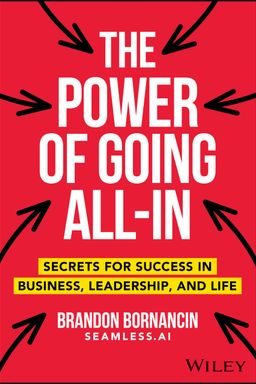
The Power of Going All-In cover

The Power of Going All-In

by Brandon Bornancin

The Power of Going All In inspires leaders and their teams to achieve more by embracing a culture of dedication and resilience. Brandon Bornancin provides a framework for leadership greatness, offering methods to unlock potential, avoid micromanagement, and nurture future leaders. Discover why true leadership transcends titles and how to foster a high-performance culture.

The Power of Going All-In

Have you ever wondered why some people seem to achieve extraordinary results while others plateau after modest success? In The Power of Going All-In, entrepreneur and sales leader Brandon Bornancin reveals that the difference isn’t talent, luck, or timing—it’s commitment. He argues that the secret behind every great leader, thriving business, and fulfilled life is the willingness to go all-in: to give everything you’ve got, without excuses, half-measures, or hesitation. Bornancin contends that “going all-in” is not an attitude but a way of living—an unshakable mindset that drives relentless growth, accountability, and service to others.

The book serves as a daily mentor through 365 short lessons divided by months and themes—from mastering vision and hiring to building resilience, trust, and emotional intelligence. Bornancin’s roadmap blends tactical leadership advice with mindset development, teaching you how to build teams that win, empower people to grow, and turn challenges into catalysts for progress. It’s both a motivational playbook and an actionable plan for anyone who wants to move from ordinary leadership to transformational impact.

What It Means to Go All-In

Bornancin defines all-in leadership as complete immersion in a purpose larger than yourself. It means devoting your time, energy, and heart into helping others succeed, even when no one is watching. The characteristics that make it powerful include extreme ownership, fearless resilience, and limitless passion. All-in leaders push boundaries: they accept failure as feedback, give credit away, and take the blame when necessary. They’re positive in the face of adversity and maintain fierce humility even at the height of success. They care more about their team’s growth than their own comfort.

At its core, Bornancin’s philosophy insists that greatness can’t coexist with mediocrity. You either give everything or you settle for average. His own story—building Seamless.AI from a $1,000 start-up into a $100 million enterprise—serves as proof that results compound when you fully commit. (Note: This mirrors similar principles found in James Clear’s Atomic Habits, particularly the idea of small daily improvements that compound into quantum leaps.)

Why Commitment Outperforms Talent

Bornancin’s argument undermines the myth that talent guarantees success. He tells stories about leaders who failed not because they lacked skill, but because they wavered—they waited for ideal conditions or gave partial effort. All-in leaders, by contrast, are the ones who go first, stay late, and do whatever it takes. They understand that hard work consistently beats innate ability. This emphasis on hustle echoes Angela Duckworth’s research in Grit: perseverance and passion, sustained over time, fuel extraordinary achievement.

He presents going all-in as the antidote to common leadership pitfalls—micromanagement, apathy, and fear. Leaders who go halfway end up with disengaged teams and stagnating organizations. Those who model commitment create cultures where excellence becomes contagious. By leading through example, they teach everyone else what it means to go beyond expectations.

The Ripple Effect of All-In Leadership

Going all-in isn’t just about personal transformation—it creates a ripple effect. When a leader is fully committed, their team mirrors that intensity. Accountability, gratitude, and passion spread like wildfire. A manager who celebrates wins daily builds moral momentum, and a CEO who gives selflessly creates loyalty that no salary can buy. Bornancin shows that leadership isn’t ownership—it’s stewardship. He often reminds readers that “leadership is rented, and the rent is due every day.” This mindset shifts your focus from authority to service, producing lasting impact on people’s careers and wellbeing.

The book’s daily structure encourages consistency—the habit of improving by just 1% per day. Using the principle of compounding interest, Bornancin demonstrates how these tiny gains make you 37 times better in one year. The message is simple: by going all-in every day, you don’t just grow linearly—you grow exponentially. Each lesson, from vision setting to emotional resilience, reinforces the idea that success is iterative.

Why These Ideas Matter

In today’s fast-paced, distraction-laden world, most people live in partial engagement—always multitasking, rarely investing fully in anything. Bornancin’s approach challenges this trend by returning to intensity, integrity, and intention. It’s a call to abandon lukewarm effort and lead with wholehearted commitment. Whether you manage a team, run a company, or parent a family, the principle is universal: full engagement transforms outcomes.

The real power of going all-in lies in transformation—it turns ordinary managers into visionary leaders, coworkers into collaborators, and individuals into purpose-driven achievers. By the end, you’re not just managing goals; you’re creating legacies. Bornancin’s book is both challenge and invitation: if you dare to give everything, you can accomplish anything.


Mission, Vision, and Accountability

Every transformation begins with clarity. The first section of Bornancin’s playbook focuses on building your mission, owning your vision, and making accountability the lifeblood of your leadership. He argues that leaders don’t just manage tasks—they create alignment through vision that inspires unity and purpose. When your team feels connected to a mission larger than profit or productivity, their motivation becomes intrinsic.

Owning the Vision

Bornancin compares vision to oxygen—it must infuse every conversation, project, and decision. Owning the vision means crafting a clear statement of direction and repeating it until it becomes the team’s north star. He advises using statements of work (SOWs) to translate ideas into actionable clarity. In his company Seamless.AI, these documents outline project scope, ownership, and success metrics so no one misunderstands the purpose. Clarity replaces confusion, and ownership replaces apathy.

You Work for Your Team

Great leadership, Bornancin insists, flips the hierarchy. “You don’t work for your boss—your boss works for you,” he says, echoing servant leadership principles from Robert Greenleaf. When leaders view themselves as servants to their employees’ growth, trust deepens. He explains that his biggest turning point came when he stopped expecting respect and started earning it through results, humility, and relentless support.

Balancing Directive, Supportive, and Contributory Leadership

To avoid burnout or micromanagement, Bornancin introduces the “Triangle Balance”—finding equilibrium among directive, supportive, and contributory pillars. Directive leaders give direction and enforce accountability. Supportive leaders nurture wellbeing and remove roadblocks. Contributory leaders actively coach, brainstorm, and inject momentum. This balance creates psychological safety while maintaining performance pressure. Most managers lean too far toward one side, but all-in leaders master all three simultaneously.

Celebrating Wins and Teaching Gratitude

Bornancin’s method for sustaining morale centers on celebration and gratitude. He encourages daily recognition of progress—through simple Slack “Wins” channels or a company gong—to create visible momentum. Gratitude journals further reinforce the positive climate, reframing work from something you “have to do” into something you “get to do.” (Similar ideas appear in Shawn Achor’s The Happiness Advantage, where gratitude rituals boost engagement and resilience.)

When leaders genuinely celebrate their team’s successes, employees push harder because they feel valued. When excuses disappear and gratitude fills the gap, accountability becomes uplifting rather than punitive. This foundation—vision, servant mindset, balance, celebration—sets the stage for everything that follows. Without it, no culture or strategy can thrive.


Building a High-Performance Culture

Once vision is established, Bornancin moves into the mechanics of high-performance culture—the invisible environment that determines whether teams rise or stagnate. He emphasizes that culture isn’t perks, ping-pong tables, or free snacks—it’s the collective energy that channels effort toward excellence. The leader’s job is to design, model, and protect that energy.

The Four Keys to Cultural Balance

Bornancin identifies four balancing forces in a thriving culture: positivity, challenge, accomplishment, and camaraderie. Too much challenge without positivity breeds burnout. Too much camaraderie without accomplishment creates complacency. He teaches leaders to maintain equilibrium so the team feels both safe and stretched.

He contrasts bad bosses—those who manipulate fear—with all-in leaders who inspire through mission. Positivity becomes strategy, not fluff. At Seamless.AI, daily celebrations, recognition messages, and gratitude practices keep employees energized even during intense growth spurts.

Creating a Learning Ecosystem

To sustain excellence, training must be constant. “Training never stops,” Bornancin says. He models this through daily learning sessions and “game film” reviews—recordings of calls or projects analyzed for improvement. By studying what went right and wrong, teams mimic habits of elite athletes. This reflective learning loop turns feedback into fuel rather than fear.

The Power of One Focus

Another cultural cornerstone is focus. Managers often overwhelm teams with countless improvement goals, but the most transformative leaders pick one variable at a time and master it. Bornancin uses the metaphor of hunting one rabbit rather than three—you catch nothing if you chase too many. Concentrated energy generates visible wins that compound confidence.

Value, Recognition, and Belonging

In high-performance cultures, belonging drives retention. Bornancin encourages leaders to make every employee feel important: “When you talk to managers, you feel they are important; when you talk to leaders, they make you feel you are important.” Positive reinforcement and public praise replace fear-based management. As he notes, positive energy scales while negativity multiplies disengagement.

Building culture, then, is a daily act. Teach continuous learning, focus on one improvement, and celebrate both effort and outcome. Over time, excellence becomes habit—and your team turns from compliant workers into collaborative champions.


Resilience and Growth Mindset in Adversity

Everyone faces setbacks; what distinguishes all-in leaders is how they respond. In his section on adversity, Bornancin turns struggle into strategy. He asserts that challenges are blessings, not barriers. Each problem is a test of grit, curiosity, and commitment—the crucibles where leaders are forged.

Do Whatever It Takes (WIT)

WIT becomes Bornancin’s mantra, the cornerstone of resilience. Whether building Seamless.AI during economic downturns or leading through uncertainty, his motto is simple: do whatever it takes. He recounts surviving corporate lows after past failures, losing millions, and rebuilding from scratch—a testimony that persistence trumps perfection. This relentless adaptability echoes Stoic philosophy and parallels Ryan Holiday’s The Obstacle Is the Way.

The 1% Rule: Incremental Progress

One of the book’s most actionable frameworks is improving 1% daily. Bornancin uses this metric to quantify compounding performance: a 1% daily improvement leads to 37× growth over a year. By shrinking the focus to manageable gains, you remove overwhelm and fuel momentum. Even failure becomes data for smarter action. “Learn fast and fail fast,” he writes—because small, quick iterations reduce risk while accelerating innovation.

Tenacity, Grit, and Coachability

Resilient leaders cultivate tenacity—the refusal to quit when facing rejection or doubt. They understand that growth rarely feels easy; success lives outside comfort zones. Bornancin’s formula for grit involves showing up, doing the work, and being positive no matter the critics (his SDB model: Show, Do, Be). To remain teachable, he urges leaders to prioritize coachability over ego. The desire to improve must outweigh pride.

Mindset Over Matter

Perhaps most empowering, Bornancin reframes success as “you vs. you.” The real competition is internal—your own resistance, self-doubt, and fear. By mastering mindset, everything else follows. He teaches teams to replace “I can’t” with “How can I?” so language drives action. Positive self-talk shifts identity from victim to creator and fosters creative problem-solving. When resilience becomes cultural, teams thrive during turmoil instead of breaking apart.

Bornancin’s closing mantra in this section—“Get comfortable being uncomfortable”—summarizes the essence of long-term leadership. Every crisis is a classroom, and every setback hides a seed for growth. Going all-in means betting on hard work, not luck, and enjoying the journey—not just the destination.


Communication and Radical Transparency

Communication, for Bornancin, is the master skill that magnifies every other leadership trait. You can’t inspire, build trust, or coach effectively without mastering the way you interact. His model of transparency and active listening transforms dialogue into connection.

Active Listening and Engagement

Bornancin teaches that the simplest act of genuine attention can change lives. Active listening means silencing distraction—closing laptops, muting phones, and taking notes—to show respect. He calls this “All-In Listening.” When people feel heard, they invest emotionally in their work. Leaders who practice this not only understand problems faster but also unlock hidden motivations. (This aligns with Brené Brown’s emphasis on empathy and presence in Dare to Lead.)

Radical Transparency and Clarity

Transparency doesn’t mean oversharing—it means explaining the why behind decisions. In Bornancin’s words, clarity, purpose, and trust form a triad of sustainable communication. When employees understand context and intention, they act autonomously. He advises leaders to make expectations crystal clear, creating psychological safety. Ambiguity breeds frustration; clarity fuels confidence.

Open Feedback and No-Excuses Culture

Bornancin’s teams operate on “open feedback”—direct, timely, and non-defensive communication. He teaches giving positive feedback for improvement: start with compliments, align with employees’ goals, and link change to tangible outcomes. Likewise, his “no-excuses” policy turns setbacks into self-reflection rather than blame. Every problem becomes a question: What can we learn or change today to move closer to success?

Leaders who communicate openly earn trust faster and reduce conflict. Empathy and accountability coexist when transparency is modeled from the top. As Bornancin warns, “Empires are destroyed from within”—silence and toxicity suffocate innovation. But honesty, curiosity, and compassion enliven teams. For him, leadership conversations are not about power—they’re about connection and constructive truth.


Empowerment, Autonomy, and Trust

True leadership isn’t about control—it’s about creating freedom. Bornancin dedicates his next lessons to teaching how trust and autonomy transform organizations from rigid hierarchies into high-performing ecosystems. His belief: when people feel empowered, they act with ownership, creativity, and speed.

From Authority to Partnership

Bornancin dismantles the myth that leaders must constantly oversee others. “We’ve all been unqualified at one point,” he says, reminding you that learning happens through doing. Great leaders replace micromanagement with mentorship, and they make it safe for employees to ask for help or take risks. Fear kills initiative; trust revives it. He encourages hosting daily standups, brief collaborative huddles where updates, blockers, and insights flow freely—small rituals that nourish trust and speed.

Autonomy to Innovate

Empowerment means giving permission to create. Many organizations solicit ideas but never act on them, causing disengagement. Bornancin flips this pattern: leaders must implement employees’ best suggestions and clear bureaucratic obstacles. Simplifying approval channels converts creativity into tangible action. Autonomy, he argues, is the soil where innovation grows. In his company, employees who own projects execute faster and outperform competitors who drown in red tape.

Building Safe Space and Psychological Security

Safety accelerates performance. When mistakes don’t equal punishment, employees take bold action. Bornancin ties safety to speed: the emotional security to fail and learn propels decision-making. He relates this to Google’s Project Aristotle, which found psychological safety the top predictor of team success. Leaders who make people feel safe—by listening, recognizing, and serving—remove fear-based hesitation. “Help your people feel safe,” he says, “and they’ll execute at full force.”

Trust Through Action

Trust is earned through consistency, not charisma. Bornancin’s advice: do what you say, say what you do. Reliability builds belief. When leaders sweat in practice—testing, refining, and preparing—the team bleeds less in battle. “Sweat more in practice, bleed less in war” captures his philosophy of preparation and authenticity. This section builds on the idea that leadership isn’t a title; it’s a series of small reliable acts executed daily.

Empowerment transforms followers into partners, and partners into innovators. When you make your people feel trusted, they become unstoppable.


Emotional Intelligence and the Human Element

In the later chapters, Bornancin turns inward—toward empathy, emotional intelligence, and the human element of leadership. Technical skill builds organizations, but emotional skill builds communities. Leaders who understand people’s feelings and motivations create loyalty money can’t buy.

Leading with Compassion, Not Commands

Bornancin advocates for compassion through action. It’s not about slogans or perks—it’s about listening to what people need and changing policies to reflect care. This echoes Simon Sinek’s view in Leaders Eat Last: human-centered leadership fuels engagement. According to Bornancin, compassion means investing in mental health support, flexible schedules, and consistent presence.

Authenticity and Humility

He warns against ego—the “know-it-all” syndrome that kills growth. All-in leaders stay humble and curious, treating every conversation as an opportunity to learn. Authenticity means staying true to who you are; don’t become a corporate robot. People respect transparency and honesty more than pretense. Bornancin’s humility during his company’s early failures, when he lost $4 million yet learned from it, exemplifies emotional resilience.

Work–Life Balance and Care

Emotional intelligence also means recognizing burnout and balance. Bornancin cautions leaders never to glorify exhaustion. Instead, they should model well-being and encourage rest, creativity, and play. Check in with employees, listen, and genuinely care—they could work anywhere, but they choose to work with you. Gratitude and empathy underpin retention and morale.

Ultimately, his message is simple: leadership is a privilege, not a power. Treat people like family, not quotas. Emotional intelligence—steady composure, empathy, authenticity—turns authority into influence. Bornancin sums it up: “When you care less about your people, your people become careless.” When you lead with care, they rise with you.


Developing Future Leaders and Succession

The final major theme of The Power of Going All-In centers on legacy—coaching and developing future leaders. Great leadership multiplies itself; the ultimate measure of success is how well your people grow when you’re not in the room.

Every Employee Is a Diamond in the Rough

Bornancin begins with perspective: every team member is a potential star. Treat them as diamonds in the rough—invest in mentorship, set stretch goals, and give autonomy. The expectation itself elevates performance. When leaders start seeing potential instead of limitations, they activate transformation.

Coaching as Daily Discipline

Coaching isn’t a yearly ritual; it’s a continuous process. Bornancin shares his structure of bi-weekly one-on-ones, monthly reflections, and annual reviews focused on growth rather than punishment. Feedback is immediate, specific, and encouraging. By coaching managers to become great leaders, he multiplies impact exponentially—training the trainers so leadership cascades across generations.

Promote Fast, Personalize Development

Unlike bureaucratic systems that stall promotions, Bornancin advocates for agility. When someone is ready, promote them immediately and celebrate personally—he calls every promoted employee himself. He also tailors development based on motivators (money, learning, recognition, growth, etc.), reminding leaders that creativity in reward design keeps motivation high.

Speak Success Into Existence

Bornancin’s final advice is spiritual as much as managerial: speak success into existence. Declare belief in your people until they believe it too. Positive expectation is contagious—it shapes reality. Create a culture where everyone asks, “What did you learn today?” and progress becomes a daily ritual. Leadership, in the end, is about creating successors who exceed you. You’re never too important to appreciate your people, never too experienced to learn, and never done becoming better.

With these lessons, Bornancin closes his marathon with a reminder: leadership is rented, and the rent—service, humility, and all-in commitment—is due every day.

Dig Deeper

Get personalized prompts to apply these lessons to your life and deepen your understanding.

Go Deeper

Get the Full Experience

Download Insight Books for AI-powered reflections, quizzes, and more.