
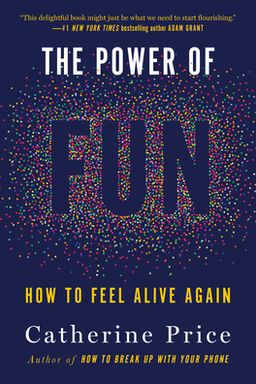
The Power of Fun cover

The Power of Fun

by Catherine Price

Discover the transformative potential of True Fun with Catherine Price''s The Power of Fun. Learn how embracing playfulness, connection, and flow can enrich your life, boosting your health and happiness. This engaging guide provides practical tools to help you prioritize joy, leading to a more vibrant and fulfilling existence.

The Power of True Fun

What if fun isn’t the opposite of work but one of the most essential elements of a thriving, meaningful life? In The Power of Fun, Catherine Price argues that real enjoyment—what she calls True Fun—is not frivolous or optional. It’s a life‑altering combination of playfulness, connection, and flow. When these three states converge, you experience energized presence, laughter, loss of self‑judgment, and timeless absorption in what you’re doing.

Price’s central claim is that True Fun is measurable and cultivable. Anyone can learn to recognize and invite more of it—and the process transforms not only your mood but also your mental health, creativity, relationships, and sense of meaning. Across stories from her research “Fun Squad” of 1,500 people, she shows that True Fun occurs everywhere—from a spontaneous guitar jam to a cross-country bicycle adventure—whenever playfulness, connection, and flow align.

Playfulness: Freedom from Judgment

Playfulness, the first pillar, means approaching life with curiosity and an openness to silliness. It’s not about jokes or games; it’s the willingness to experiment without fear of failure. Price’s BYOB guitar class is a vivid example: strangers looked ridiculous together, freed from perfectionism. Play, she argues, is mental flexibility—it reawakens the childlike part of us that adults often suppress in favor of productivity. (Psychologist Stuart Brown, author of Play, similarly finds that play deprivation leads to rigidity and burnout.)

Connection: Shared Presence

Connection, the second ingredient, goes beyond socializing. It’s the felt bond—with other people, nature, or even your own body—that creates belonging. Price’s Fun Squad results were striking: even self‑described introverts said their peak fun moments involved others. Social neuroscientists like Barbara Fredrickson and Matthew Lieberman have shown that connection quiets the brain’s threat system and releases oxytocin, improving emotional regulation and health outcomes; Price turns that science into a lived practice.

Flow: Immersed Engagement

Flow, the final component, comes from psychologist Mihaly Csikszentmihalyi’s work: it’s full absorption in a challenging but doable task. Price’s own bicycle trip across the U.S.—exhausting, exhilarating, unforgettable—illustrates the timelessness and mastery that flow delivers. You lose self-consciousness and feel synchronized with the moment. When flow combines with playfulness and connection, it becomes pure aliveness.

Against Fake Fun

Not all fun is True Fun. Price distinguishes Fake Fun—engineered activities like endless scrolling, binge‑watching, or shopping—from the real thing. Fake Fun mimics pleasure through dopamine spikes but leaves you drained and disconnected. It’s the junk food of joy: quick hits without nourishment. Recognizing the difference is crucial because the modern attention economy constantly sells Fake Fun under the label of relaxation. Her story of mindlessly browsing eBay while nursing her newborn crystallizes that loss—you can be surrounded by everything that matters and still miss it because your focus is stolen.

Attention as the Currency of Life

Underneath all her advice runs one radical insight: your life is composed of what you pay attention to. Apps and devices fragment that attention—offering dopamine-driven micro‑rewards that prevent flow and reduce connection. When you reclaim attention, you reclaim your capacity for True Fun. (Tristan Harris and Roger McNamee, quoted in the book, describe how algorithms optimize for addiction rather than well‑being.)

Building a Life that Attracts Fun

Price helps you do more than diagnose the problem. Through tools like the Fun Audit, permission slips, digital sabbaths, and community “Fun Squads,” she teaches how to make room for joyful, absorbing experiences. You design your days around playfulness instead of waiting for serendipity. Her SPARK framework—starting with Space—encourages decluttering the physical, mental, and emotional load that crowds out joy.

The Broader Promise

Ultimately, Price reframes fun as health: laughter lowers stress hormones; connection predicts longevity; flow builds mastery and purpose. These aren’t merely emotional perks—they are biological investments in resilience. Fun becomes not indulgence but essential maintenance for creativity, relationships, and even survival. The final chapters expand this into a philosophy of sustainable play: build playgrounds, practice delight, rebel harmlessly, and sustain fun through rituals and squads. Every technique circles back to the book’s thesis—that we reclaim our humanity when we reclaim our capacity for playfulness, connection, and flow.

Core Message

True Fun is not the reward for finishing life’s tasks—it is how you live fully while doing them. Protect your attention, make space for curiosity, connect deeply, and you will build a life that feels not just busy, but vividly alive.


Protect Your Attention

Your attention is the most valuable resource you possess—and the modern attention economy is designed to steal it. Price connects this truth to every element of fun: without focus, you cannot be playful, connect deeply, or enter flow. The culprit is often in your pocket. Phones and apps monetize distraction, transforming moments of potential joy into fragmented time she calls “time confetti.”

How Screens Hijack Your Mind

Drawing from neuroscience and insider testimony, Price explains how dopamine acts as a salience signal: it tells your brain, “this is worth repeating,” regardless of whether it’s good for you. Apps exploit this system through novelty (fresh content), reward (likes and notifications), and unpredictability (intermittent reinforcement). Former Facebook president Sean Parker’s confession—wanting to “consume as much of your time and conscious attention as possible”—illustrates how addictive design is intentional, not accidental.

Emotional and Cognitive Costs

  • Attention fragmentation reduces creativity and memory consolidation.
  • Constant partial focus weakens relationships—phones on tables lower empathy and connection.
  • Notifications trigger stress responses and FOMO, trapping you in cycles of compulsive checking.

Price’s turning point came when she saw her phone’s reflection in her infant daughter’s face while she scrolled eBay. That image led her to write this book: a wake‑up call that every moment of lost attention is a moment of lost life.

Practical Recalibrations

Protecting attention doesn’t mean abandoning technology—it means reshaping your relationship with it. Price’s “Break Up With Your Phone” framework suggests adding friction to unhelpful habits: charge devices outside bedrooms, use a separate alarm, and remove addictive apps from the home screen. Her WWW check‑in (“What for? Why now? What else?”) interrupts reflexive scrolling so each phone interaction becomes conscious.

If you create a buffer around your attention—digital sabbaths, not‑to‑do lists, conscious device placement—you rebuild mental quietude. That silence is where True Fun begins: the mind re‑learns how to notice, explore, and engage.


Design Your Fun

Instead of waiting for fun, you can design it. Price’s Fun Audit transforms joy from accident to system by teaching you how to identify what fuels your playfulness, connection, and flow. The method blends journaling, introspection, and experimentation like a creative research project on yourself.

Know the Signs

Start with awareness. Price urges you to notice laughter, absorption, timelessness—the physiological flags of fun. Recognizing these signals builds your “fun radar,” letting you catch moments of True Fun as they happen rather than from memory after they fade.

Map Your Fun History

Reflect on three life moments when you felt wholly alive: detail who was involved, what you were doing, and what emotions surfaced. Price’s Fun Squad responses—from dancing camps to family jam sessions—reveal that fun has patterns. Seeing yours shows your personal “fun magnets”: activities, people, or settings that reliably attract enjoyment.

Discover Your Fun Factors

Magnets lead to fun factors: the underlying elements that make an activity satisfying (music, movement, novelty, communal silliness). When you know your top factors, you can invent new contexts that contain them—turn dinner prep into karaoke cooking or host a backyard jam.

Quantify and Adjust

Price adds practical data through her Fun Frequency Questionnaire and “Enjoyment vs Energy” graph. Activities that both energize and delight belong in your high‑priority quadrant; drainers and lukewarm fillers can fade away. The goal isn’t more leisure—it’s better‑quality leisure that creates memories instead of passive consumption.

Applied Insight

The Fun Audit gives you control over joy itself. Once you track your patterns, you stop guessing about happiness—you start engineering it.


Make Space for Joy

True Fun requires spaciousness—literal and psychological. Price’s SPARK framework begins with Space, reminding you that clutter, resentment, and exhaustion quietly strangle playfulness and flow. You can’t pour energy into joy if every surface or schedule screams unfinished tasks.

Declutter Physical Space

Price’s own KonMari experiment led her to donate twenty contractor bags of possessions. The effect was immediate: a lightness that freed mental energy. Visual chaos forces your brain into constant micro‑planning; clean surroundings invite rest and creativity. “When our space is a mess, so are we,” she writes, echoing research on cognitive load and visual stress.

Free Mental Space

Attention acts like currency. Protect it by budgeting mornings and evenings for reflection rather than reaction. Price recommends a daily planner to prioritize big rocks—activities that matter most—and a not‑to‑do list to eliminate distractions like Zillow or doomscrolling. This inversion of productivity reclaims capacity for fun.

Create Relational Space

Many adults lose fun to invisible labor. Price recounts how she reduced resentment by borrowing Eve Rodsky’s Fair Play framework to fairly divide household tasks with her husband. Weekly coffee check‑ins became their ritualized “fun insurance.” When mental load drops, play resurfaces.

Time Sabbaths and Microdoses

A digital Sabbath—a 24‑hour device fast—shifts perception of time and restores energy for connection. If that’s daunting, microdose play: brief, joyful acts like five-minute drumming between tasks. Rest and fun aren’t rewards for productivity; they’re investments in creative power (echoing Alex Soojung‑Kim Pang’s work Rest).

Clearing space—physical, mental, and relational—makes fun not only possible but inevitable. Once you stop crowding your attention, joy enters the room on its own.


Cultivate a Fun Mindset

Beyond actions lies attitude: a Fun Mindset is the lens that turns ordinary interactions into play. Price shows that being a “fun person” isn’t about humor or extroversion—it’s about presence, openness, and responsiveness to the absurd.

Say “Yes, And”

Borrowed from improv theater, “Yes, and” means accepting a moment and adding to it. Price’s painful improv class taught her that fun dies when fear of embarrassment takes the stage. By being easy‑to‑laugh and building on others’ ideas rather than correcting them, you turn shared awkwardness into momentum.

Seek Absurdity

Deliberately court the surreal—like Latvian aqua aerobics instructor Olga’s yips in a pool class or the international No Pants Subway Ride. Absurdity resets seriousness and makes memories stick. You don’t need big spectacles; small rule‑breaking moments (singing with coworkers, mismatched outfits) spark laughter that binds people.

Practice Delight and Savoring

Inspired by poet Ross Gay’s Book of Delights, Price encourages calling out “Delight!” when something small pleases you. Naming joy turns attention into appreciation—a neural training that widens your capacity for fun. Share delights (capitalizing positive events) to amplify them socially.

Send Play Signals

A smile, eye contact, or wry comment can transform strangers into co‑players. Phones interrupt these microconnections by lowering eyes and splitting focus. When you look up, you broadcast playfulness. Presence, not performance, attracts fun.

In Practice

You cultivate a Fun Mindset through daily micro‑habits: laugh easily, notice oddities, share small joys, and watch how social gravity pulls opportunities toward you.


Make Fun Collective and Sustainable

Fun lasts longer when it’s shared and scaffolded. Price closes with tools for sustaining joy—creating playgrounds, using harmless rebellion to spark novelty, and maintaining rituals and squads that make fun habitual rather than accidental.

Build Playgrounds

Playgrounds are psychological containers—parties, traditions, or mini‑games—that give permission to be silly. They rely on rules, props, and voluntary participation. Examples include Pie Madness (a worldwide March pie tournament), office croquet, or backyard guitar circles. These shared rituals transform seriousness into play, deepening bonds.

Use Rebellion Wisely

Harmless rebellion—skipping routine, eating ice cream for breakfast, or celebrating Thanksgiving on Friday—releases dopamine through novelty and strengthens memory. Tiny transgressions against monotony remind you that life can be flexible and spontaneous. The key is moderation: rebel playfully, not destructively.

Keep Rituals and Squads

Fun, Price insists, requires maintenance. Form small Fun Squads (about six people for six months) to hold each other accountable and to co‑create activities. Incorporate microdoses—daily small joys—and booster shots—seasonal big adventures—to keep enthusiasm alive. Gather memories in a fun toolkit of playlists or props to rekindle motivation when life feels flat.

Technology as Ally

Used intentionally, tech can support fun: plant‑ID apps for walks, guitar tabs for practice, spontaneous phone calls for connection. Balance usage with regular digital sabbaths (borrowing Tiffany Shlain’s 24/6 model) to rebuild clarity and calm.

Enduring Practice

Treat fun as a habit, not an event. Schedule it, protect it, and share it. Over time, these playful systems become the architecture of a life that feels full of laughter and meaning.

Dig Deeper

Get personalized prompts to apply these lessons to your life and deepen your understanding.

Go Deeper

Get the Full Experience

Download Insight Books for AI-powered reflections, quizzes, and more.