
Idea 1
The Power of Energy Management
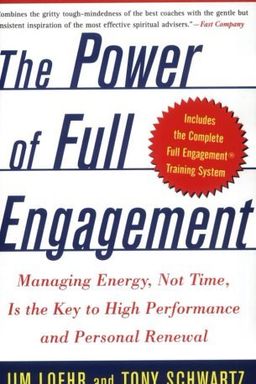
How can you thrive in a world that constantly demands more—more performance, more productivity, more connection—when time itself is finite? In The Power of Full Engagement, Jim Loehr and Tony Schwartz argue that the key isn’t to manage time but to manage energy. Time may be fixed, but your energy—the physical, emotional, mental, and spiritual fuel that powers everything you do—can expand or deplete based on how you live.
Loehr and Schwartz contend that performance, health, and happiness are grounded not in the frantic velocity of our schedules but in skillful energy management. They propose that the secret to high achievement and personal renewal is not working harder but learning to oscillate between intense engagement and intentional recovery. Their message: to succeed sustainably, you must live like a sprinter, not a marathoner—pushing hard, then resting deeply.
Why Energy, Not Time, Drives Performance
In digital life, everything moves fast: deadlines compress, email pings never stop, and work follows us home. But managing time fails because it ignores the quality of our energy during those hours. A structured, packed calendar means little if your energy and focus plummet halfway through the day. In contrast, optimizing energy creates resilience, engagement, and joy. This principle is at the core of their concept of full engagement—a state in which you’re physically energized, emotionally connected, mentally focused, and spiritually aligned with purpose.
The authors discovered this through decades of training elite athletes. World-class performers—from sprinters to tennis pros—don’t train endlessly. They alternate exertion and renewal. Loehr and Schwartz realized this same rhythm is essential in every profession. Most of us undertrain physically and spiritually while overtraining mentally and emotionally, a recipe for burnout. Energy must be balanced and developed at every level.
The Four Sources of Human Energy
Energy, according to Loehr and Schwartz, exists in four distinct but connected dimensions:
- Physical Energy — the quantity of energy, built through rest, nutrition, and movement. It fuels alertness and vitality.
- Emotional Energy — the quality of energy, shaped by feelings like optimism, joy, and confidence, or eroded by fear and frustration.
- Mental Energy — the focus of energy, expressed in concentration, clarity, and realistic optimism.
- Spiritual Energy — the force of energy, driven by purpose and values beyond self-interest.
Each of these feeds the others. Low physical stamina drains emotional stability; weak purpose undermines mental focus. Full engagement requires investment and renewal in all four dimensions, or, as the authors explain, every cylinder in the human engine must fire.
The Shift from Managing Time to Managing Energy
Traditional productivity models emphasize optimizing hours. Loehr and Schwartz flip the formula: manage energy to maximize time’s value. The book’s “new paradigm,” contrasted with the old way, includes ideas like “seek stress” instead of avoiding it, “recover strategically” instead of powering through, and “use rituals” instead of pure discipline. Stress, they argue, isn’t the enemy—it’s the catalyst for growth, provided you recover afterward.
The heart of full engagement:
To be fully engaged, you must balance activity with recovery, intensity with stillness, outer achievement with inner purpose. Overuse and underuse both lead to breakdown. The rhythm of engagement and disengagement—what they call “oscillation”—is life’s natural pulse.
From Athletes to Executives: Applying the Model
The authors saw firsthand that executives often face greater sustained stress than professional athletes—with fewer recovery periods. Where athletes train 90% of the time to perform 10%, most professionals perform 100% of the time with almost no renewal. This imbalance explains burnout, declining creativity, and disconnection. Applying athletic principles to corporate and personal life means treating yourself as a “corporate athlete”: training intentionally, recovering rhythmically, and connecting deeply to why you play the game.
Purpose, Truth, and Ritual: The Path to Renewal
Building energy capacity and changing entrenched habits require more than willpower. Loehr and Schwartz introduce a three-step system—Define Purpose, Face the Truth, and Take Action. Purpose gives direction, truth provides clarity, and action builds momentum through deliberate rituals. These rituals—simple, specific, and value-driven behaviors—shift habits from conscious effort to automatic renewal.
Ultimately, this book challenges not how much you do but how intentionally you do it. Every thought, emotion, and action has an energy consequence. You can’t add more hours to the day, but you can transform the energy you bring to those hours. The question isn’t whether you have enough time—it’s whether you have enough life in the time you already have.