
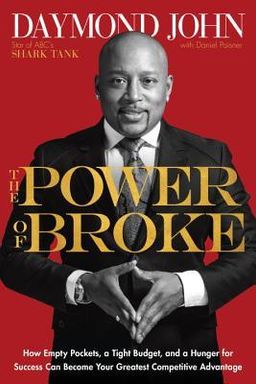
The Power of Broke cover

The Power of Broke

by Daymond John with Daniel Paisner

The Power of Broke reveals how financial constraints can be a catalyst for innovation, authenticity, and entrepreneurial success. Daymond John shares insights and real-world examples, demonstrating how a tight budget can be your greatest competitive advantage. Discover how to leverage limited resources to build a thriving business.

The Mindset of the Power of Broke

What if having almost nothing was the biggest advantage you could ever have? In The Power of Broke, entrepreneur and FUBU founder Daymond John argues that scarcity unleashes creativity, focus, and drive in a way comfort never can. Being broke forces you to grind harder, innovate more, and build something real—because when you’ve got nothing to lose, you’ve got everything to win.

John contends that most people misunderstand what it means to be broke. They see it as a lack of money, but he redefines it as a mindset of resourcefulness. It’s the determination to make something from nothing, the grit that pushes entrepreneurs when life leaves them no safety net. Money can actually be a handicap at first—it lets you gloss over weaknesses that will come back later to destroy your business. But when you’re broke, you have to build strong foundations of authenticity, persistence, and creativity. He insists: your hunger is your greatest competitive advantage.

From Scarcity to Power

When Daymond John started FUBU with a few friends in Hollis, Queens, he had barely any money—just a sewing machine, some fabric, and his mother’s mortgage. Because he couldn’t rely on cash, he had to rely on hustle: sewing at night, selling shirts on the streets by day, persuading rappers to wear his designs in music videos. FUBU grew not because of funding, but because of authenticity. It came from the community it served: “For Us By Us.” That spirit of broke—authentic, grassroots, necessity-driven—turned a $40 sewing experiment into a billion-dollar brand.

Why the Power of Broke Matters

John’s philosophy challenges popular business myths. Schools and investors tell us success requires capital. Yet, as he notes, most great innovations and companies—from Apple to Under Armour—began when founders were desperate, scrappy, and broke. This condition forces realism and restraint. You can’t waste money on fancy offices or vanity projects. You have to be lean, listen to customers directly, and adjust fast. When you’re broke, failure hurts enough to make you wise but not enough to destroy you.

The book also emphasizes that “broke” isn’t just financial. It can be emotional, social, or situational. A lack of connections, status, or education can still spark innovation by forcing you to make your own way. John’s own dyslexia shaped his thinking patterns—it taught him to approach problems visually and intuitively. Like many entrepreneurs with disadvantages, he turned his obstacle into strength.

The SHARK Points Framework

To teach readers how to channel this hunger, John offers a framework he calls the SHARK Points: Set a goal, do your homework, adore what you do, remember you are the brand, and keep swimming. These are not mere motivational slogans; they’re survival rules for the broke mind-set. Every story in the book—from Ryan Deiss clawing out of debt to Kevin Plank building Under Armour in his grandmother’s basement—illustrates these same points. Being broke wakes the shark inside you: relentless, opportunistic, and adaptive.

A Guide for Every Dreamer

The “Power of Broke” isn’t about glorifying poverty. It’s about redefining constraints as fuel. John argues that anyone—whether a student, creative, or corporate employee—can apply this attitude. When the world says you’re disadvantaged, flip it into leverage. Your limitations force you to be original, just as hip-hop turned lack of instruments into music built from sampled beats. The broke mind-set asks: what can I do now, with what I already have?

In the chapters ahead, John explores how this power plays out in real lives. You’ll meet entrepreneurs who built multimillion-dollar ventures with little to start; creators who used authenticity to connect with audiences; and companies rediscovering their hunger after success dulled their edge. Whether you seek financial success, creative freedom, or reinvention, John shows that being broke might be the best thing that ever happened to you.


Hunger as Your Greatest Advantage

Daymond John explains that hunger—the raw urgency to succeed—is the most powerful motivator any entrepreneur can harness. Having your back against the wall transforms fear into fuel. With no safety net, you stop procrastinating, think creatively, and take risks others avoid. When you’re comfortable, you can afford to wait. When you’re broke, waiting equals failure.

Rocky Balboa and the Eye of the Tiger

John uses the cinematic metaphor of Rocky to illustrate the difference between hunger and complacency. In the first film, Rocky runs the Philadelphia steps and boxes cows; he’s broke, desperate, and unstoppable. But once he’s rich and relaxed, he loses his “eye of the tiger.” Only when he reconnects to his roots—training in gritty gyms—does he regain his power. Businesses, John warns, follow the same pattern. When they lose the power of broke, they lose hunger and innovation. They start spending instead of inventing.

The Forus Case

He illustrates this through a Shark Tank case study of Forus Athletics, a startup shoe company. Founders Joel and Arsene had begun with passion and few resources—selling affordable running shoes. Once they had some success, they overextended with too many lines and licenses. John refused to invest, arguing more money would worsen their confusion. Instead of expanding, they needed to refocus and keep growing organically. Hunger fuels discipline. Financing without clarity kills it.

Turning Need into Drive

John’s message echoes motivational icon Les Brown’s advice to “be hungry.” He insists that desperation breeds invention. The founders of FUBU, Under Armour, and GoPro all began broke, relying on sweat equity. Necessity makes you focus and forces efficiency. When every dollar matters, you avoid vanity and pursue what customers truly need. (Similar ethos appears in Cal Newport’s So Good They Can’t Ignore You, which argues mastery grows from deep work, not comfort.)

Stay Hungry, Always

Success, ironically, is when you must guard hunger most fiercely. John reminds you that money and fame dull the hustle. To stay vital, keep remembering what it felt like to be broke—what it meant to fight for every client, every sale, every idea. “When you expect it,” he writes, “you might get an ass-whupping. When you need it, you make good things happen.” Hunger is not a phase; it’s a permanent state of mind for those committed to growth.


Authenticity Over Flash

John argues that authenticity—the ability to stay true to your story and audience—outperforms cash, flash, or marketing hype. Realness connects in both business and relationships. A product or brand must have soul; otherwise, when the money runs out, the façade collapses. To demonstrate, he shares how FUBU succeeded by being “our own customer,” crafting fashion that reflected hip-hop culture rather than imitating high-end designers.

Bottom-Up Innovation

Innovation, John says, never begins with large corporations—it starts in streets and garages. Breakdancing, rap, and wearable tech all emerged from individuals solving real needs. He compares FUBU to indie films or street art: limited money but unlimited authenticity. Organic ideas thrive because they pulse with truth. When companies chase trends or pour millions into fake novelties, they end up with flops like New Coke—a product that failed because it lacked a genuine reason to exist.

Relationships as a Mirror

He cleverly parallels this to dating. If you woo someone with luxury—cars, dinners, gifts—your relationship is built on cash, not character. When the money disappears, so does the connection. The same goes for brands. When businesses rely on budget rather than belief, they lose customer loyalty. Authenticity must anchor every interaction between company and customer, just as honesty sustains human relationships.

Technology and Realness

Even digital revolutions prove that people crave authenticity. John references global social movements like Egypt’s Facebook Revolution and Hong Kong’s Umbrella Revolution—initiatives powered by genuine ideals, not giant budgets. Online, transparency reigns supreme. With social media replacing traditional ads, sincerity becomes strategy. (Note: This mirrors Simon Sinek’s concept in Start With Why: people follow causes, not campaigns.)

To keep your brand real, John advises: know who you are, serve your community honestly, and create from passion rather than profit. Money can amplify your message but never replace your meaning.


Be Resourceful, Not Rich

Resourcefulness is the heart of the power of broke. Money doesn’t create creativity; constraints do. John demonstrates this through stories like musician Steve Aoki, who built Dim Mak Records in a cramped apartment filled with interns and chaos. Rather than relying on his wealthy father’s fortune, Aoki turned punk passion into an empire. His determination proves that true entrepreneurs find beauty in disorder and make opportunity from scarcity.

Chaos Breeds Creativity

Aoki’s office, a 900-square-foot space shared with 13 interns, exemplifies “beautiful mess.” He had maxed-out credit cards, minimal funds, and total belief. Like a garage band or start-up coder, he leveraged sweat equity and credibility. The same principle guided John at FUBU when he spray-painted logos on store security gates instead of paying for billboards. Limitations inspire originality. Working under pressure unleashes innovation that luxury never can.

The Liberation of Less

Being broke liberates you from wasteful abundance. Without excess, you focus only on essentials—customers, product, story. John calls this “Mo' money, Mo' problems” reversed: fewer resources equal greater clarity. He admired Aoki’s refusal to ask his father for help, a stance that demanded self-validation. “You have to eat it,” Aoki said. Pain becomes motivation. Real art, real businesses, and real success emerge from knowing you have no choice but to make it work.

Drive Beyond Safety Nets

Safety nets, John warns, breed laziness. When success seems guaranteed, risk-taking dies. Most investors on Shark Tank began with minimal funds, learning resilience before comfort. Entrepreneurs with venture capital but no desperation often fail because they lose touch with what matters. Only resourceful creativity—not money—builds sustainability. The takeaway: stop wishing for funding and start mastering improvisation with what you already have.


Keep Swimming: Relentless Persistence

Daymond John repeatedly returns to one metaphor—the shark. Sharks must keep moving or they die. That is persistence: continuous motion, relentless pursuit. Entrepreneurship, creativity, and growth depend on this very survival instinct. Facing failure, rejection, or pressure, you must “keep swimming.” The shark doesn’t waste energy chasing small fish—it focuses on big opportunities with precision and patience.

Lessons from Kevin Plank

Under Armour founder Kevin Plank is John’s example of this instinct in action. As a college football player frustrated with sweaty cotton shirts, Plank invented a lightweight synthetic undershirt. He started his company in his grandmother’s basement with $16,000, which quickly vanished. At one point he was broke, even gambling in Atlantic City out of desperation. Yet he persisted, clawing his way back until Under Armour became a multibillion-dollar brand. His mantra—“Protect this house!”—embodies focus, teamwork, and faith in purpose.

Small Steps, Big Wins

John emphasizes that persistence requires realism. Plank grew step by step: five years to reach $5 million, five more to reach $300 million, then five to exceed $1 billion. Constant adaptation, like a shark sensing changes in currents, kept him alive. Entrepreneurs fail when they either stand still or grow recklessly. To move forward sustainably, John insists, pressure plus patience equals progress.

No Loser Talk

Kevin Plank’s favorite slogan—“No loser talk”—captures the mindset. In crises, control what you can and refuse negativity. Whether sports or business, it’s about owning effort and never surrendering. John echoes this message in his “Rise and Grind” mantra: work before hope, momentum before miracles. Sharks rest only when moving; so should you. Persistence isn’t glamorous—it’s oxygen.


Learning from Failure and Risk

Failure, for Daymond John, is tuition. The power of broke makes you willing to fail small so you can succeed big. Each setback refines your judgment and resilience. He shares examples from Shark Tank and his own career, showing that disastrous moments often lead to breakthroughs when you analyze them correctly.

Ryan Deiss and Financial Resilience

Ryan Deiss, founder of Digital Marketing.com, learned this hard truth through debt and tax crises. He made six figures online yet ignored expenses until he owed $250,000—and another $250,000 to the IRS. After one night of panic, he built campaigns to generate $160,000 in two days, paying off his obligations. By “getting back to zero,” he discovered peace and skill. Crisis clarified his priorities, teaching him disciplined goal-setting. Deiss reinvented failure as his best investment.

Risk and Rebirth

John emphasizes that embracing risk with strategy distinguishes survivors from dreamers. He recounts his own near missteps after FUBU’s success: spreading too thin, losing hunger, relaxing discipline. The cure was returning to broke—relearning hustle. Like Jay Abraham, who saved failing companies by turning debts into negotiation leverage, risk sharpens skill. Fear of losing money should never outweigh the fear of missing opportunity.

Fail Better

Every collapse can be a clean slate. Acacia Brinley, a teen social media influencer bullied for her selfies, transformed hate into humility and built a genuine brand with millions of followers. Her motto—“Try, fail, try again, fail better”—embodies John’s philosophy. Failure isn't personal; it’s data. Each rejection, debt, or setback provides feedback for sharper, stronger comebacks. As Thomas Edison said, “I found 10,000 ways that didn’t work.” John invites you to measure failure not by losses but by lessons.


Do Your Homework: Preparation and Insight

Research and preparation—doing your homework—is a recurring theme across Daymond John’s stories. The power of broke means your best capital is knowledge. When you can’t buy expertise, you must earn it through learning, curiosity, and observation. Success favors those who study the field, competitors, and history before acting.

Jay Abraham’s Strategic Learning

Marketing legend Jay Abraham transformed limited means into mastery by studying everything around him. Fired from jobs and broke, he sat in on meetings for free just to listen and learn. His ingenuity led him to build multimillion-dollar ventures by connecting “other people’s money, manpower, and mindset.” Knowledge became capital. Abraham’s story teaches that observation and imitation precede innovation. You don’t need new ideas—just better execution of existing ones.

Rob Dyrdek and Research Through Practice

Skateboarder Rob Dyrdek learned through repeated trial. Every fall fine-tuned his stunts. Later, he applied the same principle to television and product licensing: observing fans, brands, and competitors, blending lessons into his “Ridiculousness” success. Doing homework isn’t academic—it’s street-smart. Analytics, audience insights, and lived experiments matter more than textbooks.

Knowledge as Leverage

John reminds entrepreneurs that ignorance is expensive. Research your market before asking for money, as investors fund insight, not enthusiasm. Christopher Gray’s Scholly app succeeded because he learned exactly how scholarships worked, building data from his own million-dollar hunt. Knowledge without cost outperforms money without focus. Study first, spend second.


You Are the Brand

Daymond John insists that the strongest currency in business is identity—your brand. Before people buy your product, they buy you. Everything from your values to your communication reflects the brand within you. Authentic personal branding connects intention to impact.

Gigi Butler’s Cupcake Story

Gigi Butler, founder of Gigi’s Cupcakes, personifies this rule. She started as a cleaning lady who dreamed of singing—then pivoted to baking with only $33 left. Every cupcake carried her name and heart. When lines wrapped around her store, it wasn’t just flour selling—it was faith and perseverance. Because she represented her brand passionately, customers felt her authenticity. The lesson: your story is your marketing.

Presence as Trademark

John built FUBU’s brand by living it—spray-painting logos on gates, wearing the clothes, and making sure hip-hop icons did too. Rob Dyrdek branded himself by his relentless energy and style. Acacia Brinley branded herself through genuine self-expression, not filters. You project your brand by the consistency of who you are. (Comparable to Brené Brown’s call for vulnerability in leadership: authenticity breeds trust.)

Brand Before Product

Your brand precedes your product. Before FUBU had inventory, it had identity. Before Under Armour sold globally, it had purpose. Before Loren Ridinger launched Market America, she and her husband embodied credibility and connection. John advises: define your brand first, then build everything else around it. When you stand for something, even mistakes align with your values—and customers forgive authenticity faster than perfection.


Be the Change: Adapting to a New Economy

The book concludes by bridging broke thinking with modern technology. John urges entrepreneurs to embrace new tools—crowdfunding, social media, Shopify, online storytelling—to democratize opportunity. The digital age levels the playing field: money and connections matter less than creativity and courage. Yet, adapting requires the same broke principles—hustle, authenticity, and learning.

Innovation in a Bathroom

In a memorable scene at a South by Southwest jam session organized by Gary Vaynerchuk, John sat among leaders from Twitter, Uber, and Meerkat—crammed into a hotel bathroom to avoid noise complaints. Their common theme: the future belongs to those who save time and sell authenticity. From self-driving cars to “drinkable knowledge,” these innovators dreamt of efficiency. John realized all progress aims to monetize time, yet the broke mindset reminds you time is earned by effort and focus.

The Rise of Everyday Entrepreneurs

Platforms like Shopify and crowdfunding sites allow anyone to sell globally from home. John calls this the “retail everywhere” revolution—no more gatekeeping by big-box stores. Authentic creators now reach audiences directly. A father-son duo in Australia raised $12 million for their Honey Flow beekeeping invention through Indiegogo with just a five-minute video. Digital tools magnify broke principles: clarity, credibility, and community.

Continuous Learning

John closes with goal-setting advice: write down seven goals, visualize them daily, and tie each to a deadline and sacrifice. Whether embracing new tech or rebounding from setbacks, the broke mindset is timeless: keep learning, keep moving, keep believing. Because broke isn’t a condition—it’s a source of power to thrive in changing times.

Dig Deeper

Get personalized prompts to apply these lessons to your life and deepen your understanding.

Go Deeper

Get the Full Experience

Download Insight Books for AI-powered reflections, quizzes, and more.