
Idea 1
The Power of a Positive Team
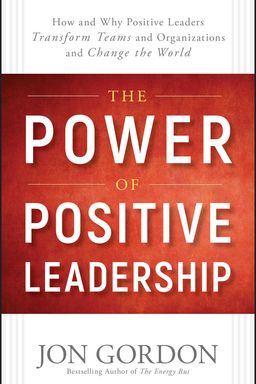
What makes some teams thrive under pressure while others crumble when things get tough? In The Power of a Positive Team, Jon Gordon argues that the secret lies not in strategy, skill, or raw talent, but in positivity—a cultivated, resilient, team-centered mindset that transforms groups of individuals into unified forces capable of extraordinary performance. Gordon contends that positivity isn’t just about being cheerful or ignoring reality. Instead, it's about consciously choosing optimism, belief, and purpose even when circumstances are tough, and using those attitudes to propel the team forward.
Drawing from years of working with sports organizations, businesses, schools, and nonprofits, Gordon shows that success depends on what’s happening inside the team, not outside. Teams become great by shaping a shared culture rooted in optimism, accountability, and care. Negative forces—fear, ego, cynicism—exist in every organization, but positive teams learn to override them through deliberate communication, encouragement, and faith in one another.
Positivity as a Competitive Advantage
Gordon begins with a compelling proposition: positivity is not fluff—it’s a measurable, strategic advantage. He cites Duke University research showing that optimistic people succeed more often in business and politics. Studies on team dynamics reveal that positive interactions promote engagement and peak performance. Teams fueled by optimism attract talent, encourage creative contributions, and sustain momentum even in adversity. Much like Wayne Baker’s research on energizing relationships, Gordon illustrates that positive energy is contagious and creates a feedback loop that enhances every member’s effort.
The Heart of a Positive Team
At its core, a positive team blends three elements: belief, trust, and purpose. They confront real challenges without denial and maintain optimism rooted in shared vision. Gordon contrasts optimistic teams—who find opportunity in setbacks—with negative ones that dwell on problems and deteriorate under pressure. He shows, through stories like the Clemson football team under Dabo Swinney or Alan Mulally’s turnaround at Ford, that teams aligned around belief and purpose can outperform raw talent.
A Purpose Larger than Winning
Gordon expands on this idea by integrating lessons from both sports and business. Alan Mulally’s “One Ford” initiative united thousands of employees under a shared purpose—creating cars people loved. Similarly, Organic Valley prospered by focusing on helping farmers and families instead of chasing revenue targets. These examples demonstrate that when you connect individual motivation to a larger “why,” people give more energy and commitment. As Gordon says, teams don’t fail from exhaustion—they fail when they forget their purpose.
Belief, Communication, and Connection
From belief comes energy, and from communication comes unity. Gordon emphasizes that teams must keep their collective belief alive and nurture it through optimism, active encouragement, and authentic relationships. He recounts Swinney’s use of the “Believe” sign at Clemson and stories from leaders like Miami Heat coach Erik Spoelstra, who prioritize culture and connection over tactical perfection. Positive teams listen deeply, celebrate openly, and talk to themselves—not their fears—to sustain confidence (a lesson inspired by Dr. James Gills completing a double triathlon).
Transforming Negativity to Resilience
Of course, positivity doesn’t mean ignoring negativity. Gordon insists every team must confront it head-on. His “No Energy Vampires” principle urges teams to identify and transform those who drain energy, or, if transformation fails, remove them to protect morale. Negativity can’t just be ignored—it must be weeded out and replaced with optimism and purposeful action. The goal isn’t to ban disagreement but to encourage positive conflict—the kind that improves truth, accountability, and performance rather than spreading fear or blame.
The Cycle of Positivity and Growth
Throughout the book, Gordon builds a cycle of growth: positive culture fosters connection; connection strengthens commitment; commitment reinforces care; care drives collective excellence. Teams communicate to connect, connect to commit, and commit to get better. This pattern turns positivity into tangible performance. Whether it’s the Miami Heat defying midseason losses or the University of Virginia tennis team forging championship bonds through family storytelling, he reminds you that positive unity always beats fragmented talent.
Why It Matters to You
Gordon’s message applies far beyond locker rooms or boardrooms. Whether you lead an office, classroom, or creative project, you’re part of a team that faces conflict, fatigue, and doubt. This book shows that by choosing belief over fear, gratitude over entitlement, and communication over silence, you can transform any team from surviving to thriving. The power lies inside you and your team—it starts from the inside out. As Gordon frames it beautifully, “The best teams don’t give up when things look bleak. They overcome the negative with belief, optimism, and care.”
In the pages that follow, you'll explore how positive teams create cultures of excellence, unite around purpose, feed optimism, connect deeply, commit selflessly, and continually strive to improve. Gordon’s stories—from athletes and CEOs to teachers and everyday heroes—prove that positive teamwork isn’t just motivational—it’s operational. It’s how you build something that lasts.