
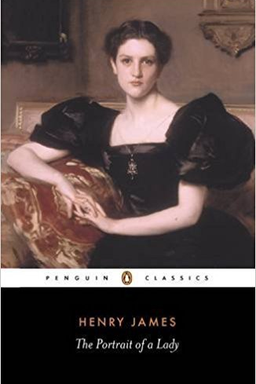
The Portrait of a Lady cover

The Portrait of a Lady

by Henry James

The Portrait of a Lady by Henry James follows the spirited Isabel Archer, an American in Europe, who defies societal norms in pursuit of independence. Her journey through love, betrayal, and self-discovery reveals the intricate dance between personal ambition and societal expectations, offering timeless insights into the human condition.

Consciousness as Architecture: Henry James’s Vision

Henry James’s The Portrait of a Lady begins and ends with a question about consciousness: how can freedom and awareness coexist inside the pressures of society? He builds this question not through plot tricks but through composition—the deliberate crafting of a consciousness, Isabel Archer’s, as the novel’s cornerstone. James calls it architecture: every conversation, gesture, and hesitation becomes another brick in a structure meant to reveal moral experience from within.

Character Before Plot

In the Preface to the novel, James explains that it started with no story, only a person vividly imagined. Like his mentor Turgenev, he trusts that if you study a character long enough, the right situations will form around her. Isabel Archer therefore isn’t pushed through external events; her mind itself produces the drama. You are asked to read not for what happens next but for what every scene reveals about her evolving sense of self. (Note: this reversal from incident to revelation defines James’s mature style in all his major works.)

Freedom and Its Moral Cost

From her first arrival at Gardencourt, Isabel stands as a young woman determined to live “freely.” She refuses Lord Warburton’s aristocratic proposal and resists Caspar Goodwood’s forceful passion, insisting that liberty is her birthright. Yet James quickly allows cracks in that confidence—freedom is exhilarating but also isolating. She herself feels the moral arithmetic of independence: every act of autonomy injures someone else or provokes misunderstanding. You begin to see that liberty, for James, demands emotional precision and moral labour, not just courage.

The Transatlantic Frame

James locates this moral inquiry between two worlds: American energy and European restraint. Isabel carries American candour—she speaks plainly, travels boldly, expects possibilities—while the English and continental figures embody hierarchy, taste, and restraint. In contrasting Lord Warburton (an anxious aristocrat) and Caspar Goodwood (an industrial American) James dramatizes the cultural collision that shapes Isabel’s choices. Every refusal or acceptance mirrors that collision—mobility versus tradition, self-making versus inherited form.

Money as Moral Instrument

The fortune Isabel inherits from her uncle becomes the novel’s hinge. Ralph Touchett, half idealist and half strategist, decides to make her financially independent “to put wind in her sails.” That act seems benevolent but also proves prophetic: money magnifies freedom and danger. Isabel’s wealth changes how others perceive her—she becomes target as much as heroine. In James’s architecture, money is not reward but instrument, linking intimate choice to social visibility. (Compare this to Balzac’s use of capital as destiny; James treats it instead as moral experiment.)

Voice and Moral Sense

James’s narrative method insists that form and morality are inseparable. His “house of fiction” metaphor—a mansion with countless windows—invites you inside Isabel’s view rather than an omniscient one. The author’s moral claim rests on felt life: if you can feel Isabel’s inner weather, you grasp ethical meaning. Architecture replaces sermon; empathy replaces judgment. This slow, meticulous design allows ordinary acts—tea on the lawn, a letter unanswered, a pause before a confession—to become moral tests.

From Innocence to Vision

The novel’s trajectory, across its parts, traces Isabel’s passage from idealism to wisdom. She begins believing the world will enlarge her sense of self; she ends knowing that consciousness itself is both gift and trap. By marrying Gilbert Osmond—the aesthete who prizes form over sympathy—she walks into the mirror James set for her: an exquisite world that shows how taste can imprison. When she finally returns to England to face Ralph’s death and then to Rome to finish her duty, she embodies the Jamesian irony: inner light surviving outer confinement. Through her, James argues that freedom lives not in escape but in lucid endurance—the moral architecture built inside the mind itself.


Isabel Archer: The Price of Independence

Isabel Archer’s independence is the novel’s emotional engine. She arrives at Gardencourt with theories about freedom and self-possession, wanting to see life before choosing. Her refusals of two suitors—Lord Warburton’s proposal and Caspar Goodwood’s persistent love—stand as early demonstrations of her autonomy. She tells Warburton gently that his stability would close the world to her; she tells Goodwood, more sharply, to let her live undefined. Those acts mark her as rare in James’s society: a woman building her identity through negative choice.

Freedom as Principle and Experiment

James shows that Isabel treats liberty almost like a moral experiment. She reads incessantly, questions traditions, and imagines living by her "best self." You watch how small gestures show large philosophy: declining easy adoption by Mrs. Touchett, teasing Ralph for his cynicism, or going alone to rooms she hasn’t yet explored. Freedom, however, begins to risk vanity. Isabel enjoys being thought remarkable; she recognizes admiration as both mirror and temptation. Her independence can lapse into pride—a tone James lets you admire and fear at once.

Freedom Under Observation

Around Isabel, James places mirrors: Ralph’s ironic tenderness, Lord Warburton’s patience, and Henrietta Stackpole’s brash friendship. Each interaction reflects her ideals and their possible misuses. Ralph admires her courage but worries about its cost; Henrietta calls her theories dangerous if detached from reality. You begin to read freedom not as personal triumph but as relational test—can independence survive sympathy without cruelty?

The Moral Arithmetic of Choice

James insists that liberty carries consequences. Warburton and Goodwood are not caricatures of oppression; they are sincere men hurt by Isabel’s refusal. You see the cost accumulate—loneliness, suspicion, and an exposed idealism that will later make her vulnerable to more refined manipulation. By making freedom noble yet perilous, James teaches that independence must include moral attention to the lives it disrupts. (This balance of inner autonomy and external empathy anticipates Virginia Woolf’s later heroines, who inherit Isabel’s dilemma in modern form.)


Culture and Contrast: The Transatlantic Mirror

James’s world spans oceans. He renders Europe and America not simply as places but as moral climates. Every major character embodies an aspect of the transatlantic collision: Mr. Touchett’s pragmatic American business sense transplanted to English gentility, Mrs. Touchett’s cosmopolitan restlessness, Lord Warburton’s self-conscious British nobility, and Henrietta Stackpole’s energetic journalism. Together they stage an ongoing debate about freedom, decorum, and authenticity.

America: Directness and Idealism

The Americans in this world are frank, mobile, and progressive. Isabel’s dream of seeing as many countries as she can, Henrietta’s insistence on speaking truth to power, and Caspar Goodwood’s commercial determination express that expansive impulse. For them, movement equals liberty. Their language is plain, their ethics practical, and their emotions unguarded. In James’s depiction, that openness appeals but also offends societies founded on discretion.

Europe: Manners and Anxiety

By contrast, English and continental characters live through structure—titles, houses, reputations. Warburton’s castle and Madame Merle’s salons exemplify an aristocratic devotion to polish. Yet James complicates the image: Warburton himself is a reform-minded radical of the upper class, aware that his world is eroding. Europe in James’s fiction isn’t static; it trembles under modern scrutiny. Isabel’s engagement with it dramatizes that tension: the New World admires sophistication but fears suffocation.

The Resulting Pressure

Every choice Isabel makes is layered with this cultural duality. Refusing Warburton is also rejecting England’s permanence; resisting Goodwood means declining America’s urgency. Later, marrying Osmond in Italy appears the symbolic union of American imagination and European form—dangerous precisely because it looks perfect. The transatlantic contrast becomes James’s way of showing how ideals, once exported, evolve into haunting contradictions. You, the reader, feel both nostalgia and critique: freedom travels but never arrives unchanged.


Influence and Manipulation: The Social Web

James populates The Portrait of a Lady with brilliant observers and subtle plotters, each serving to sharpen or distort Isabel’s vision. Secondary characters—Ralph Touchett, Henrietta Stackpole, Madame Merle, and later Gilbert Osmond—form a web around her consciousness. They are both mirrors and agents, shaping the moral experiment that freedom becomes.

Ralph Touchett: Compassionate Witness

Ralph’s quiet illness becomes moral perspective. Watching from his couch, he measures action against motive. His decision to endow Isabel makes him co-author of her fate; his later warnings against Osmond reflect insight purchased by suffering. Ralph’s death eventually forces Isabel’s reckoning. He is the conscience James lends you, translating observation into ethical commentary—never intrusive, always exact.

Madame Merle: The Courtly Strategist

Madame Merle begins as cosmopolitan mentor, teaching manners and taste. Gradually you perceive calculation beneath charm. She engineers introductions, especially to Gilbert Osmond, while maintaining decorous secrecy. Her power is bureaucratic—achieved through delays, phrasing, and plausible deniability. Even her artistry (letters, piano, embroidery) becomes a mask of competence and control. You admire her fluency, then fear it: her duplicity reveals social mastery as moral risk.

Henrietta and Others: Voices of Contrast

Henrietta Stackpole’s blunt journalism exposes what Merle conceals. She is James’s counterpoint to manipulation—direct, comic, yet earnestly moral. Secondary figures like Miss Molyneux, the Lockleigh sisters, and the expatriate couple Mr. and Mrs. Luce provide alternative lives, showing how ease or polish replace genuine purpose abroad. Together these satellites display how influence works in polite society: through taste, opportunity, and relentless conversation. James’s lesson for you is clear—politeness can be an instrument of power disguised as grace.


Wealth, Taste, and Control: Osmond’s World

Gilbert Osmond enters as a man who makes taste into creed. He curates his villa, his friendships, and his daughter with connoisseurial precision. At first his calm seems noble—an antidote to vulgar ambition—but you soon realize refinement has turned into tyranny. For him, people are exhibit pieces, their spontaneity trimmed to fit aesthetic convention.

Taste as Power

Osmond’s “convention” is deliberate armor. He renounces public ambition yet seeks private dominance. His villa near Florence and the education of Pansy serve as symbolic rehearsals of control. What he calls cultivation is in practice domestication—training taste to replace sympathy. He tells Isabel that he lives quietly because ordinary success bores him, but quietness conceals an appetite for mastery. (Compare this aesthetic authoritarianism to Wilde’s later paradox that art can redeem life; Osmond reverses it, making art consume life.)

Pansy as Exhibit

Pansy’s innocence becomes Osmond’s proof. Educated by nuns, obedient and docile, she stands as his ideal object. When Rosier’s courtship and Lord Warburton’s interest threaten disturbance, Osmond responds strategically, not emotionally, arranging outcomes as if editing a catalogue. Isabel’s affection for Pansy becomes moral rebellion—she wants to protect authenticity in a world curated beyond impulse. Through Pansy, James exposes how parental care can become artistic possession.

Marriage as Curatorship

Osmond’s courtship of Isabel mirrors his treatment of Pansy: he desires a brilliant companion to ornament his taste. His apparent renunciation—“I am convention itself”—masks ambition in reserve. The marriage transforms Isabel’s liberty into aesthetic exhibit. Living in the Palazzo Roccanera, she discovers that beauty and refinement can imprison as effectively as duty. James’s insight here is radical: culture without conscience degenerates into cruelty. You are meant to feel the chill of elegance turned cage.


Disillusionment and Moral Awakening

By Part 3 Isabel’s luminous idealism has dimmed into clarity. Her marriage exposes what James calls “the arithmetic of consequences”—freedom distorted into obligation, taste hardened into domination. At Palazzo Roccanera she lives amid silence and arrangement, observed by Madame Merle’s strategic eye and Osmond’s civil demands. Yet disillusionment in James isn’t despair; it’s moral sight regained.

Seeing the Arrangement

Isabel begins to perceive that she has been arranged like one of Osmond’s rooms. Madame Merle’s duplicity, Osmond’s superiority, and society’s expectations all converge to prove how a woman’s freedom can be appropriated by others’ narratives. Her conversation with Madame Merle at the convent—icy, courteous, deeply wounding—marks the psychological climax: Isabel recognizes manipulation without melodrama. The discovery functions as internal revolution.

Ralph’s Death and the Moral Test

Returning to England to see Ralph dying, Isabel confronts truth spoken kindly. He reminds her that conscience itself can go out of tune when overplayed. His death clarifies her moral horizon: fidelity, duty, and pity intertwine. When she later receives Caspar Goodwood’s passionate rescue offer, the tension between freedom and duty crystallizes. Goodwood’s kiss at Gardencourt forces Isabel to choose between escape and endurance, and her flight back to Rome signals decision: to bear her consequences lucidly rather than flee them blindly.

Ethics of Endurance

Isabel’s return is neither resignation nor triumph—it is James’s version of moral maturity. She learns that freedom, once compromised, may still survive as inward clarity. Her continued care for Pansy and refusal of self-deception redeem autonomy at moral cost. For James, awareness itself becomes salvation. The portrait concludes not in romantic closure but in spiritual accountability: seeing, finally, is acting. You are left with the sense that consciousness, patiently built through pain, is itself the portrait—the only liberty that cannot be confiscated by taste, society, or love.

Dig Deeper

Get personalized prompts to apply these lessons to your life and deepen your understanding.

Go Deeper

Get the Full Experience

Download Insight Books for AI-powered reflections, quizzes, and more.